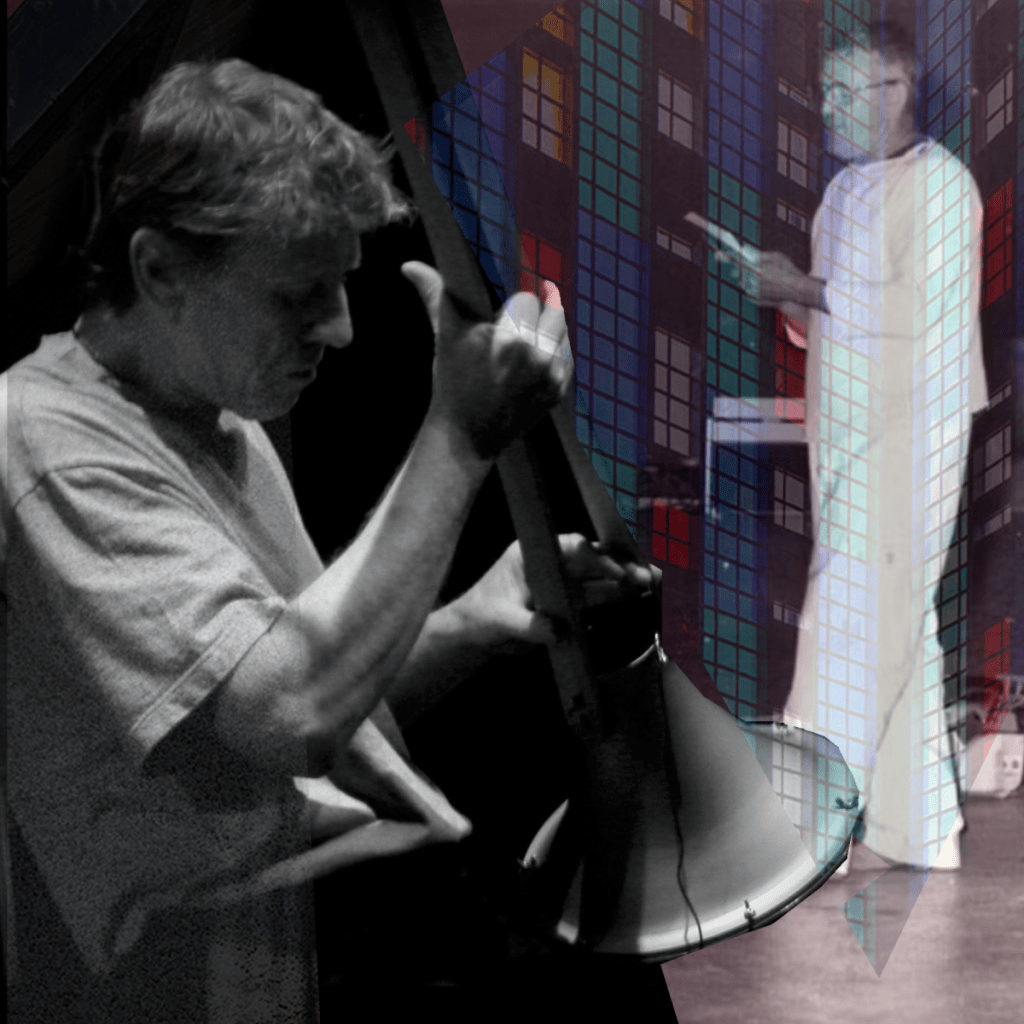
DSLB will be performing alongside Phil Dadson and Tim Barlow at this event to celebrate the work of Jim Allen.
“Jim Allen (who taught Dadson at Elam art school in the 1960s) has been called the “father of experimental art” in New Zealand. He was a pioneer of post-object art and performance art in this country, and is regarded as the most influential art educator of his generation. Allen died in June this year aged 100. Futuna, one of NZ’s most iconic buildings, is the site of some of Jim Allen’s most important and enduring artworks, and this concert (and following panel talk) is a celebration of Allen’s contribution to art and culture in Aotearoa.”Source
vegetable.machine.animal had the wonderful fortune to perform at the Compassionfest held in Island Bay, Te Whanganui a Tara late October 2023.
The festival this year was to celebrate the life of an extrodinary local, Kae Miller “CompassionFest is a festival for the south coast of Wellington, New Zealand, seeking to celebrate and re-tell local stories of local heroes of compassion. The local hero this year is Kae Miller, who advocated and acted for the benefit of refugees, mental health, and the environment. She inspired Bruce Stewart to build Tapu te Ranga marae out of recycled materials, and she started the movement to replant the South Coast with native bush.”source
I googled to see if there had been examples of music anywhere remixed by plants. All I found was a lot of Robert Plant and Plant Vs Zombies.
When putting the album My Daughter the Spider together I thought about making some tapes at home. Turns out our tape deck is not up to the task.
After a few experiments at dubbing I accepted that the quality just stank, and abandoned that idea. But then another more interesting thought came along.
What if I played the dodgy audio back through the synth? What if I had a plant also connected to the synth and had it wired up in such a way that it would change the audio coming out? What if I got the plant to do a remix??
The text of Eryk Salvaggio is really useful in helping to understand how this can work:
“Living things produce electrical signals on their surface, whether it’s human skin or the cap of a blooming mushroom [or in this case a photosynthesising plant] . A synthesizer can be designed to read this signal as voltage. The voltage can then control the synthesizer by moving through its components according to a specific structure. The structure is shaped by circuits, which usually assembled and sold as “modules” in a modular synth. The signal’s path between those modules is possible through the patchwork of wiring between those modules.
The [plant] is not the core of our concern. The centerpiece of this machine is electricity. Once the [plant] “gets into the system,” you can direct it in all kinds of ways, depending on where the wires connect to those modules. If you have never tried to do this, you might assume it’s like hooking up a stereo, where wires have a right place to be. That’s not the case. Instead, you have to make decisions about where the electricity needs to go in order to do the thing you need it to do; every hole in the module is an eligible candidate and there is really no way of knowing what it will do in combinations with other parts of that chain.
It’s not a sound system. It’s an electrical ecosystem. “Sound” is just what happens afterward.“
The technical Part:
The first module is a bio-feedback module, this converts plants electrical signal in a way that the synth can use. The Synth also has a Loop module, this captures and repeats edits of sound moving through it. The Loop also has a GATE [controlled by the plants electricity] meaning when the biofeedback module is active, the GATE opens and lets a new piece of sound into the looper and deletes the previous sample. And this is where I thought the remix would come form. Not a reinterpretation but a method that a piece of established music could be affected into new and unexpected ways.
And then I started the recording of the remix. I decided once the recording had started that I would not manipulate anything on the synth. I did allow myself to interact with the plant, like touching the plant, spraying water and creating shade. These physical interactions change the signals being sent from the plant to the synth. But it seems like there is no way to control or preempt what the changes might be.
Does it sound any good?
Is it a technique worth exploring?
It’s a fascinating way to apply reimagining to a piece of music via a truely random method. There is no suggestion that the remix is based upon plant-intention or consciousness. It does seem like an interesting result from what Salvaggio calls an Electrical Ecosystem and well worth exploring more.
Below is the remix – have a listen, leave a comment, we’d love to know what you think.
We are very pleased to be able to post this new release today the new album My Daughter the Spider by the project vegetable.machine.animal – an interspecies trio [non-human(of fungal and photosynthesizing variation), modular synth, human] creating
My Daughter the Spider contains 11 tracks – 9 tracks collected over the last 6 months- then an imaginary cassette version, and then a remix of the imaginary cassette version conducted by Plant!
vegetable.machine.animal : an interspecies trio of non-human, technological and human collaboration developing generative and engaging sonics at this meeting point of three worlds.
Via mycelium, wires and neurones signals are made, sent, received and interpreted in ways that make sense to each from its own perspective
non-human/machine: The non-human is connected to the machine via a biofeedback module which converts living electrical signals into ‘data’/machine-processable information – these signals moves through the network of the various modules of the synth altering parameters such as pitch, time, volume, sensitivity.
machine/human: Aesthetic Synth sounds to the human ear are identified by manipulation of the parameters of oscillators, sequencers, EQ’s’ and settled on once the general ‘voice’ being produced seems ‘right’ for the moment.
human/non-human: When the drumming/recording starts no further human manipulation is made to the synth.
The only physical interaction happens once playing commences is between the non-human/human – this may be touch, talking, spraying water, making shade etc – these interactions also appear to have an affect on the incoming/outgoing signal of the synth. It also seems that the plant appears to responds to the volume of sound of the drums/speakers, further changing the dynamics of the audible sound.
The 9 tracks recorded at various locations, home studio, live [Pyramid Club] and at the Audio Foundation- Tāmaki Makaurau/Auckland – many thanks to AF!!
Track 10 is an edited compilation for a 20 minute imaginary cassette.
Track 11 is track 10 that has been played back into the synth with the plan to develop a ‘Remix’ via a Sarracenia Pitcher Plant.
The biofeedback signals of the plant influenced various gates and effects of the synth. The sensitivity/intensity of these signals determined the parameters of the audio output. For example A looping module would collect a snapshot of audio depending on the signal received. The duration of this playback was held until a new signal directed the machine to discard the sample and collect a new soundbite to loop/process for a plant-determined time, until the next signal arrived.
Once recording started the human interacted only with the non-human. These interactions in turn affected the outcome from the synth which generated this essentially plant-based remix.
The concept of the plant remix is the topic of the next post



 skirted Records