Been a bit remiss in updating – theres been a bunch happening, and a bunch more to happen in the near future.
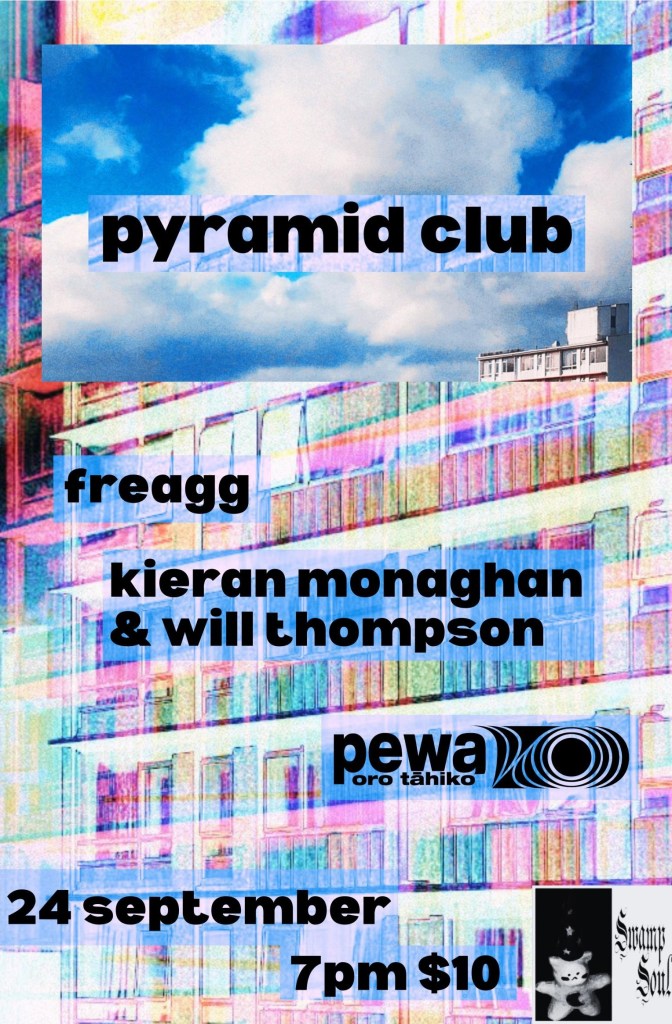
Thrilled to be playing at this concert – this city is SO lucky to have an enthusiastic entity such as Swamp Soul Swampsoul TwoSides (of the same coin) #14 ☆freagg ☆ ☆kieran monaghan & will thompson ☆ ☆pewa ☆ 24 Sept – 7pm, $10 on the door
The vegetable.machine.animal tour is about to kick off – first show Sunday 27 Sept at Te Whare o Rehua Sarjeant Gallery, Whanganui. There is both a public presentation, a short break, and then performance. It’s wonderful having the opportunities available to make presentations as part of the TRIO tour, it’s an exciting addition to the general swag of sounds/noises Kieran get’s to travel with. And often these conversations generate totally fascinating conversations, so please come along if your nearby. Check THIS POST for all up-to-date tour info
Both Chrissie, and Kieran, had seperate chances to talk about their collective, and independent, musical pasts. These can be heard on the wonderful archive that is the Dancing in your Head radio show broadcast, out of Paekākāriki 88.2FM. Thanks to Dan Beban from Pyramid Club. Chrissie Butler
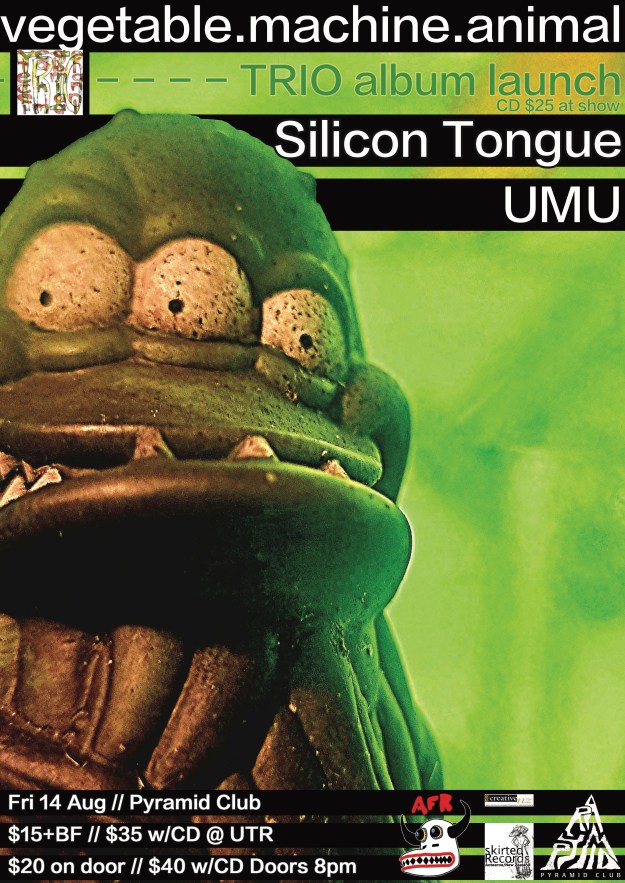
To celebrate this musical coming-of-age, a show is being hosted at the wonderful Pyramid Club, in Pōneke. We also have joining the event UMU, and Silicon Tongue. Tickets at UTR – Pre-sales: $15 entry/$35 entry + CD :: At the door – entry $20 ($10 low-waged) :: $40 -entry + CD. TICKET LINK
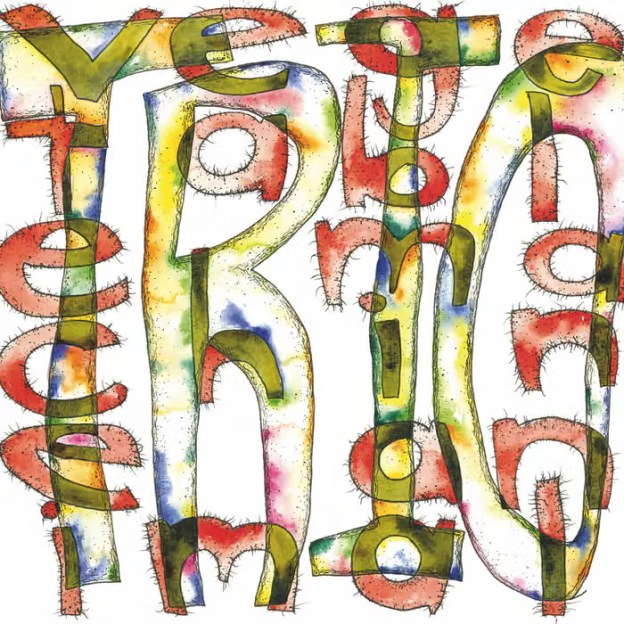
Press Release: AFR and Skirted Records are pleased to co-release a new album by vegetable.machine.animal – the moniker of the prolific artist, drummer, collaborator, traveller Kieran Monaghan who is based in Wellington, New Zealand.
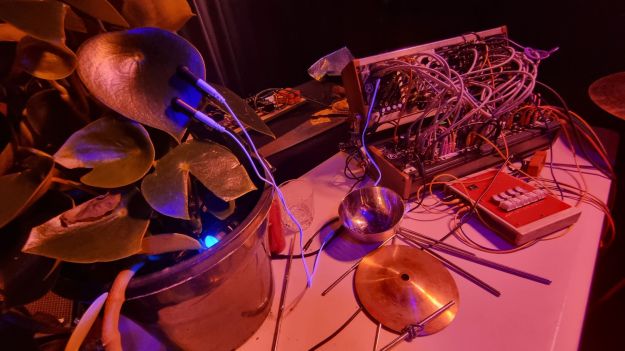
v.m.a’s 2025 album ‘Guest’ saw Monaghan and his vegetation/synth/drums setup improvising with 15 different artists over 13 tracks, with diverse instrumentation inclusive of Taonga Puoro (traditional Maori instruments), noise guitars, modular synths, vocals, household objects and more. ‘Trio’ flips this model and sees Monaghan performing alone with his triple pronged ‘band’. Some may argue this is a solo project – Monaghan would beg to differ. The vegetable and the machine cannot be wholly controlled by the animal, and contribute what they will. Given that the sensors on whatever vegetation is at hand pick up the electrical impulses of the alive plant, the animal can only attempt to coax more interactivity by the cute if clumsy gesture of spraying water on said plant, and then it still may not respond…the animal is at the mercy of the inner workings/life of the plant for any material with which to work and create music. The machine interface – a modular synthesizer – responds better to manipulations by the animal, however the taming of electricity into predictable forms is not desired – the opposite is what makes the sound/music alive. Surprise, instability, chance, error, repetition, ruts…it all makes for a wonderful sound world for the animal to spontaneously interact with, thus this is very much a Trio. Whilst scientific tests on the effect of music upon plants remain inconclusive, whether or not the vegetable and machine are ‘listening’ or responding to the animal is irrelevant – the animal is at the mercy of the vegetable, the machine talks to both, we the listeners simply listen.
– AFR
releases August 14, 2026
Thank you to CNZ for the support to make this possible.
The last two shows of the tour are to happen around the most geographically isolated city on the planet. Check-out is at 10. I leave The Metro behind me, and spend the next few hours making my way across country from Adelaide to Perth.
Claire collects me at the airport. I first met her in the nineties when, for a period of time, she lived in the agricultural-university town of Palmerston North. And in my recollection, Palmy, as we all know it, was the centre of some of the best oddball music being made in this country. Alas, this is not a widely held view, but I’ll defend it. There were bands of many forms, an independent venue, a swag of musical releases, much of it on handmade lathe-cut records [the music was cut onto the surface which was shrink-wrapped around a solid aluminium disc] from a cutting machine somewhere around Foxton (that was at least the bones of the legend). It was a specific sound, an alternative voice that could only have come from the Manawatu, and infinitely more interesting than the “Dunedin Sound”, or other such genres that are more myth than magic. Claire was at the centre of it. She was a maker, an organiser, a promoter, and a beacon of a committed and uncompromising way of being. These days, her performance moniker is Furchick, and she runs the experimental label Dog Park Records.
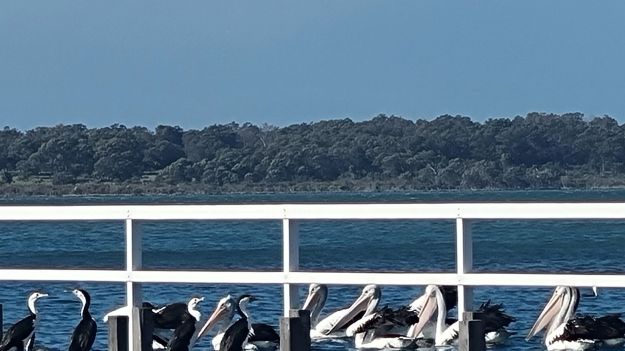
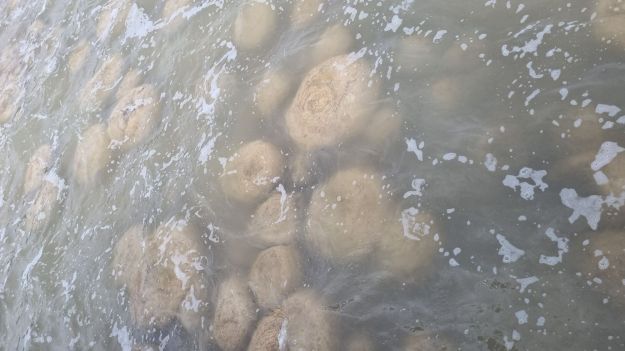
Mandurah is home now, and we spend our time together catching up, mooching around the flooded waterways looking for missing birds, getting my head around the linguistics of Australian grammar, and gazing into the murky storm-stirred waters at ancient thrombolites.
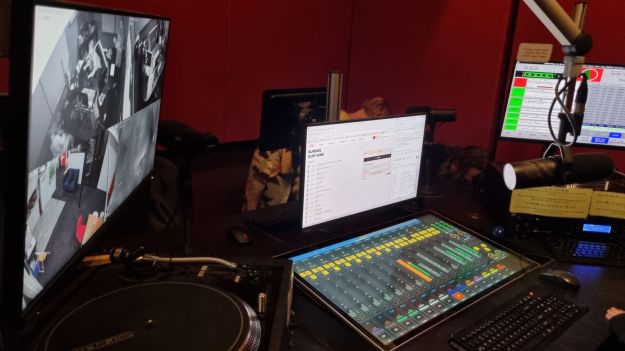
The first event was on Difficult Listening, a two-hour radio show, showcasing the outputs of both Dog Park and skirted Records, on the independent station RTR FM.
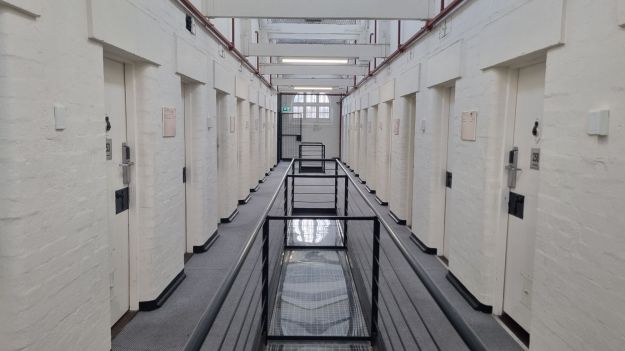
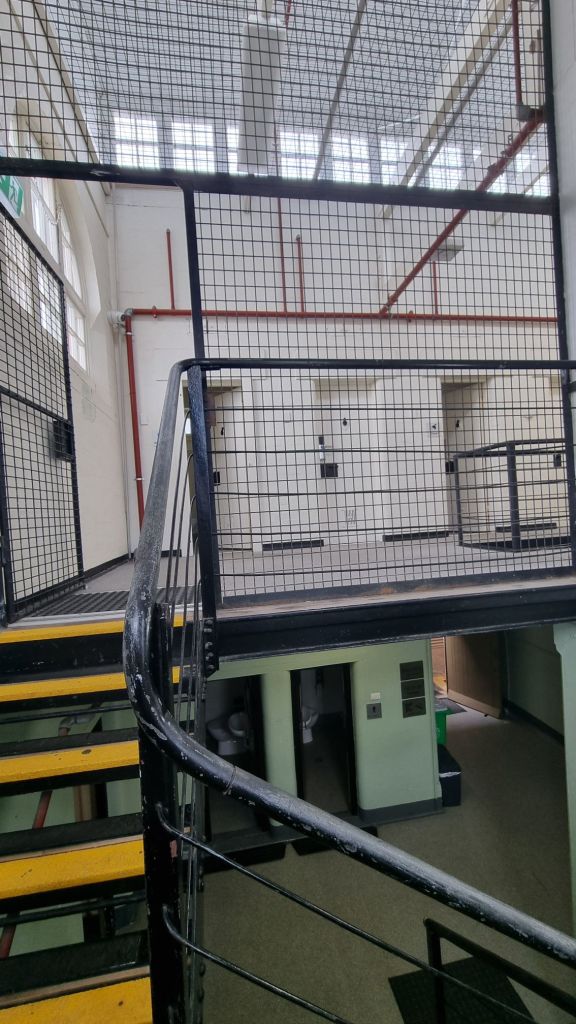
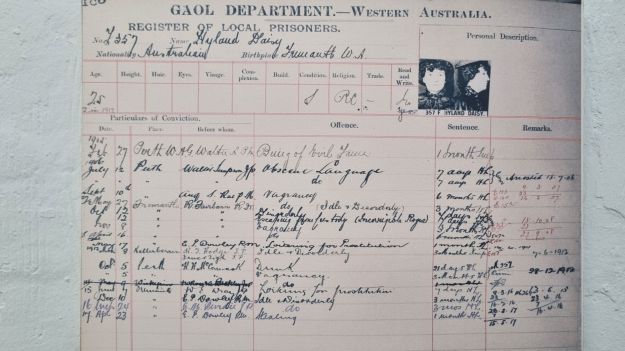
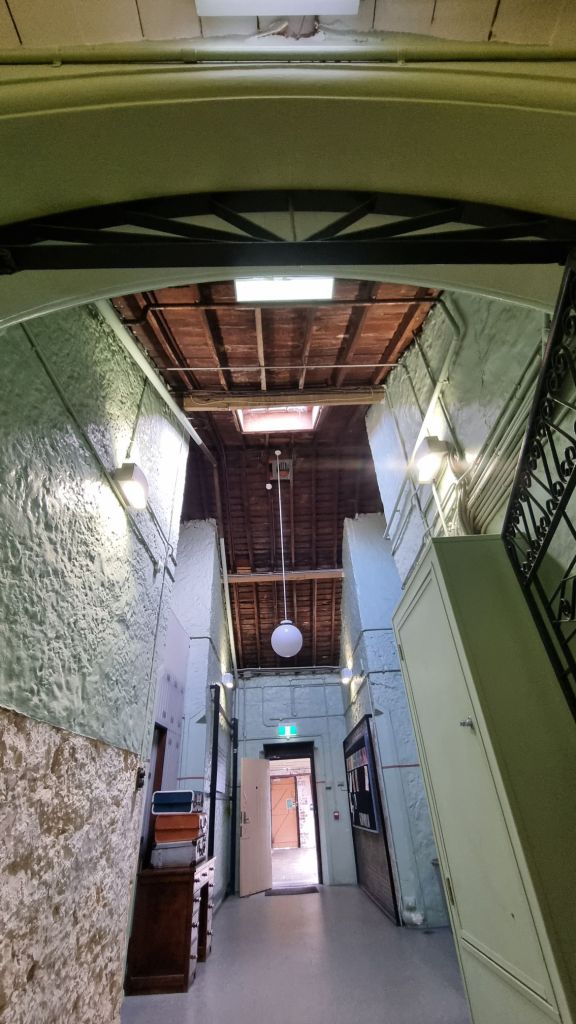
Next day, I’m on my own. Claire returns to Mandurah after delivering me to the YHA accommodation The Prison, a historic building for incarceration that has reimagined itself as both a tourist destination and a quirky place to stay. My bunk is in the old women’s wing of the facility. Hefty concrete walls, bars, and partitions of caged mesh leave little to the imagination about the actual brutal history. There are signs of historical moments, often about people’s creative attempts to escape, but always got caught – prisons would never advertise their failures.
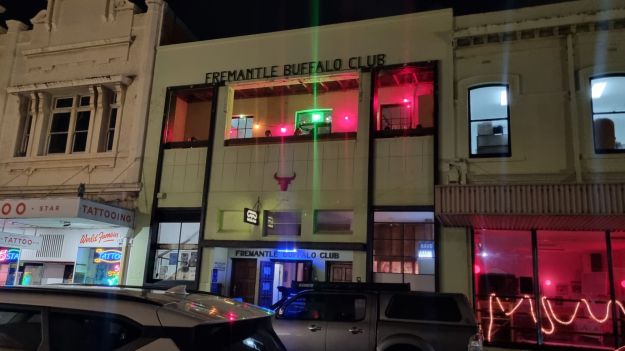
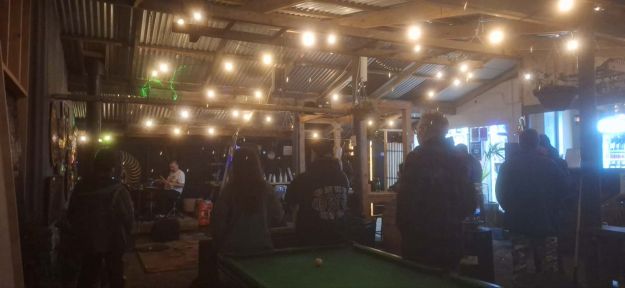
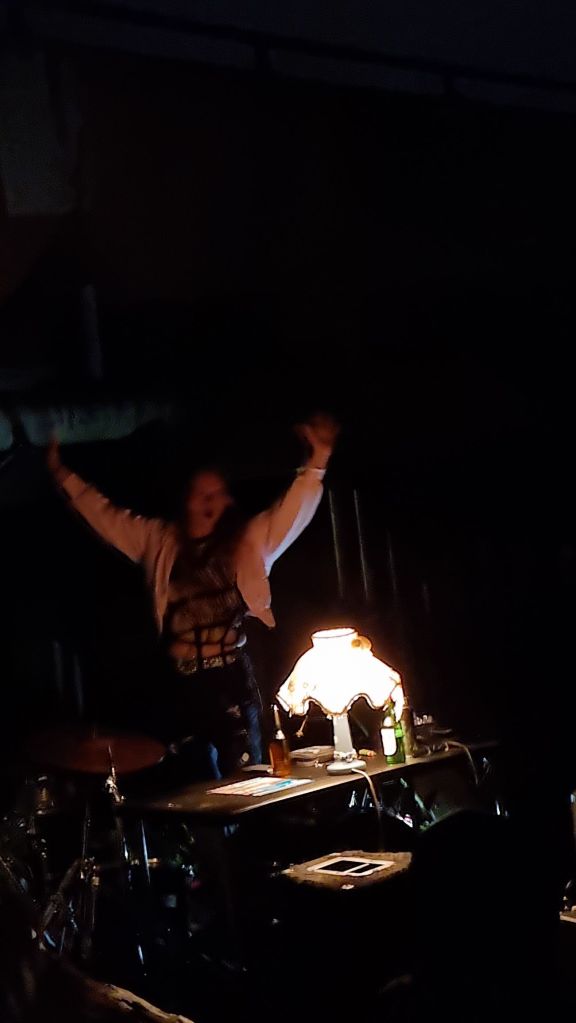
The show is at The Fremantle Buffalo Club, or the Freo Buff as it’s locally known. The building was established in the 1800s by the Royal Antediluvian Order of the Buffalo, but these days it’s a volunteer-driven, not-for-profit community and music venue. Monday’s comedy night was in the downstairs bar; our show occupied the charming hall on the first floor. SeNsOrY fReNzY open the proceedings. It was the band’s first show, and they were aiming as high as possible with a full set of original material. Loud, maximal rock with catchy hooks and dynamics. Lotus were next, also a four-piece, and a rock band of a different flavour. The impression left was of a Tool that never made the big leap into metaphysical rock but became something far more edgy from a label like Touch and Go. Two mighty acts delivering hefty chunks of drums and slabs of riff, and exceptional delivery from both singers.
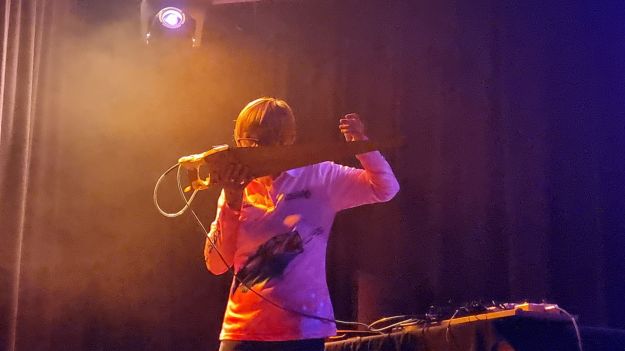
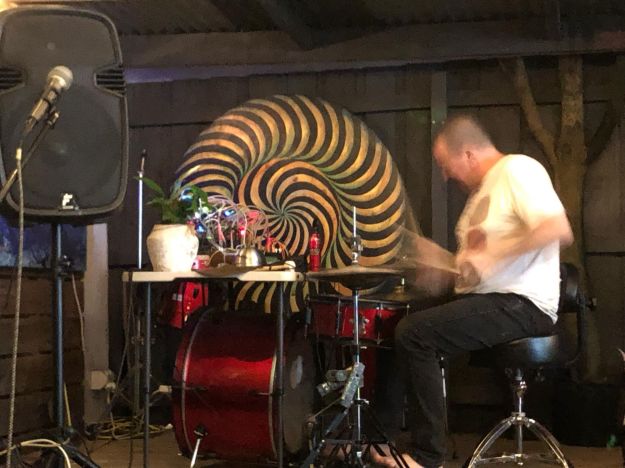
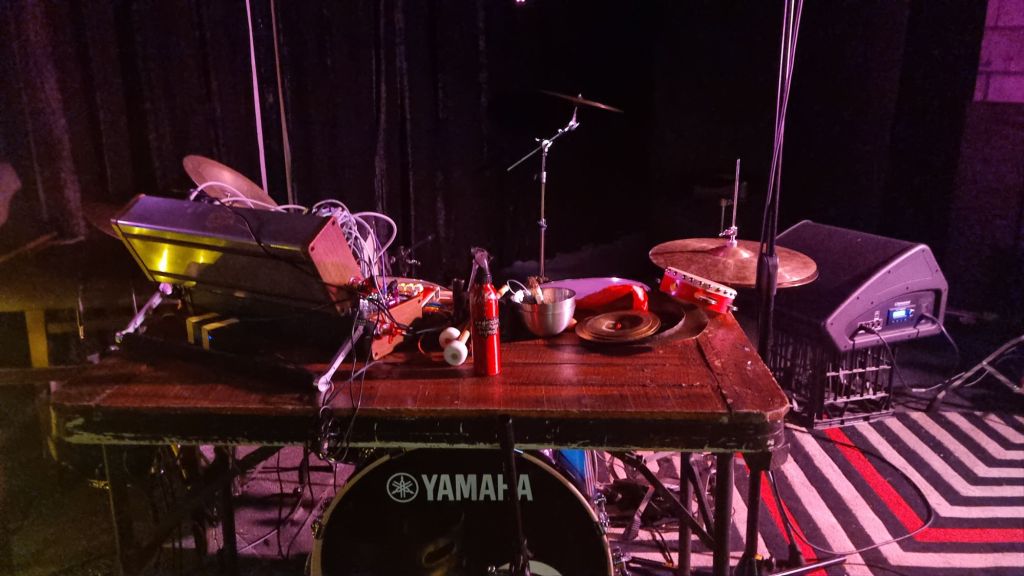
I was delivering neither riffs nor lyrics. But I could promise tumbling patterns and peculiar vocal-like sounds triggered by the plants. And I had a new contact mic, gifted from Claire, as substitute for my recently destroyed one. I have been using a contact mic for a while now; it was the main way to capture live water and gargling sounds. It also produces a wonderful distorted colour when I lay it across the ride, and then very carefully hit the cymbal, it adds the equivalent of gravel to the sound bed. During one show, though, I removed it from the cymbal and placed it on the floor tom as a placeholder. It took me a few moments to realise that the low pitch of that drum was resonating, via the contact mic, and producing feedback. A most unexpected discovery in real time, and with a bit of extra playing, I now feel like I’m developing some skill in manipulating these swelling bass notes that resonate from the drum. It was more unpredictable at the Buff. Somewhere in my system something started to run out of control, and the swelling of bass tones seemed to exude from every channel, everywhere, all at once. Imagine the roar of a wave before it dumps its full weight upon the off balance surfer. I cut everything to silence and ended the show there.
Sometimes the end just arrives, and if you’re listening in a responsive way, you can catch it. It’s a very satisfying feeling to latch on and ride it to completion. It can be easy to miss it, but an exit ramp still needs to be heard or found. I have a small clock on stage with my set up. Over the years I have learned the importance of not overstaying my welcome; equally, underdelivering is also a thing I want to avoid. I lose my sense of time when playing, my perception is elsewhere, and so a little timepiece is a useful tool to help me aim and shape a set.
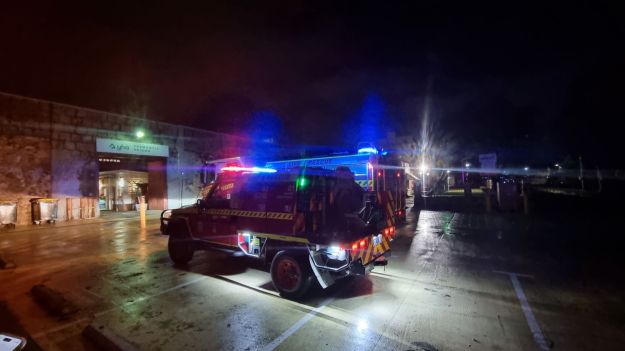
I walk back to The Prison, past rough sleepers in the doorways, without bedding, and in the rain. It’s a harsh alcove of reality. I get to my cell and fall into bed. An hour later the fire alarms go off, in a loud and clear voice instructing all to evacuate. I grab all the wrong things and leave. We wait in the dark, cold, and hint-of-returning-rain night. Fire appliances arrive and then swiftly leave. Turns out someone felt locked in the after-hours office. They must have panicked when they convinced themselves that the’d become trapped. The door would not open to their pushing – they needed to pull it. They hit the button to the right, thinking perhaps it was a door release. Turns out that button opens every door in the building. Exits can be complicated.
The last show arrives. Five and a half weeks of touring, and months of organising, all led to The Bird, the venue for Noisemaschin!!, on this final Tuesday night. I can feel myself already bending towards leaving, but manage to keep those feelings in check till the final act is done. It’s a good lesson: don’t check out before check-out time!
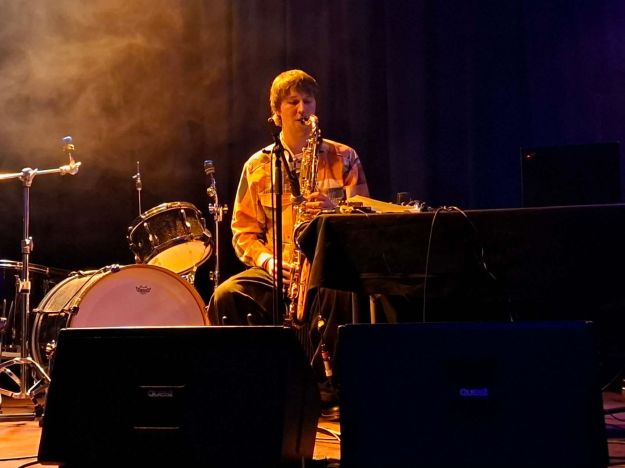
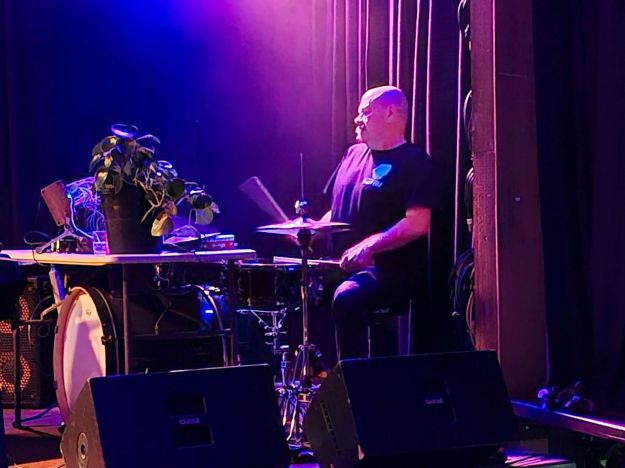
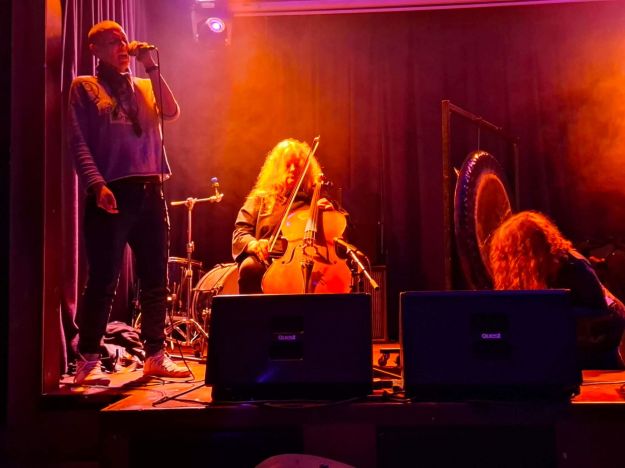
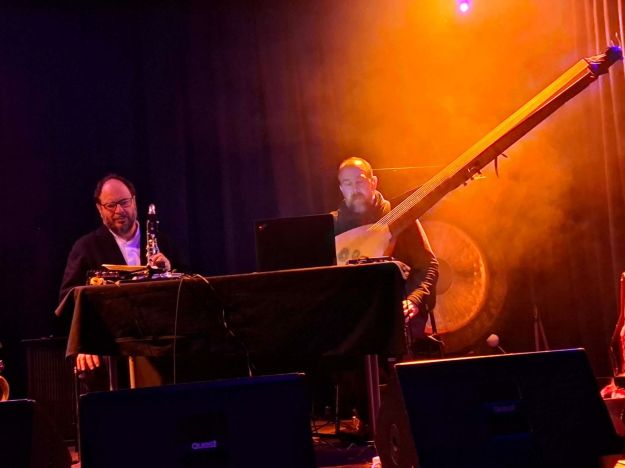
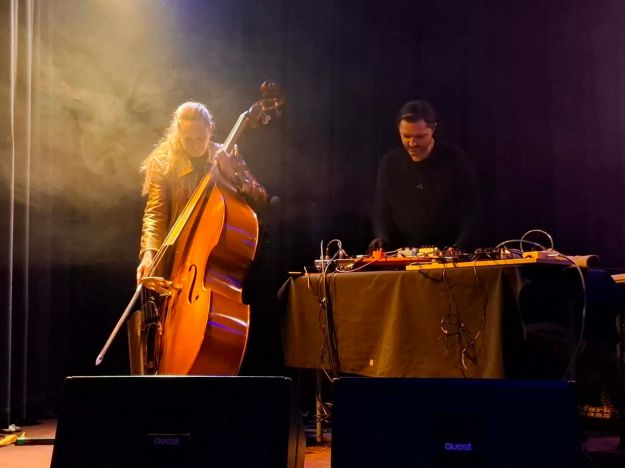
It’s a full lineup. Six acts, delivered in two blocks with an intermission for the major changeover of performers. Elias Farhen opens the proceedings. Perhaps the youngest performer this evening, Farhen delivers a solid and considerate piece of electronic manipulation and saxophone. I enjoy watching musicians of analog instruments playing and utilising the tech, but not getting lost in the tools at the expense of the thing that is their primary instrument. Farhen does this well. The Pianos follow, also with saxophone, and an unknown string instrument that was longer than I am tall. Spiderlight was the third in this block, a trio comprising of cello, gong, and throat singing and other vocal techniques. This set opened up space into the room, a responsive dynamic between the three musicians that were quite clearly listening intently to each other. Intermission arrives and the stage is rearranged. I follow fourth. Sets were recommended at 20 minutes. Across the tour, set lengths have varied, but on average mine had settled at around 40-45 minutes. Tonight, I enjoy the condensing of time, the limitation demands focus. I aim for maximum output, a last final push, expending the last I have to offer in the space I had allocated. And I’m done. I leave the stage and CCCXXXIII take over. A duo of double bass and electronics. I am standing at the far end of the bar, trying to sell the last of my CDs when they start. Everything starts to vibrate with the massive sound waves breaking upon the nearby surfaces; the windows and fittings around me rattle. I feel like it’s the best spot in the room. And finally, Furchick takes the stage to round off the evening. It’s a wonderful set that employs magnets, frying pans, spatulas, a log of wood, and a saw. All elements appear multiple times across the set. Modest electronic manipulation and looping build a bed upon which the physicality of the performance commands. This is Claire making the most of the minimal, drawing on decades of actual practice, in the execution of an idea. It lands like an exclamation point. It is such a treat to watch performers commit to pulling ideas into the world, where the physical labour is essential to the process of imagining and realising.
photo by Furchick
photo by Furchick
photo by Furchick
photo by Furchick
photo by Furchick
And then it’s over. Done. Dusted. One more overnight transit delivers me back to the shore of home, and a satisfied collapse.
But the end is not the end. I don’t know what’s next, it’s too early. But something will appear after rest and reflection. There a massive list of thanks for the huge amount of work to make 21 events possible, to all those who put their hands up to take that upfront responsibility of booking and such, the additional assistance for advertising and posters etc, to all the trusting drummers who lent gear, the other bands and performers who shared the bill, for the help with transport/accommodation/food, for those that hung around and connected, sharing stories, and for everyone who turned up and become part of an event. Thanks! Thanks! Thanks! Let all do it again sometime.
I don’t think I should do any more overnight bus journeys. It was completely full and far too warm for my delicate disposition. Sleep was achieved in 20-minute increments, and I reckon I would have been lucky to have gotten an hour in total. It wasn’t the most ideal ticket to get, but it was the only ticket. Arriving at 6am required three hours of lurking in the Adelaide dawn, which had the good decency to arrive later than I. The hotel opened at 9am, and I latched onto the first human in uniform. Local decency was extended as their room was immediately available. I slunk in, dumped my stuff, and slid under the covers to sleep.
Downtime followed. Days of slow mooching around the city looking in bookshops, tending to admin, writing, laundry, and being busy resting. Exploring didn’t take me far. I was impressed with the curation of the Adelaide Art Gallery, a fascinating juxtaposition of indigenous, classic, and modern art works and forms. I couldn’t help feeling a little paranoid as the security guard who seemed to follow me throughout the gallery, across rooms and floors, but it didn’t deter from my enjoyment. Maybe he was the paranoid one, who can say, maybe he was just bored.
The quiet week is welcomed. I’m into the fifth week of touring, and the exertion of effort is really starting to make itself known. The body expresses aches. I thought I was developing a cold on Monday night, but the symptoms dissolved somewhere in the night. The orange case hovers around 23kg, and despite a particular road fitness developing, the weight distribution of the box is unfairly distributed across shoulders, knees and elbows. Careful consideration of movement is a useful skillset to develop to avoid injury as weight is hoisted up and down stairs, and along uneven terrain.
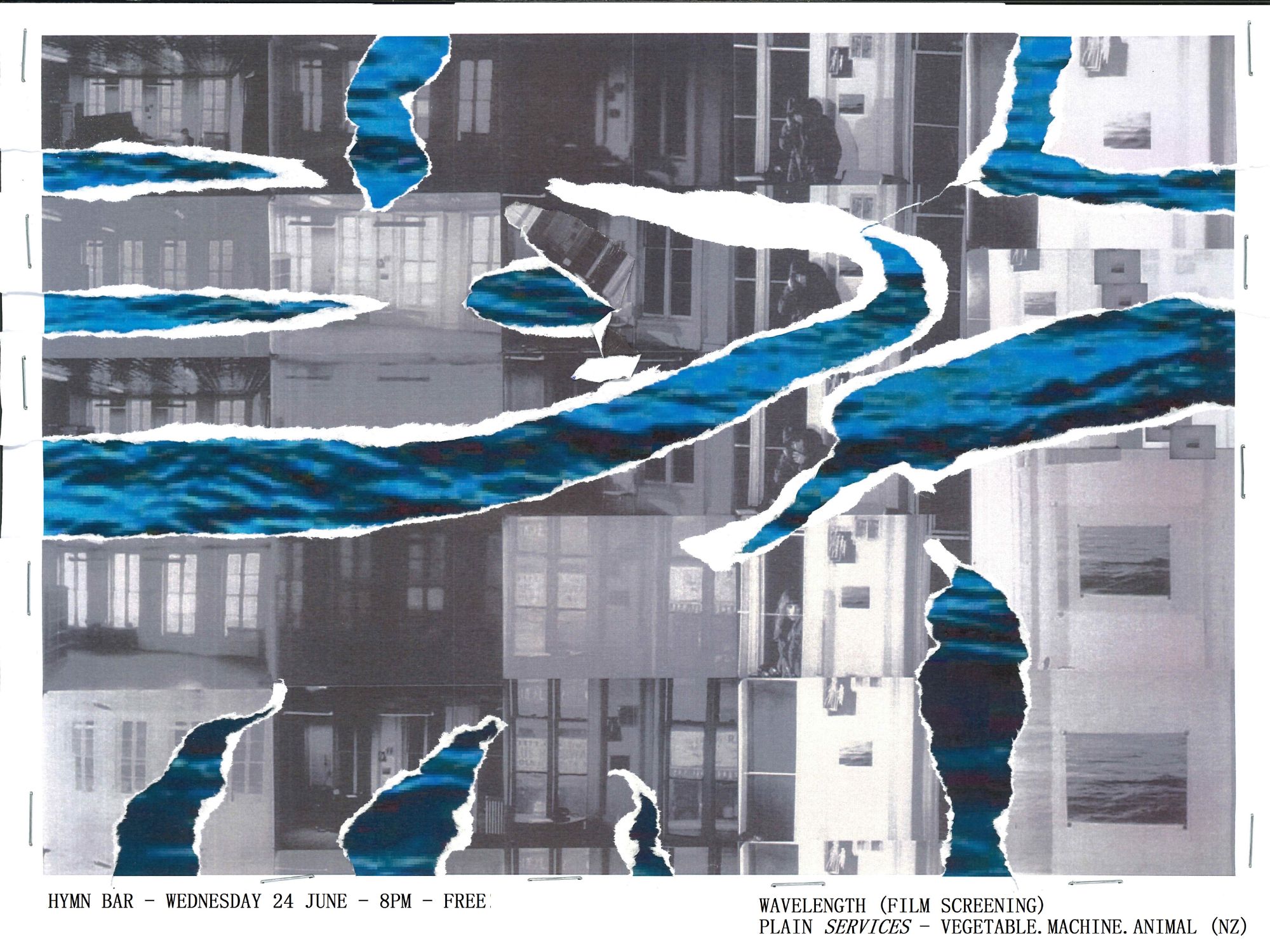
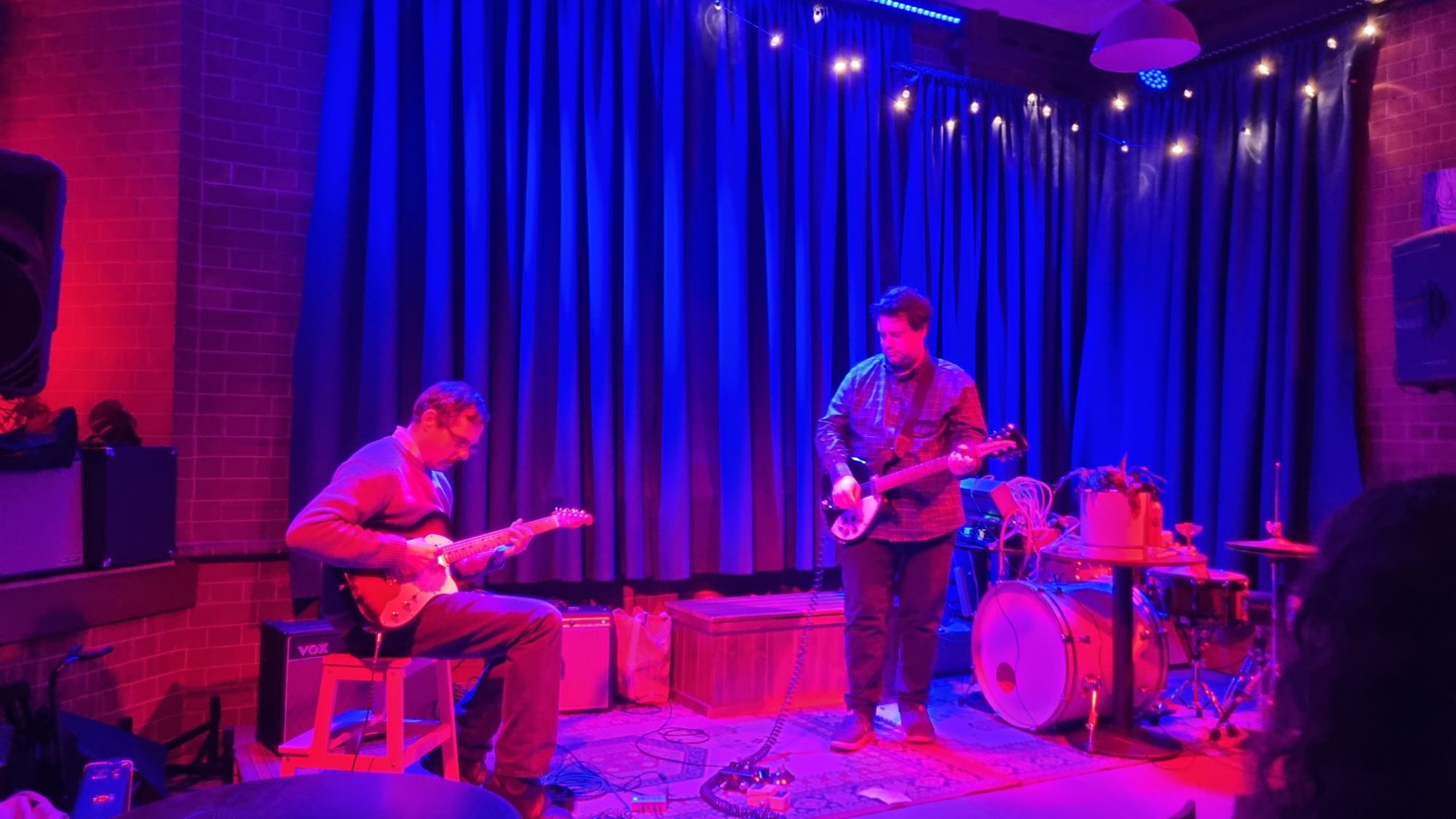
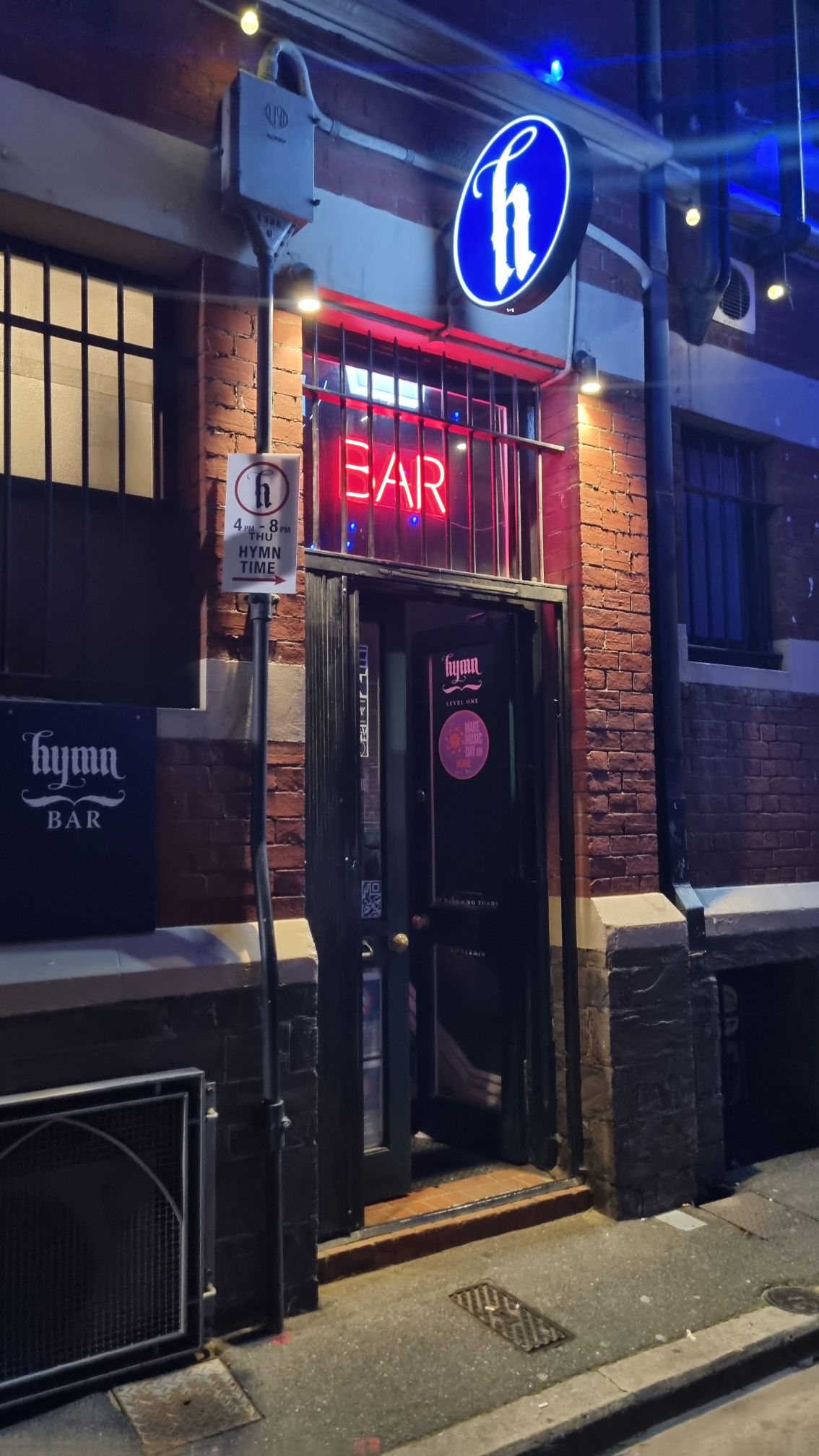
The first event for the week is at the beautiful Hymn Bar. At first I thought it was a tiny church, but the owner says it was built over 100 years ago as a bible school. There will be none of that business here this evening. The first act is Plain Services, a duo of instrumental guitars, whose original compositions often felt curiously cut short. A soundworld was established and then most often swiftly terminated — more like glimpses of landscapes from a train’s window than the contemplations from a bench somewhere. It actually had a refreshing aspect to it. My set followed and was perhaps more akin to a train’s rolling somersault down a hillside somewhere. Alongside this tumult though, I have recently been exploring establishing a section in the set aiming to keep playing to the quietest volume physically possible. I really like the sense of sitting up there, making the softest sounds I can, and sensing the room listening intently.
The third act was a film screening hosted by Moviejuice; they projected the film Wavelength by the Canadian, and apparently quite notable, filmmaker Michael Snow. It was a long, slow, increasingly tense and claustrophobic film set in a single location — a room overlooking a road somewhere, sometime in the ’60s, with the focus becoming ever tighter on an image of the far wall. The local curators had obtained a version on 16mm.
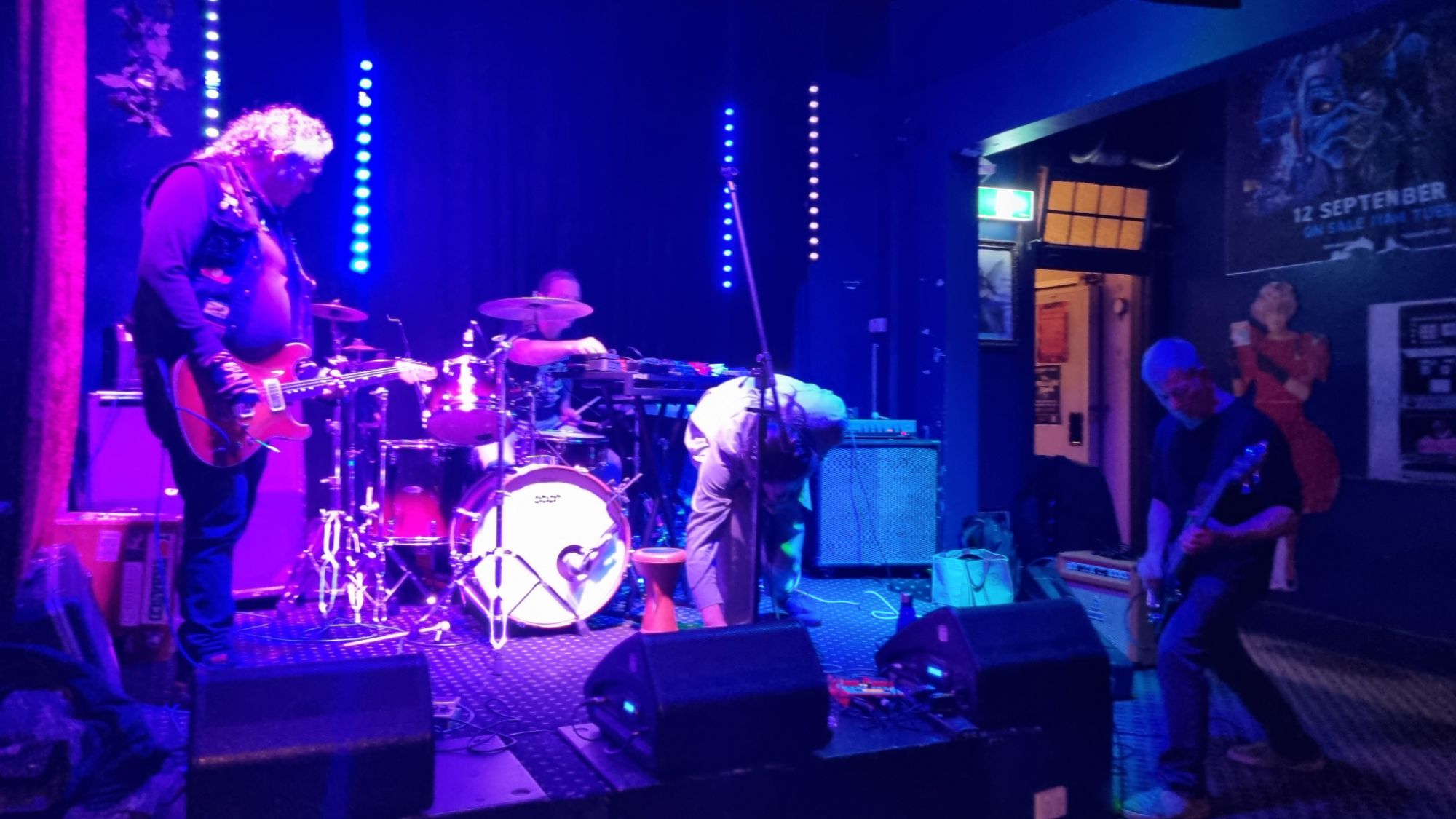
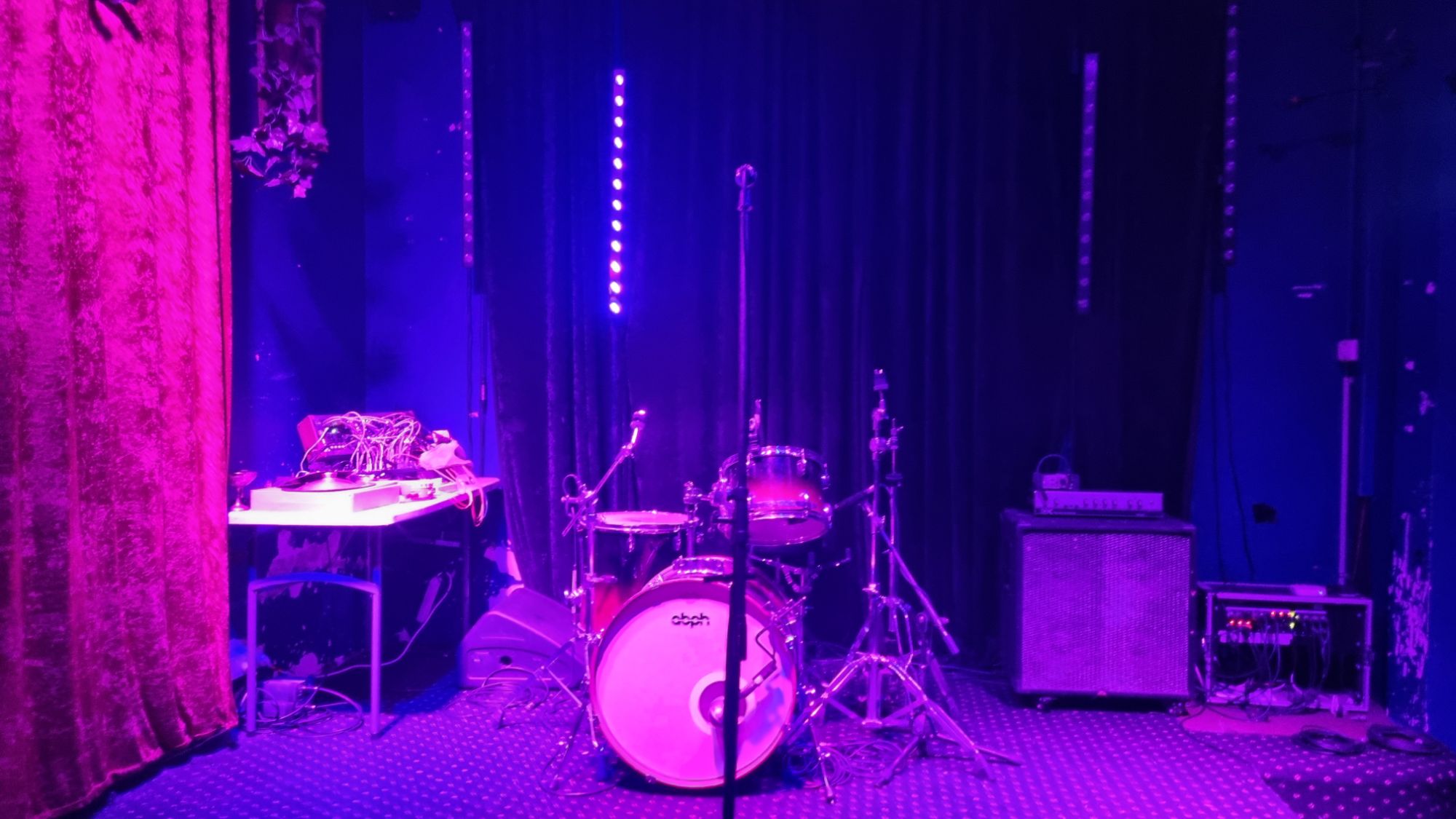
First up is Les Voltiguers, a maximalist four-piece rock band. Unrelenting hints of grindcore, Boredoms, Nomeansno — hefty riffs and heavy toms — but also some unexpected sonic deviations into quieter (but not quiet) passages when conventional instruments are sidelined for gongs, electric mbira, and darbouka. Following this was Minimax, a duo of guitar, laptop, and saxophone. A long-form piece that seemed part composition, part improvisation. There were prerecorded elements, alongside some processing which I couldn’t quite figure out. A cinematic set. I play third.
Two candle holders, made in India, found their way to Newcastle. Across the seas and time they have traveled, to illuminate family rituals and to relieve the frightened from blackouts. Somehow, they became abandoned to the purgatory of a secondhand shop’s shelf. I bought them for the difference in tones between the two brass bells.
I put my contact mic on the base to amplify the resonance, but somewhere along the line, I abused the mic to the point of destruction. There is more static than bell. Regretfully this time, I abandon the candle holders to some future event.
Kick the switch, and four channels, all sound, eject in volume for the P.A. I accompany, torrential, with maximum metal and skin. I have a handmade Wuhan China cymbal at hand. If I time it right, in the tumbling of drums, I can grab it by the collar and slam it into the skin of the floor tom. Upon impact, while raising the cymbal into the air, I simultaneously silence the synth. With the electronics silenced, the metallic acoustic resonance hangs above the audience. Repeat.
Attention has been gathered. I change direction and reduce the ruckus to a single line of bass tones, gated by the voltage of the venue’s only living plant. The quality of the signal determines when and what we hear. I try to match pattern for pattern, always playing catch-up with nature.
The plant was almost denied inclusion into the trio — the bartender declined my request to include the plant in my set, saying that he didn’t know me, or what I would do with it, and that it had taken some substantial effort to keep it as healthy and alive as it was. I had to respect that position, though I must admit I was a bit frustrated. I went in search of a plan B. Twenty minutes later, he made his way around to the stage. Through some process, he had changed his mind, saying the plant could participate if no other option arrived. My mind had changed in that time as well. I shifted from irritation to respect once I realized that what he was doing was being the plant’s protector, caring for its wellbeing in this unexpected moment of uncertainty.
No other option arrived, and the precious plant took the stage.
Typically, though, plants in pubs don’t tend to be the healthiest of specimens. Many bars have none at all, or maybe provide the theatre of greenery by installing plastic doppelgangers into the intoxicated gardens of the mind. Even more rare, I assume, are serious conversations about the health of those sun-starved tenants in the pubs environment.
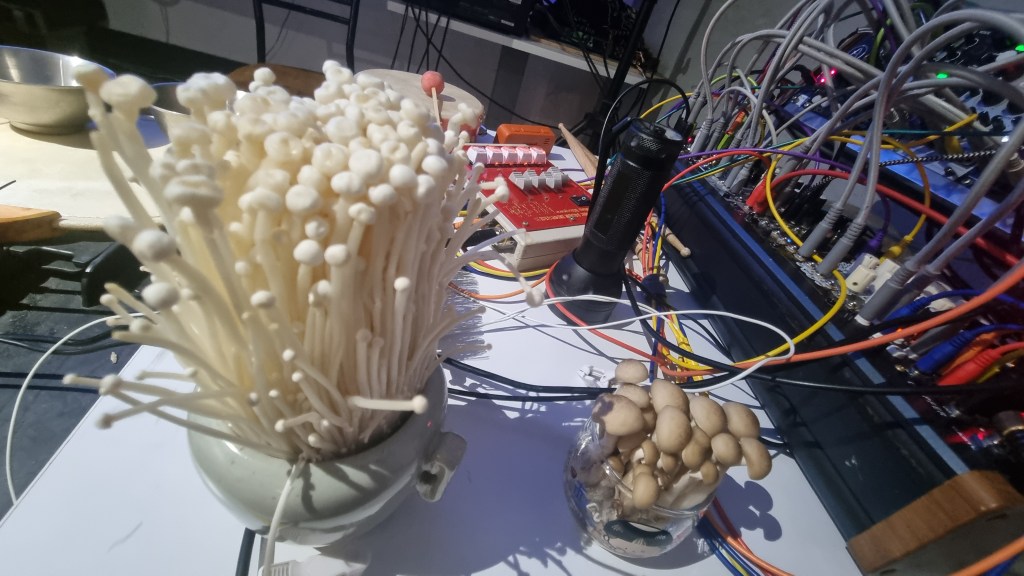
I wonder, sometimes, if the inclusion of plants and fungi in a performance such as mine shifts the perspective a little. Their live-ness is audible. Their presence is made known. The silence is broken. Interaction is observable. They are alive.
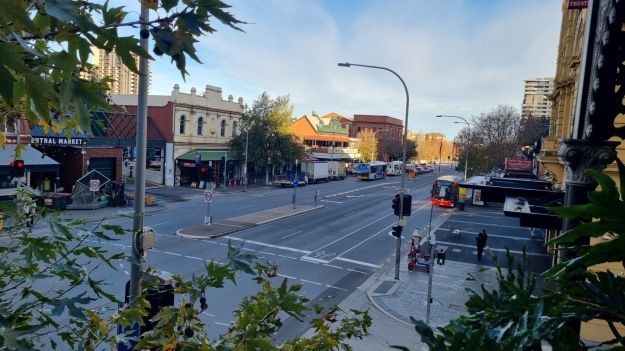
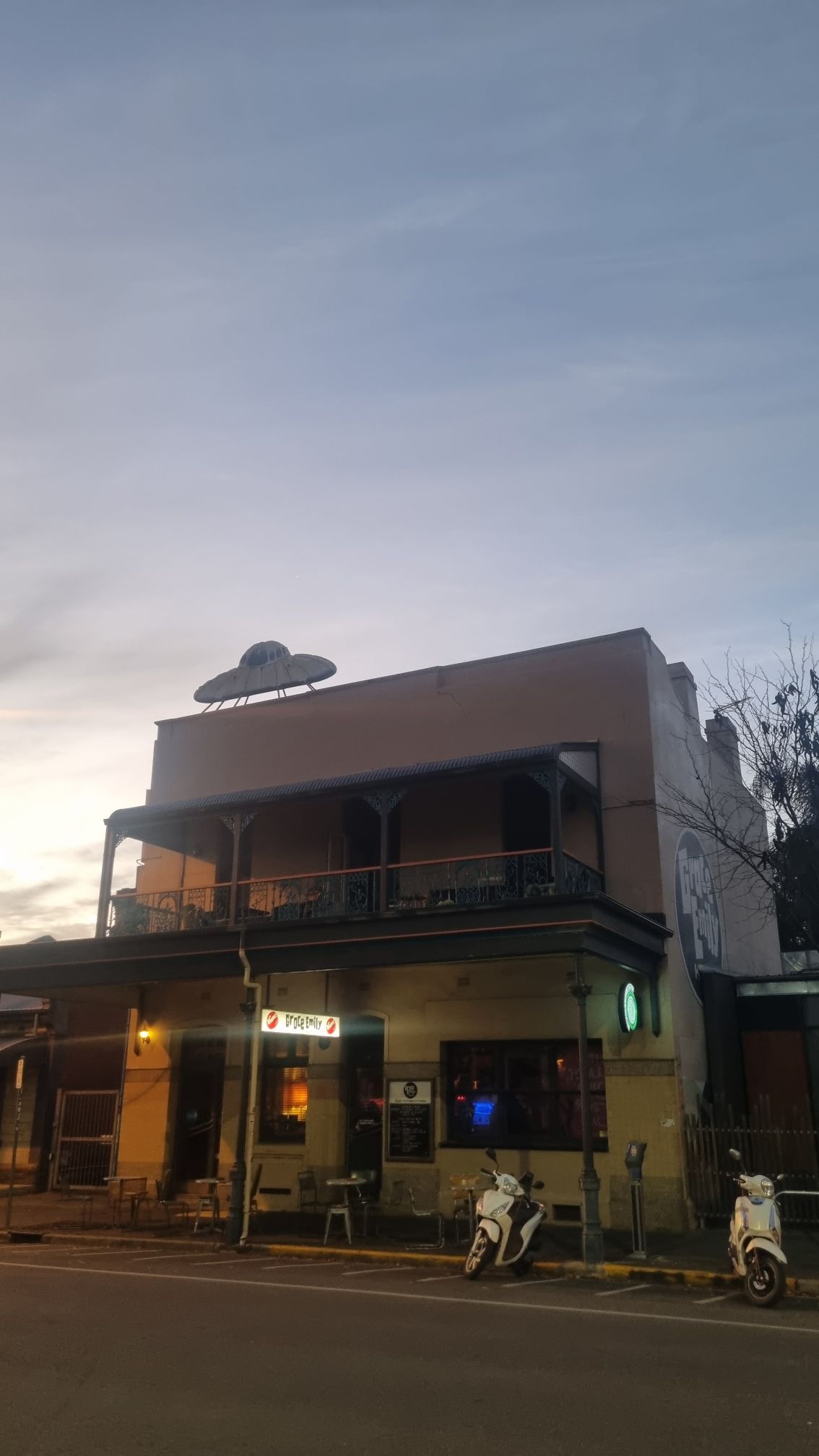
I like Adelaide. It’s a city that seems to lack pretension. It feels like a city centre that is for living in, rather than modelled around looking good for Instagram posts. The diverse cross-section of Adelaide life, and population, always seems ever-present. There’s a good number of places serving up delicious Indonesian cuisine. And I love the numerous and ever-unfolding alleyways that weave throughout the inner city. I’d come back here.
Mon: Dawn opens her orange eyes as I walk the colourless rise to a stop where a bus will, hopefully, whisk me away. I leave muwinina Land / Hobart, and aim, once again, for Wurundjeri Woi Wurrung Land / Melbourne.
There’s a wonderful dose of extra confidence in returning to a once-visited city. A sense of fresh familiarity and competence in navigating public transport, recognising landmarks, and feeling a little less novice than those first times around. I head to the suburb of Fitzroy and set up camp at The Nunnery, a beautiful old building next door to schools of certain religious denominations. The building’s been repurposed into accommodation for travellers, mostly young. Perhaps this is also the first time away from home, I’m guessing this from the substantial mess they leave for the cleaners each morning, and many seem to be earning a buck as Uber drivers, as evidence by the collection of scooters huddled around the front doorway. It’s $40 for a bunk bed and $140 for a single room; I choose the former and settle in on the bottom bed as a troll under the bridge might do. I very much feel like the old man of the manor in this place. But this is not a week for declining ability; it is to be my busiest week. With the MONA show complete, I feel as if I have crossed some psychological hill. The booking was the catalytic reason for the tour, and possibly the show with the most apprehension attached — it’s certainly one of the swankiest venues I’ve ever played. A sense of “phew” now settles, as it does similarly to any hair-raising, cliff-edge drive once the precipitous moments have passed, and a flat open road stretches out in front.
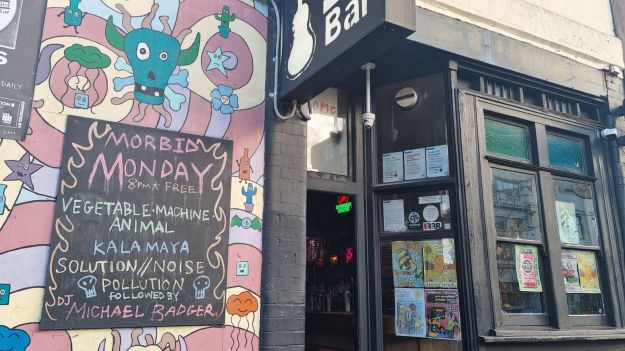
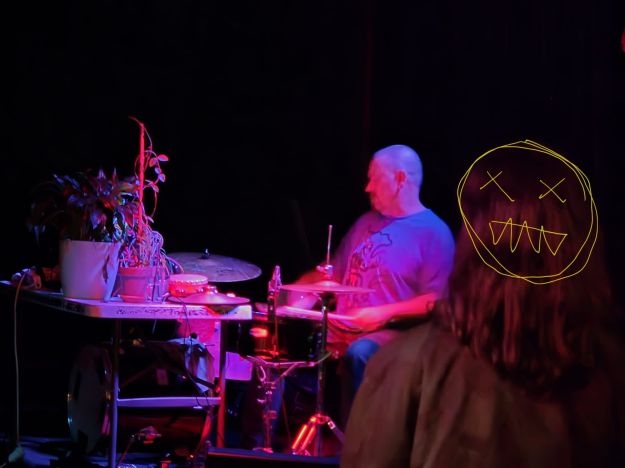
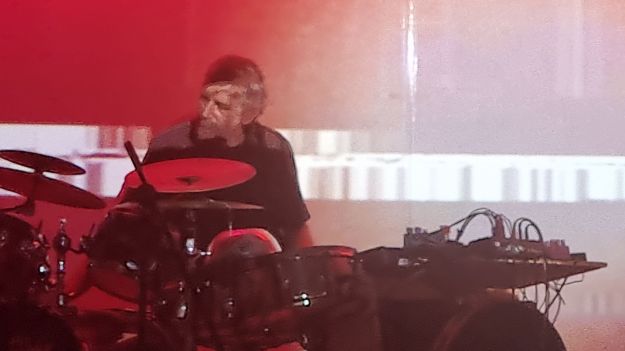
But not for long. The first show is Monday night; the event is Morbid Mondays, at The Old Bar, a handy 10-minute walk from my digs. A venue whose flooring is notorious for its stickiness – I suspect the velcro-effect is from years of spilled drinks onto the once-upon-a-time carpet. Solution // Noise Pollution is the first act. Solo drumming with an accompanying film, sound included. An excellent use of tech, and a compelling performance. Kalamaya return, last seen at the Geelong show, and deliver a much more amped performance this evening. I really enjoyed hearing them level up with so much more assertion. I play third and deliver what I think is, even as I write this, possibly the best performance to date. It was just one of those shows where everything aimed for landed as hoped; there were no tech problems, the sound was great, the pub was full, and that reciprocal energy helps ratchet up the exchange.
The next day is admin and washing day. During the day I am contacted by Cher Tan, who was at the previous evening’s show, and asks if I am keen on playing another show on the Wednesday night? Yes, is my reply, of course. The details reveal themselves eventually. The venue will be Footscray Records, a small shop located two tram lines away from Fitzroy.
Wed: The record shop is delightfully cramped, and bursting with curiosities that I’d love to take home. My ability to buy, though, is limited by two main factors. The first is the weight limitation on my flight cases; I need to be extra considered about the weight of any purchase. The complications of me getting too excited and pushing the weight of my case over the allowed limit is an expensive complication I am motivated to avoid. The second is simply available cash. I have tried to be as attentive to minimising costs while travelling, using hard cash made from shows rather than using the credit card. An unforeseen learning from this trip has been the increasingly normal use of digital payments for tickets and merch purchases. I had anticipated more hard currency, but the reality has changed in the past few years, especially since Covid. I have needed to rapidly discover ways of receiving payments after the event; my main tool at the moment is a Wise account. But there’s no real clear and easy way, at least to me, of doing digital payments for merch at shows.
I am the only act. People huddle around the record bins, looking from whatever vantage point they can secure. It all feels close and cosy, and delightfully ludicrous. The shop’s plants are a little under-attended too, poorly, if the truth be told. So a couple of guys, with the appearance of grindcore fans, head off to a local pub to see if we can borrow a healthy specimen for the show. They return with arms full of foliage, and with leaves full of voltage.
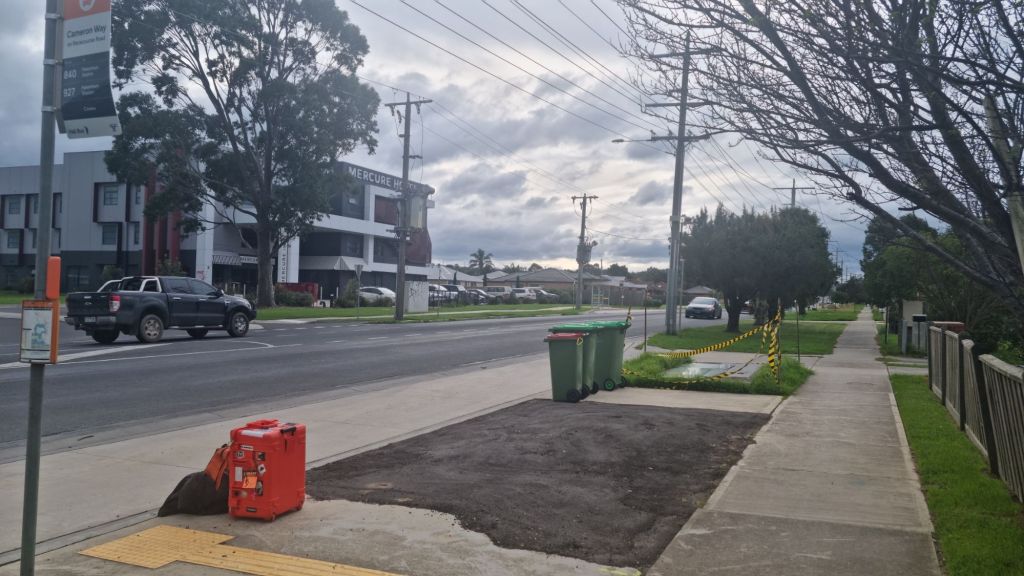
Thu: When I’ve told people I’m going to play in Cowes, on Millowl / Philip Island, they seemed genuinely surprised, or bemused. It appears that it is not a place that features highly on anyone’s touring schedule. To fulfil this claim though, I must first get there. The island is seven hours, by public transport, south east of Melbourne. This intrepid exploration starts first on a tram to Flinders Station, then train to Pakenham. I follow Google Maps’ advice and walk the 15 minutes to the bus stop to Cowes, of which only the name is displayed, with no time. A bloke strolls up and waits for a different bus. I find out from him that it seems pretty uncertain that any bus will take me where I want to go from this stop. He leaves. I recheck Google and it now provides another location, 8 minutes by car, and leaving in 10 minutes. I scan Uber and think about trying to make a dash for the newly suggested departure spot. I am definitely feeling a sinking sense of impending disappointment. Then, like an ancient myth, salvation comes out of the fog, except the day was clear but overcast, a bus approaches. Perhaps the deity of the bus stop heard my cursing and looked kindly upon such a sad whelp, and whispered into existence this miracle. The bus driver was more taciturn; he told me no buses, from any stops, went to where I wanted to go, and that I needed to return to the station. I went to gather up my gear and walk at the briskest pace back to the station, when the driver offered his final, and informative, missive: “Are you going to get on?” Its destination is the station! The stationmaster took some moments to establish whether any more vehicles were running that day, but delivered the short answer of “yes”. Cinderella shall go to Cowes.
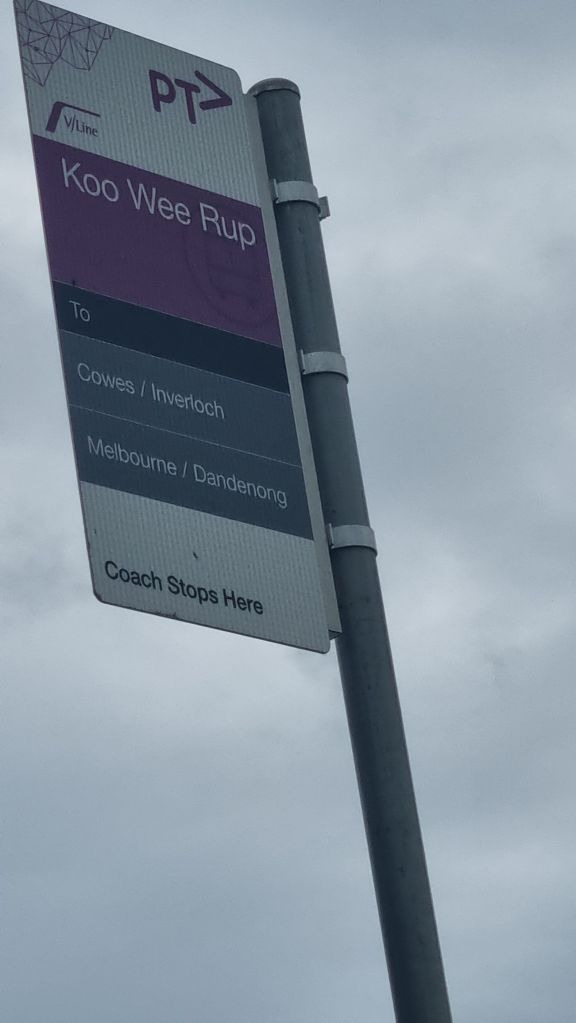
I wait 30 minutes for the first bus to Koo Wee Rup. From there I wait in the cold, for an hour, for the second coach to Cowes. Further adding evidence to my lucky streak, the driver lets me on for free, and delivers me into the dark, cold, and now foggy, night of the invisible town of Cowes. The venue is a five-minute walk, and I walk into the warmth of Bar 151.
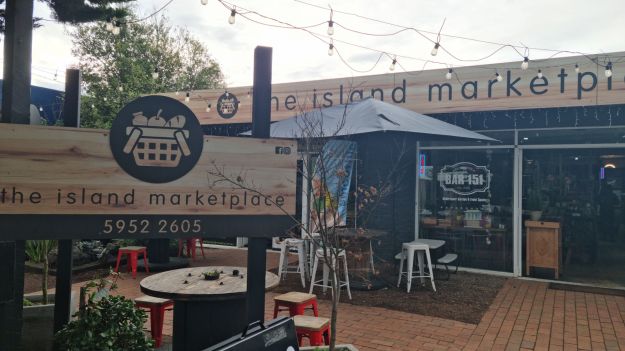
Rustic is an apt description; a once-upon-a-time outdoor space is converted and covered, there’s a roaring fire to welcome all in. It’s a coastal village, population around 7k, and a combination of money from tourism, holiday homes from Melburnians, alongside a darker edge of the types who might seek to disappear from the mainstream. It’s a contrasting community. But the crowd in the bar are sweet! Interested, enthused, curious, and super-friendly. First act is JC; he plays a solo bass set, a freeform noise set via an Acca/Dacca filter, not reliant on too many pedals or heaps of effects. It was a beaut set of crackles and rumbles. I could have listened to so much more. RuinScapes are next, Sam on drums (the show organiser) and a guitarist. And I love acts like this, genuinely. There is a beautiful phenomenon that exists on the periphery of these kinds of music, where able-bodied individuals make spaces, in a non-patronising or deficit-focused way, for people with other abilities or who might need some additional support in certain areas of their lives. It’s a genuine approach that anyone can make music, it’s all valid, and sound making is an art form that can include everybody. MNNQNPNTS’D is third, delivering a squelchy, collaged soundworld that brings to mind many of my favourite musical weirdos. That’s a fine three-for-three I have to follow, and I feel really privileged to bring my show into this community.
The venue also needs a mention. On this single site, I am told there’s maybe up to 10 small businesses: the bar, a tattoo shop, a Philippine supermarket, a store of plants and crafts, and out the front, a coffee caravan. They are all locals, who seem to have self-organised their efforts into this one endeavour. A self-initiated marketplace in which each benefits the other. As opposed to other “marketplaces” in which landlords extract a rent for a space; stalls stand side by side, but they generally feel like a collection of producers, rather than a cohesive expression of community.
The next morning we swim in the sea before the sun comes up, have breakfast, and I leave, travelling back across land, aiming for tonight’s show at Trash Cult in Bendigo.
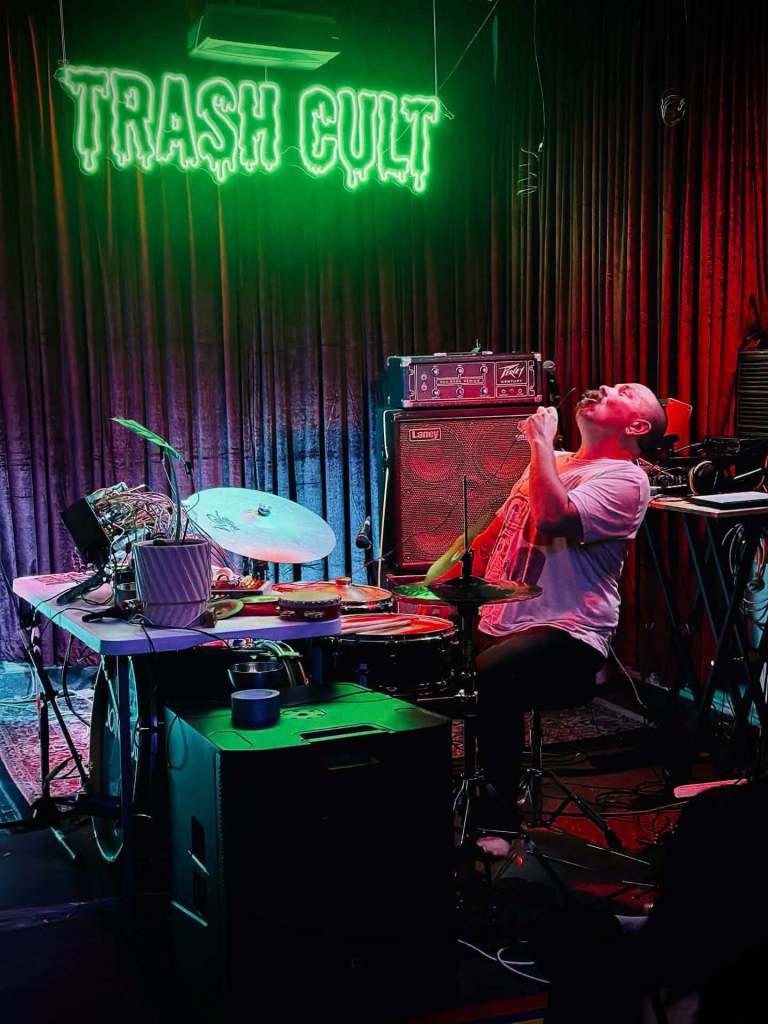
And what a record shop Trash Cult is! So much goodness all wrapped up into one place. It’s also a bar, and a venue. It’s run by Lorelle and Mike, warm, accommodating, and genuinely enthusiastic music nuts. A snug venue that packs a punch well above its weight. Tube Failure was the first of three acts, it included bar operator Mike, and two others. I’m told that seeing Mike play live is a rare and special thing. It is a cacophonous collage of sounds emitting from three middle-aged men huddled over three laptops – it makes me think of the Weird Sisters of Macbeth, but tonight it’s the Weird Misters. Wasp Dope follows and is a maximalist barrage of modular and other electronics; the subs were pushed to their limits for this. At times like an asphyxiating dub, any breathing space available was stuffed with sound and volume. And then there’s my turn. I’ll leave this video here, generously made by Megumie Alcala, capturing the evening in such cinematic fashion.
Sat: The last show in this block is in Castlemaine, an hour from Bendigo. And if I count back from playing MONA last Saturday, this will be the sixth show inclusive of Hobart. And quite some miles have been travelled in that time as well. It’s certainly been a week of maximum exertion. Oni Streetwear is the venue for the show, and it’s a mid-afternoon gig, starting around 4pm. Oni seems to be a small business, selling bespoke clothing, a screen printing setup out the back, a small gallery for exhibition purposes, and also hosts opportunities for young people to come in and experience creativity in other formats. I’m told the shop used to be the old toy store, it seems like a comfortable historical fit for today. Rex Maximus opens the event, playing an electronic set of arpeggiated patterns which mutate into a luscious field of drone, warm and enveloping. I wrap up the afternoon, blowing bubbles, jittering metal chopsticks, flipping cymbals and other techniques I’ve learned in the world of classical drumming. The beauty of afternoon shows is that we are home for tea and rest. Sunday is slow. Walks in the woods where we discuss tiny sundews, the exotic kangaroo, the existence of the pobblebonks, and living with fire. The day closes with an overnight bus trip to Adelaide.
He sits there, preparing breakfast in the sun. The wall of the house is the back of his chair; his seat is the asphalt. Snow White bread balances at a challenging mathematical angle. The strawberry jam is thick, gelatinous, as easy to smear as a jellyfish, or a liberated viscous organ; it is clotted and resistant to reduction. I can see his thumbnail through the tram window, long and ending as the blunt end of a butter knife might. Appropriate, as the thumb is his only utensil available for sandwich construction. The clot is distributed across the surface with an awkward dexterity. That shit is sticky. The knuckle looks arthritic, aged, impractical for the privileged evenness that correct spreading requires. It will do.
I am on Wurundjeri Woi Wurrung Land, otherwise known as Melbourne. A taxi ride transported me across the city to where I’m to stay, a co-living hotel. It’s an interesting place, a multi-level complex that aims to create some sort of community atmosphere, hosting regular communal events and activities. I can’t make my mind up as to whether it’s a distasteful way to monetize the communal experience, or a thoughtful way to decrease alienation and disconnection for the people who are living semi-permanently in the complex anyway. Maybe it’s both.
Three days of rests, repairs, and admin. The Monday is a write-off after the overnight transit; I arrived in the city just after 7am. The next day is slightly more enlivened. That evening, I learn to ride the trams. A wonderful form of transport that warms up the sound world with bells, a hefty bass rumble, and a hushed track-clatter. I go to Bar Open.
People just meander from the path to the side of the tram; all traffic stops. I don’t see any wheeled vehicle cutting through on the inside; for a moment the road is pedestrian. Back home, people get apoplectic at the installing of bicycle lanes; I can only just imagine how beetrooted their complexion would become at such liberal movement on such precious roads.
The Make It Up Club is a local institution, running now into its 28th year, a weekly experimental music event held every Tuesday at Bar Open in Fitzroy. We’ve played here a couple of times, the last being 15 years ago, and unfortunately couldn’t make it work for this trip. But to not attend while here would be remiss, and it was truly worth the effort. Headlining is Kae Takahashi on solo bass, fully immersive, unrestrained, and bombastic, interwoven with a Butoh-styled stillness. Impressive.
More wonderful and unexpected was the reconnection with Cher Tan. Cher organised a show for us in Singapore 20 years ago, and here she was playing a noise set with Pete, an equally welcoming and interesting cat. There were other reconnections, people from across the years, whose paths we’d both crossed at some point in the past. It made the night quite special.
Cher was playing the next day at The Last Chance with their Gameboy/grindcore band ESP Mayhem. A mighty fierce and intense five-piece, three on keyboards, a monster of a drummer, and Cher on a microphone. Blistering. This was followed by another set from Kae, more compelling than the night before. If I were to choose between the two nights, then this one takes priority, it was just more of everything!
The day before I leave for the Wadawurrung Land / Geelong show, I hear that one of the other band’s members has received an injury, and are no longer able to play. Snatching success from the jaws of defeat, two acts step up and into the spot made available on the stage; the show goes on.
The journey is straightforward, as is the settling into that evening’s digs. The venue is a simple five-minute walk away and is Medusa Bar, a beautiful brick longhouse down the end of an alleyway. First up is The Grimwoods, delivering sophisticated pop tunes, a delightful combination of HoodooGurus meets Talking Heads. Next is KalaMaya, who traveled down, especially from Melbourne, to play. A duo of one producing electronic beats, textures, and one skilled drummer! A crackle of tension and release, it’s an improvised set that winds its way to completion. I follow, messing up the stage in the way that I do best. Sometimes, when you finish, you get a sense that what you aim for doesn’t really land. That was my feeling this evening. Yet these things aren’t worth talking about afterwards to the people who genuinely enjoyed what they saw. Brains lie (as in personal reflection), and it’s not my place to compare my notes with others. It is good enough to trust them.
Friday is big travel. I start at Geelong and end at muwinina Land / Hobart. It is this show that kicked off the entire tour. Earlier in the year, I fired off an introductory email to MONA, roughly saying, “This is what I do, maybe it might interest your gallery?” Several months later, I received an email with an invitation to play as part of their regular programme. MONA also run the festival DARK MOFO, and that is happening simultaneously.
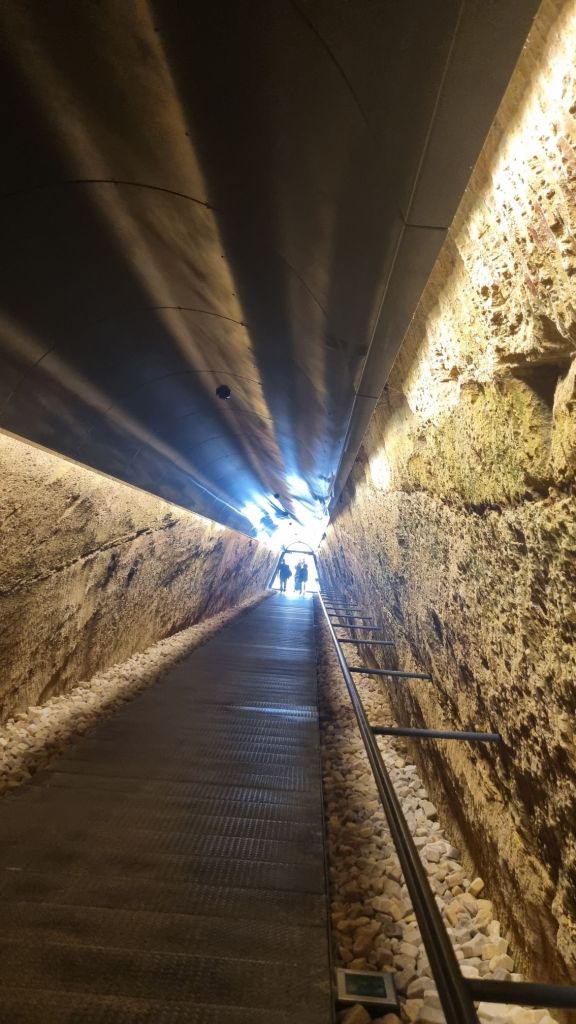
I travel to MONA by ferry, a stunning way to start the day, and it’s my first chance to see the actual landscape of the city, as I arrived in the dark last night. Hills and houses are the scarf that wraps around the neck of this harbour. Arriving at the pier, I am directed into a long tunnel that takes me into the heart of the hill onto which the gallery is built. I’m early, so the gear goes into storage, and I have 90 minutes to explore.
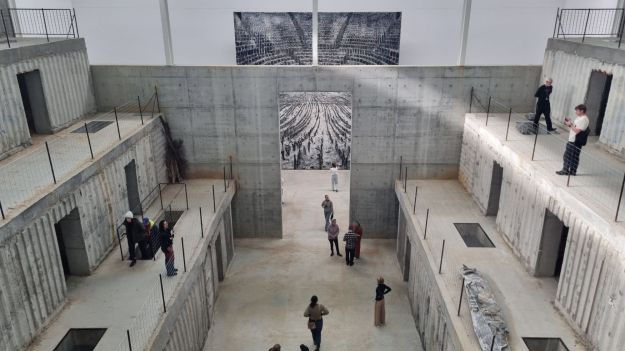
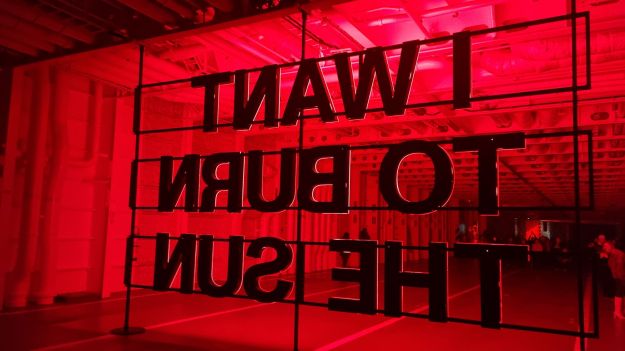
There’s a lot to take in. It feels sprawling, and disorientation finds me quicker than I find my bearings – a room that contained ever-smaller rooms, a library with walls of blank white-paged books, a reflective pool of oil, more tunnels that thunder with drones, and a most magnificent space that hosts works by the German artist Anselm Kiefer. Truly breathtaking in scale, paintings bigger than buildings. It is the most satisfying display to take in as my viewing time runs out.
The stage is prepared, the plants have arrived, and I assemble the equipment in the container to present my offering to the audience on the lawn. The space though feels transient, a venue in between locations. I make a point to be as open as I can, lock eyes, and ensure contact. And people remain. I’m even able to coax folk into the spare space on the stage to dance as they feel appropriate, and they do. The whole time, the sky is heavy, spittle from the clouds hints at a downpour. I finish with perfect timing — two minutes later, the sky opens in full saturation. Post-show there’s no natural space to mingle with those that saw me play, but now on the ferry home a few people make the connection and we chat in the half light.
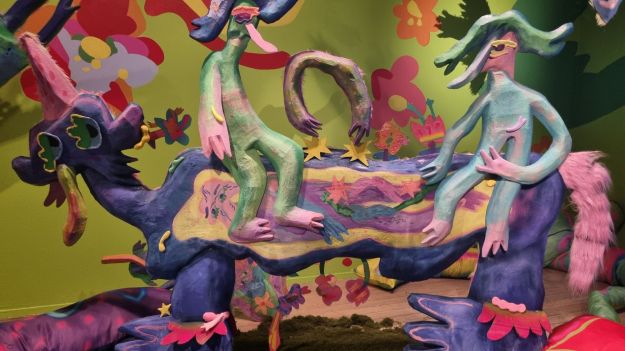
Next day, the first task is washing. I am travelling with very few options, and it’s important to remain on top of the basic domestics. During the arvo, I take a walk to explore the free exhibits on the DARK MOFO program scattered around the city. My favourite is Trunkman, by Xiyue Cici Zhang. A show that is the polar opposite of DARK MOFO and MONA’s Gothic, edgy aesthetic. Zhang’s work is bright, playful, speculative in vision, and considers a future somewhere different from the dystopia we’re constantly told to expect in stories. It is a vision of a future being, part human, part plant, part something quite unpredictable and unknowable. There is not a hint of cynicism in the show. This is the sort of art I want to head towards.
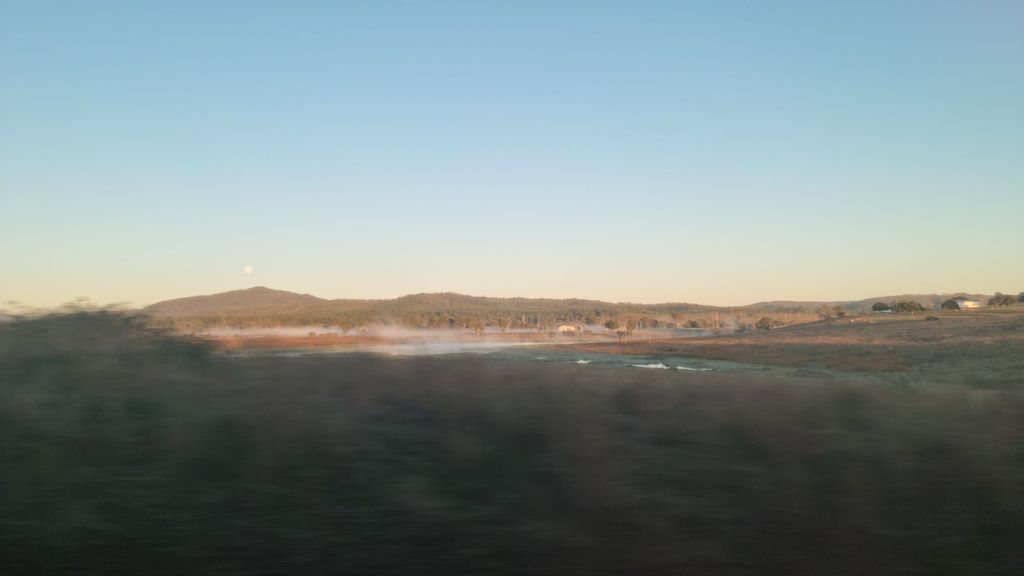
From a rolling window, the view goes all the way to the Moon. It is so full of itself, I watch it settle down for the day, encouraging the Sun up in the opposing direction. There’s horizons to the left and right, I feel as if I am wearing the space travelers as earrings. Terrestrial mist lifts as our rock turns towards the light. Night is replaced by long, shadowed fingers stretching out in awakeness.
This train is southbound to Newcastle, Australia.
———
One round of a week has passed, from Monday to Monday on the TRIO tour of the southern landmass. It’s taken this long to find this time to write.
It’s not uncommon, at the start of a major project, to have feelings that ricochet from exuberant enthusiasm to wobbly confidence. The greater the wait, the bigger the swing. So it’s fortunate then that my first show is on the first night after the first full day. Distraction redirects worry, focus is found, there’s work to do, and months of preparation and planning are now converted to action.
Show number one is at the Cave Inn Experimental music night, in downtown Brisbane. The Inn is a pizza & beer joint in what seems like a semi-industrial section of the cities CBD. I do not think many come here by accident. Arrival is intentional. It is a trans-welcoming space in an area of panel and paint shops.
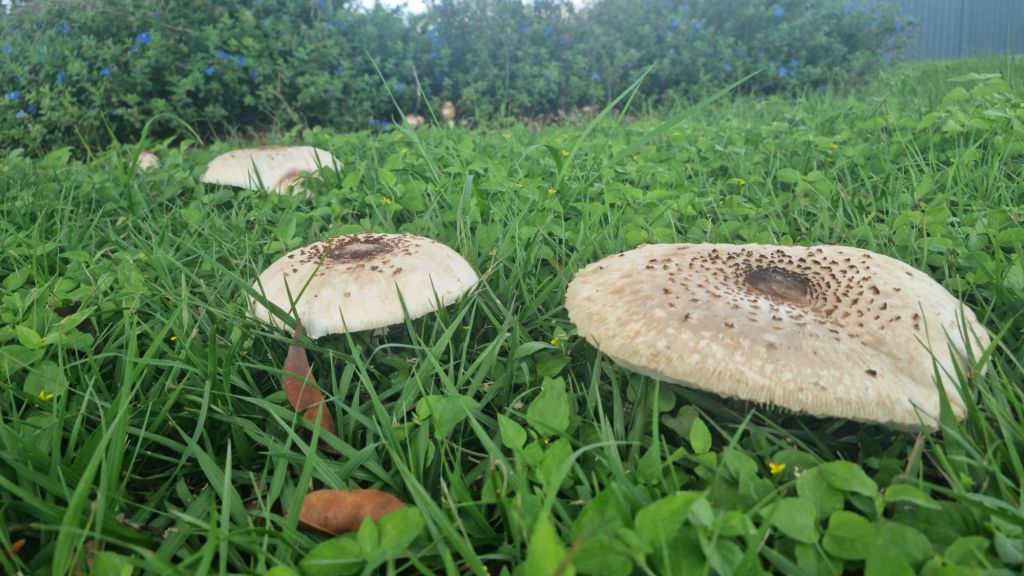
The audience is hearty and attentive. I play first in a choice to bookend the evenings drummers at each end of the show. It’s a good first performance, cauterising any persisting doubts I may have entertained earlier. I have a freshly plucked mushroom from a roundabout in Tingalpa as a bandmate, and it certainly brought the magic. The second act is solo, leaving me with the impression of J-Pop-with-guitar-solos-by-The-Shaggs; the final act is a jazz-metal trio from Sydney, sax/gat/drums, they have made a massive road trip just for this night. They are robust, tight, and forthright. Tomorrow they make the return trip.
———
I have no idea what shape the city takes. This bus could simply be traveling the insides of the belly of a glowworm cave for all I know. The streetlights dispense tight conical brightness, and the blackest scarf of night sits upon the lamp poles’ shoulders. I see the inverse silhouette of houses, evidence of our arrival into habitation, floating rectangles of illuminated glass, and lace in this black and wet night. This is Lismore, the destination for this bus, and my show. It seems to be a city of water and thunder.
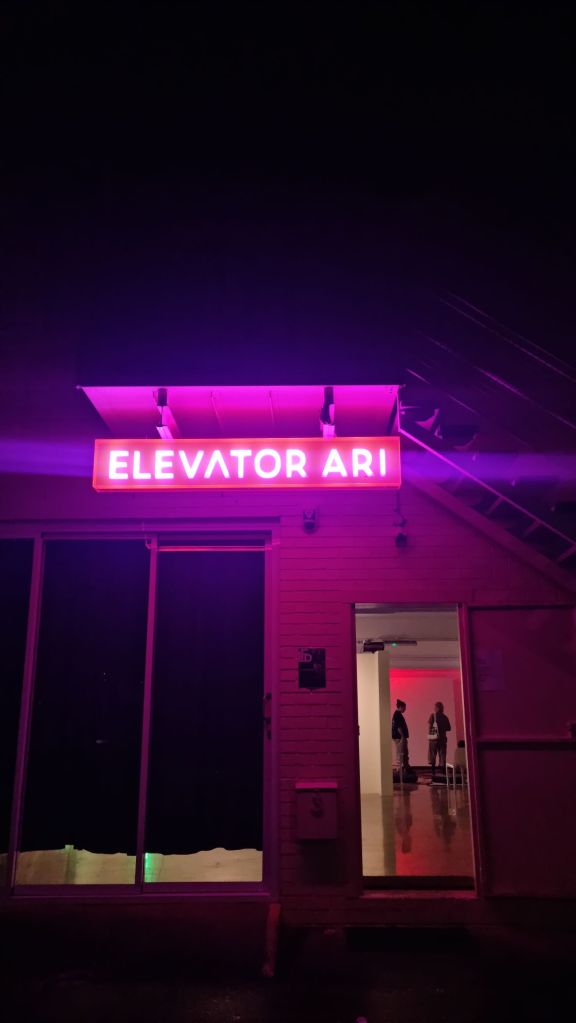
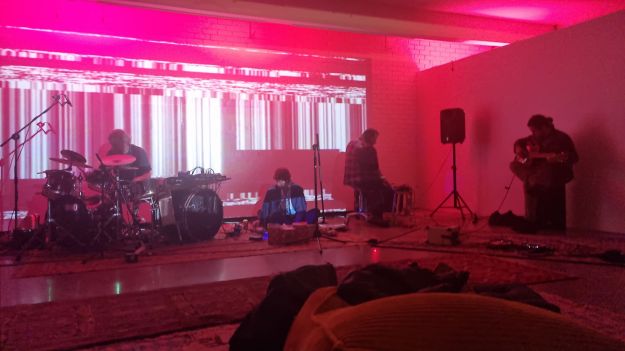
I am collected by Michael, and swiftly enfolded into the lovely creative community that circulates the venue/gallery Elevator ARI. People gather into chairs and cushions as the first act, Noise xhurxh, assembles. It’s an open invite band. A message is sent into the ether, or at least a chatroom, announcing a show – who then turns up is who turns up, that is the band for the night. There are a collection of acoustic and electronic instruments, and the boundary of stage/audience is broken when one of the performers shares his electronic machinery with this watching audience. The watcher becomes performer. The P.A funnels hums, glitches, effected voices, drums punctuate and rattle inside it all – it sounds perplexingly Australian.
Can we call Noise xhurxh a community project? I think so. But something like this is made more possible by having regular, welcoming, and dependable access to a space – that space is Elevator ARI. The venue/gallery has been functioning for a number of years now. It was drowned in a massive deluge several years ago but has been reactivated with funding, enabling the installation of measures to enhance its flood resilience as protection into the future. Surely, this provides security and stability of space for the community who utilise it. I hope it is unlikely, with that sort of civic investment, that the doors are going to shut any time soon, at least by political administrative means, places like this are essential.
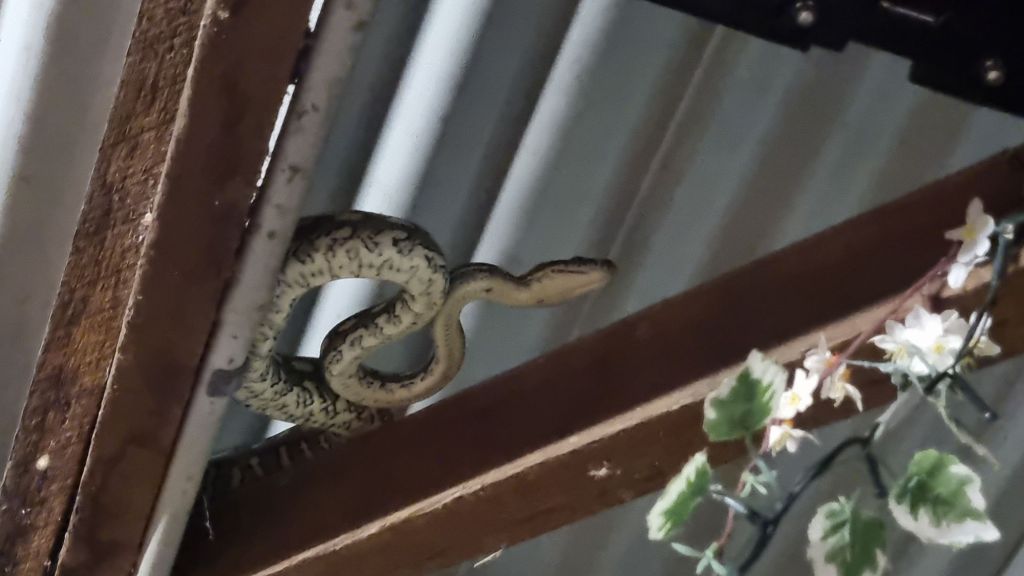
After the show I camp out in a studio/shed, I have a short sleep. I am introduced to a digesting, and wild, carpet python living, currently, in the overhead beams of the shed. I’m told it’s safe. I don’t think I’m worried, I’ve just never spent a night with one. I later discover that the main impediment to sleep is a crowd of hungry mosquito, but eventually it must become too cold and they disperse. I sleep four hours and then catch a the early Thursday morning shuttle-bus back to Brisbane.
I’m transported away, the city still holding tight the cloak of invisibility, this time it’s a tangled shawl of fog, cloud, and dawn.
— — —
Photo by Ben Shannon
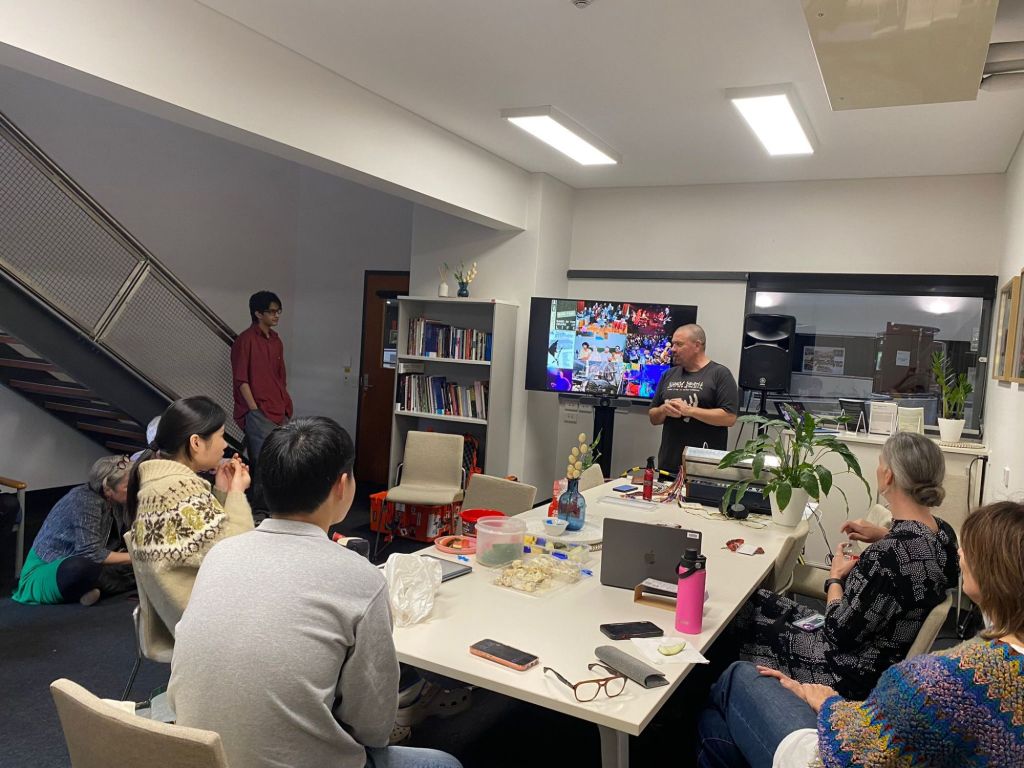
I return to the city to present an ‘Introduction to vegetable.machine.animal’ to PhD. students at the Queensland Conservatory mid-afternoon. I follow on after a fascinating presentation from Sami performer, Hilda Landsman. At times, concepts from my work mingle alongside ideas she discussed, yet at other moments in the discussion, I point out that I think my work is aimed more at ‘western’ cultural perspectives – in that I mean that there are many examples of Indigenous cultures who have expressions of human life inextricably intertwined with the non-human. I reflect on my personal cultural background – that concept has been a void.
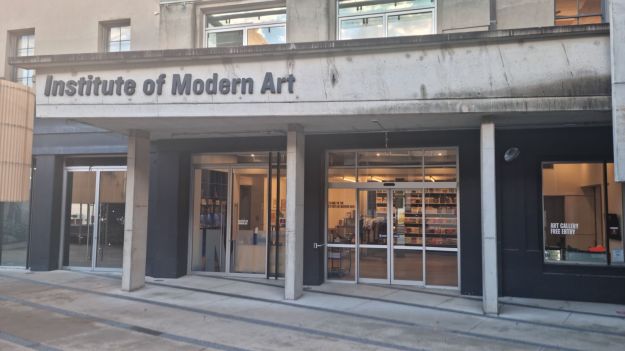
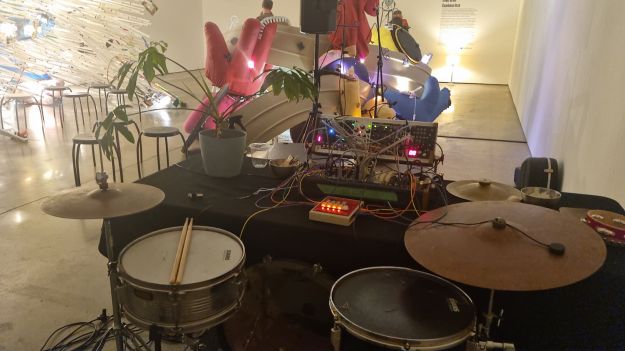
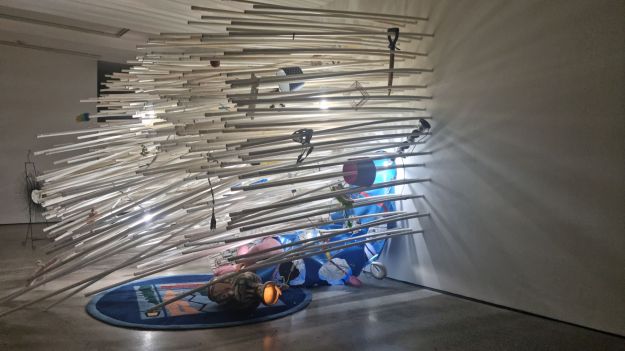
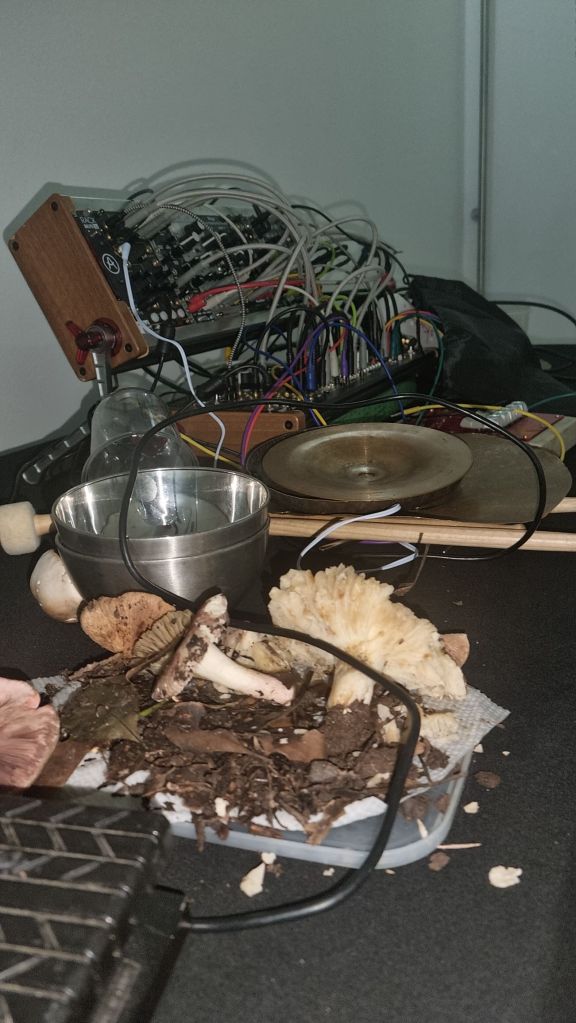
On the bus ride to Lismore, I was contacted by Leighton, who at very short notice offered me a spot to perform at an event he was hosting the next day. It was confirmed Thursday mid-morning. So, with that new addition in mind, I uber across the Story Bridge to the Institute of Modern Art, the longest running private art dealer gallery in Australia. It is an evening of quirky Pop, of which I qualify my engagement as being POPulated by microbes. I am given freshly collected mushrooms and toadstools from people who saw me play on Tuesday. These become my bandmates for the night. But they are initially cantankerous and withholding of voltage. It is an awkward beginning, but midway through the voltage picks up, and the set tumbles along swimmingly.
— — —
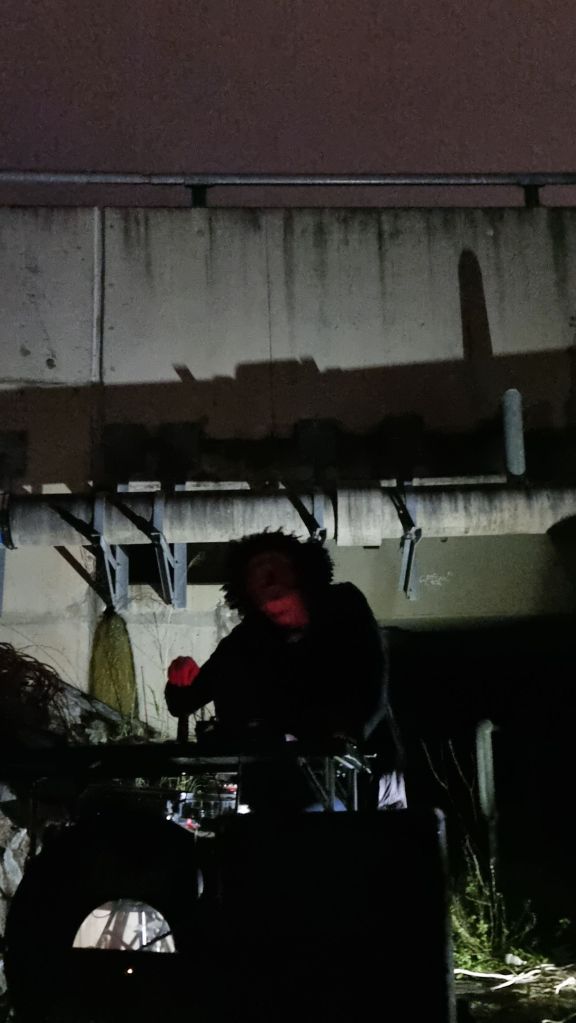
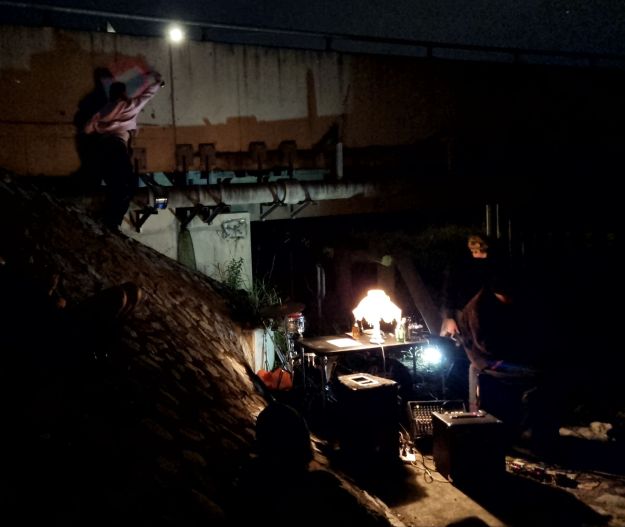
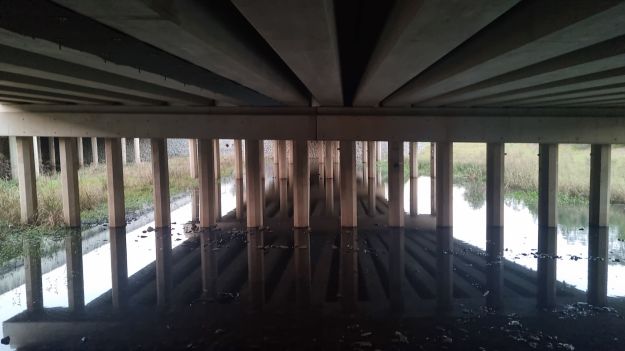
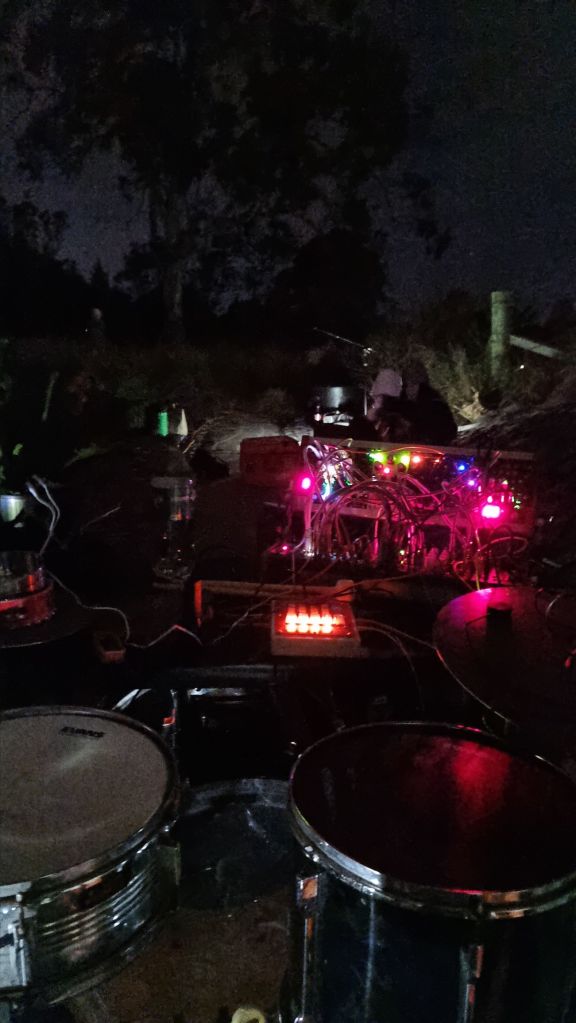
Fridays show is as far from the shiny dealer gallery as you could get. It’s a squatted gig organised by ATOPOS, underneath the M7 offramp on the main motorway to Ipswich. I would never have found it without assistance. Before any equipment arrives, the site is checked to see if it is the home for any rough-sleepers, it looks like it has been in the past but not tonight. Drums, speakers, and everything else is lugged across grassy flood banks, avoiding the boggy slush hiding under the grass. Just before darkness descends, the generator arrives, and all equipment flashes into life. Sounds are checked as 16-wheelers thunder overhead. The first act is deep under the bridge. In the almost pitch black, the only visible light is the reflection caught from the surface of a mini-lake of surface flooding. It adds nothing to where we crouch. An electrical device makes a cymbal sing continuously, a violin is played quietly, almost imperceptible at times, and moving through the darkness is a voice singing something like a lullaby in Czech. There were maybe 30 of us trolls under the bridge for the performance. I’m second, playing my fifth show for this week (I also played the Saturday, back home, before I left). The night has truely fallen, all I can see are attentive silhouettes, I have a bromeliad for a bandmate and it is interestingly active even though the sun has long gone – many photosynthesising plants go ‘quiet’ after dark – bedtime, I guess. Third is an electronic set, heavy and repetitive irregular loops, the performer crouches gargoyle-like, hunched in intensity, belching a hefty bottom end from the gapping maws of speakers. Finally, a duo of improvised clarinet and electronic and irregular tabla play, a groove is suggestively hidden in the pattern recognition of the mind. People have found it and are swaying away.
I watch planes pass over, flying foxes settle in tree tops, and I feel the weariness of the first week settle in satisfaction.
The show packs up, and we do the cross-country run with gear back to vehicles, then back to home.
Thanks to: Ben Shannon, Boddhi, Yvette of ATOPOS, Queensland Conservatory, Leighton and Sandra, Institute of Modern Art, William, Michael, Swerve, Shaun and Harriet
With thanks to CNZ for the funds to make this possible
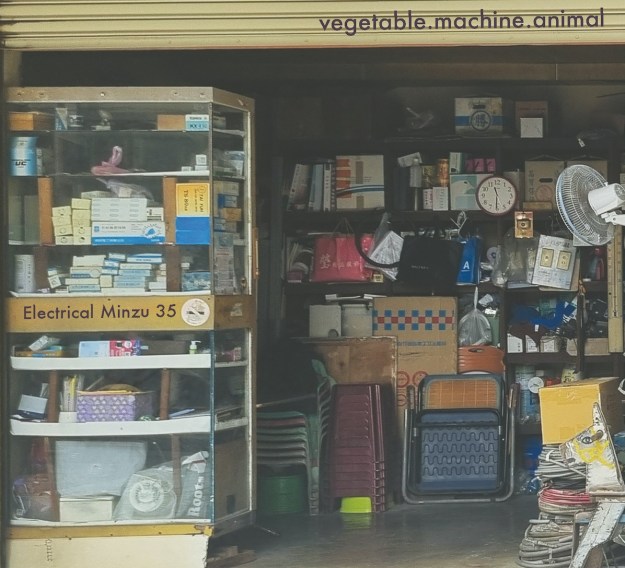
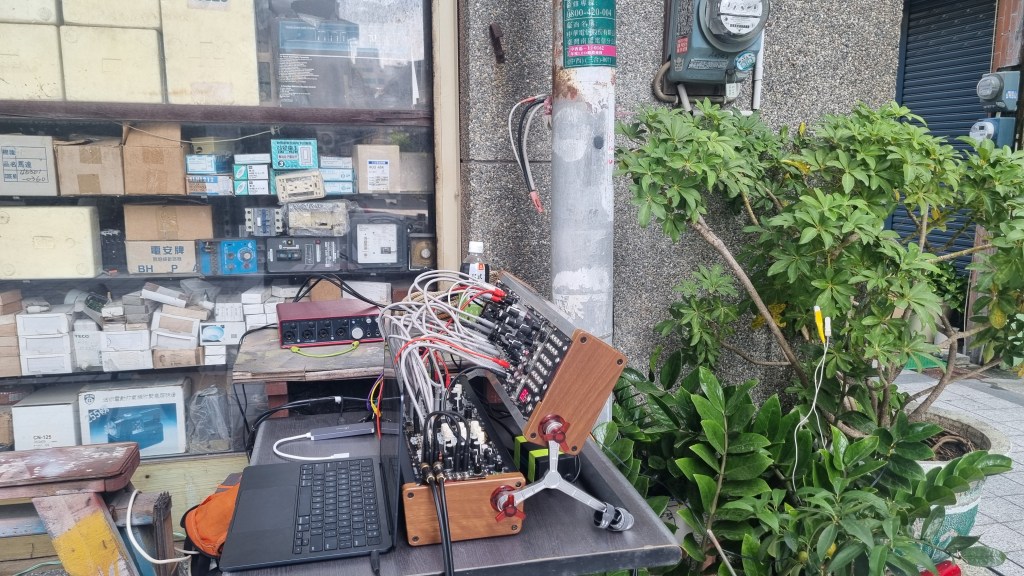
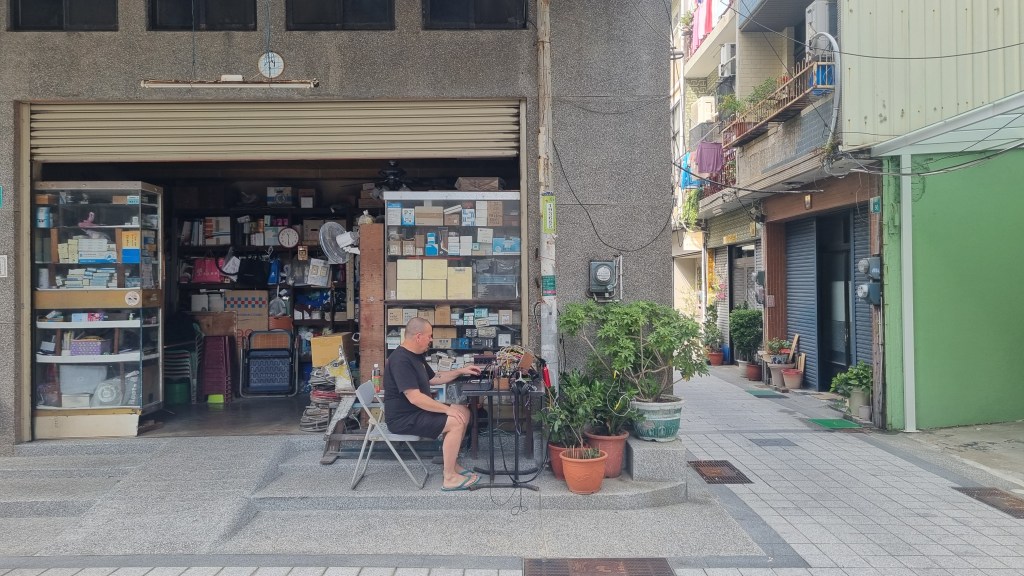
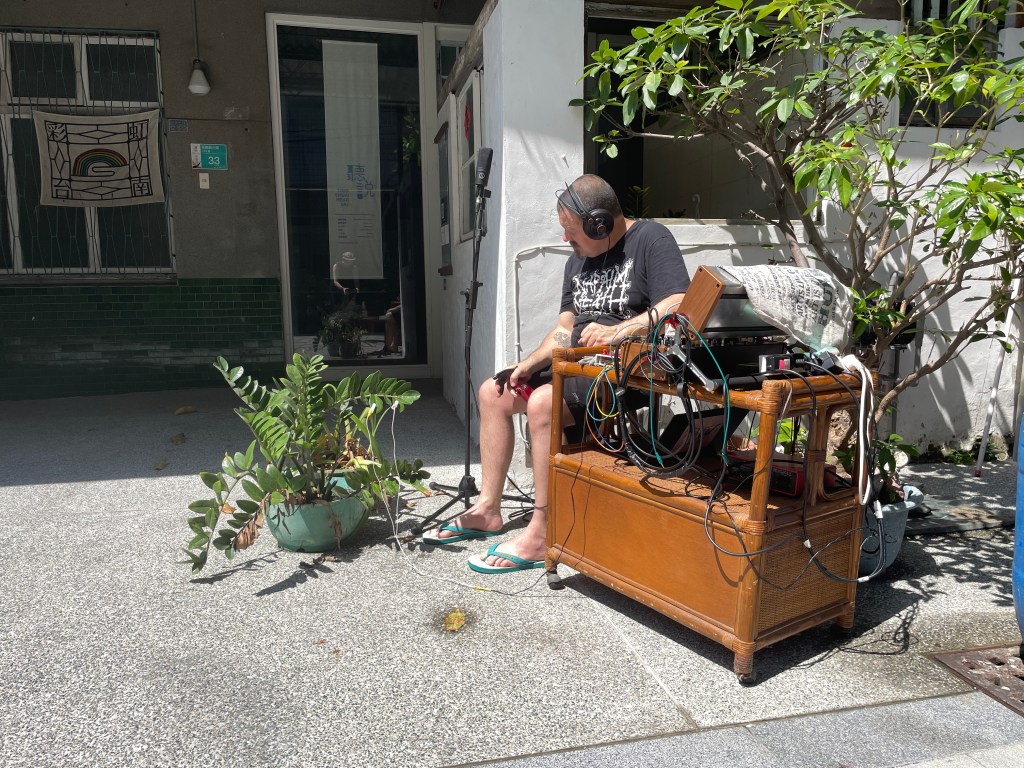
Electrical Minzu 35, by vegetable.machine.animal [vma] : a site-specific recording project, undertaken during October/November 2025, while on residence in the southern Taiwanese city of Tainan.
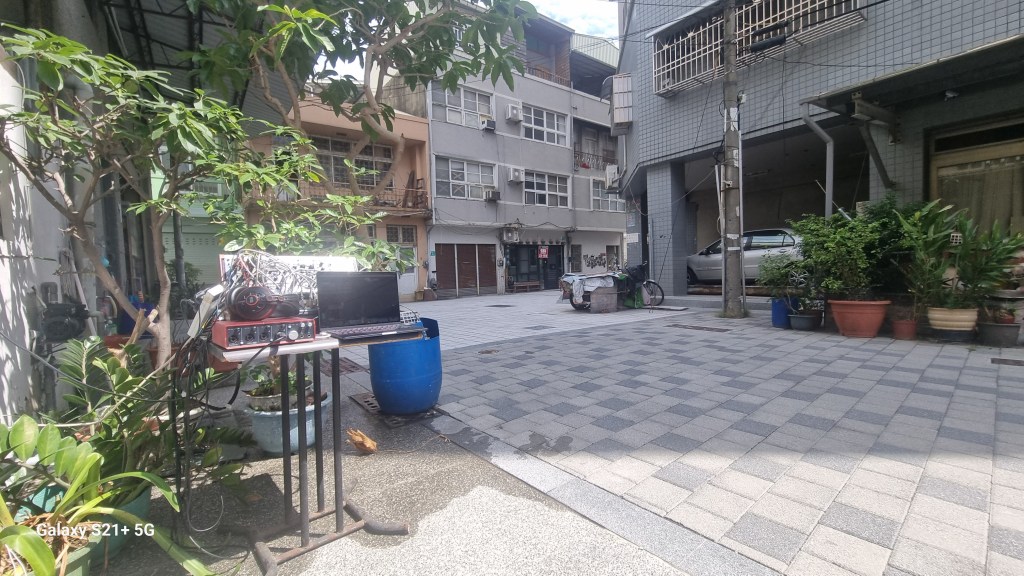
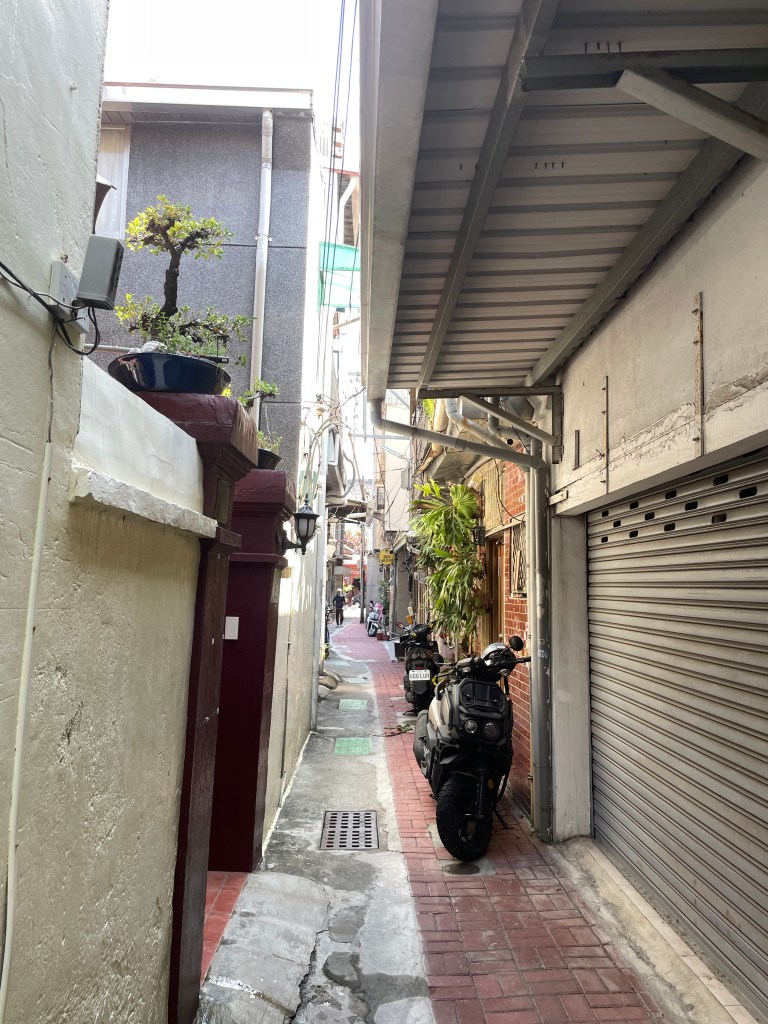
Between the laneways off Minzu, Xinyi, Jinhua, and Chenggong Road is Ting Shuo Hear Say, a space that has sound at the centre of its purpose. For two months vma and DSLB called this residency home and a base for musical exploration, connection, and touring.
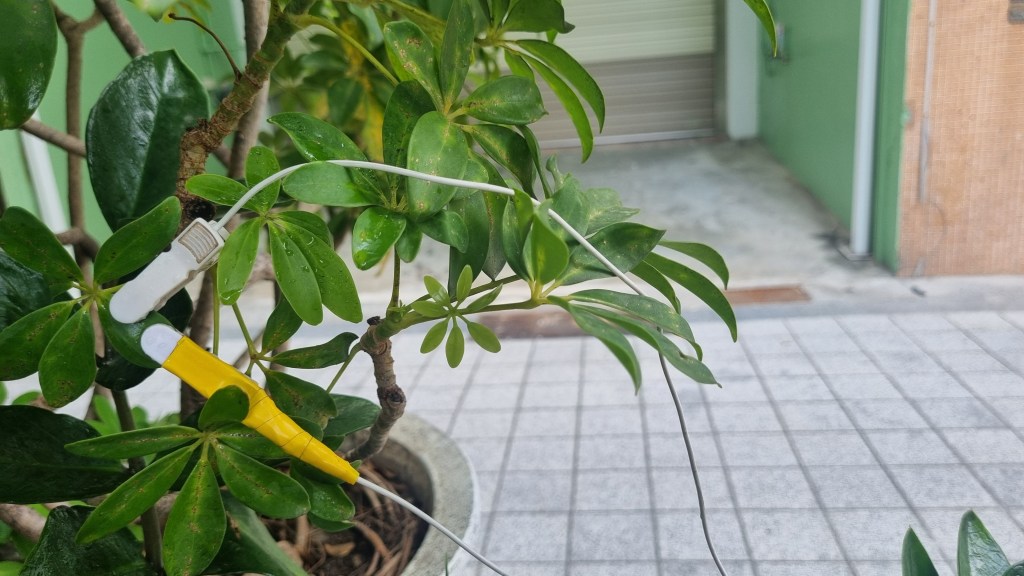
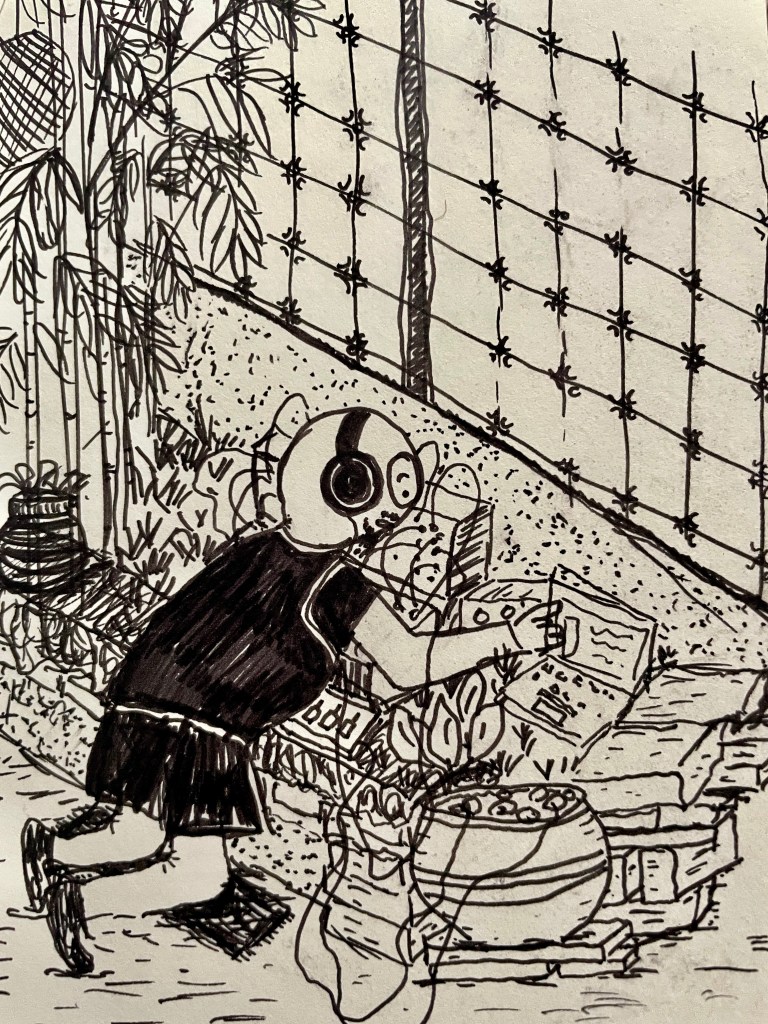
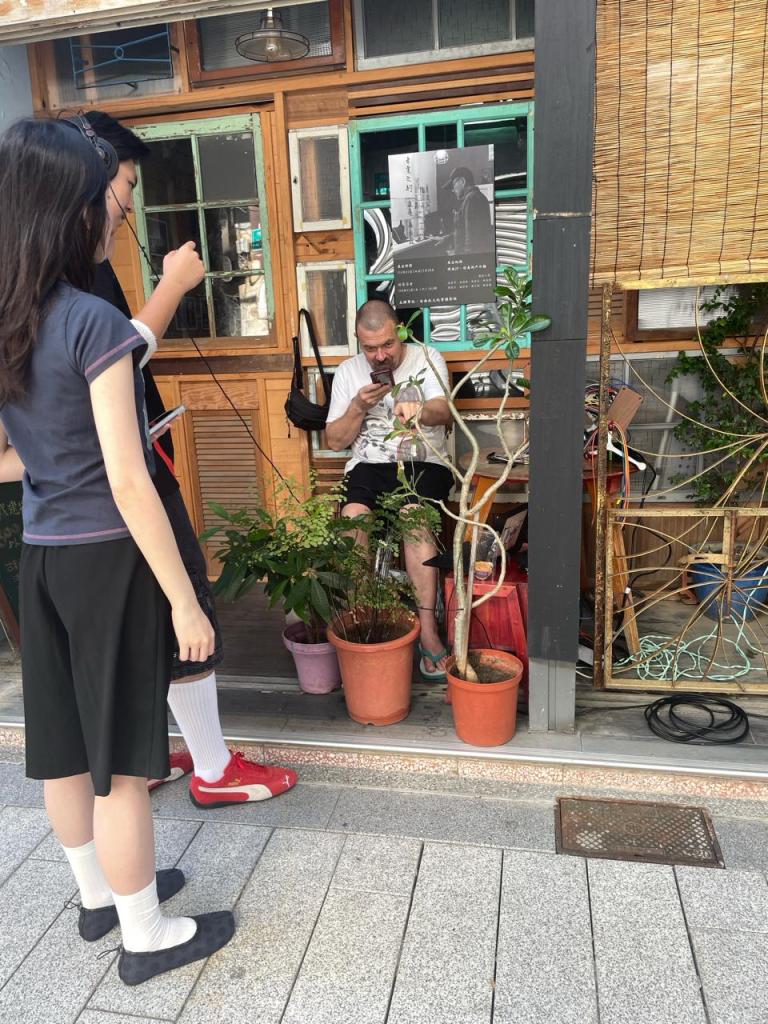
In these narrow thoroughfares that weave between the main roads, green-space is rare. Yet people install potted greenery to soften the concrete and marble, and wild-seeded plant-life thrives in the gaps and cracks. At these potted assemblies, and in close proximity to wheels of scooters and feet, vma would connect the leaves of Eternity Plants, ferns, and other flora to the modular synth via sensors. These sensors detect invisible voltage, bio-signals, inside the plants, signals that flow into the circuitry of the synth, converting the imperceptible electrical fluctuations into sound.
The environmental sounds audible to human perception are also, simultaneously, recorded. Conversations, dogs, vehicles, silence, jet fighters, and echo. The sonic interpretation of the internal world of plants, and the sound world of these laneways are then bound together, capturing moments of multiple lives lived in real time, seemingly seperate yet intimately connected.
This project takes place in public spaces: a cafe frontage, outside a Community University Project, in the carpark of Ting Shuo, and at the entrance to a local electrical repair shop. People were curious, asking questions, and were interested to listen to and interact with the process during the recording sessions. These electronic sounds, interpretations of the invisible aliveness of plants, offered an unexpected shift in perspective. Via the ears, this small part of the world just got a little bigger.
Only one recording contains overdubs. Early on in the process additional percussion was added, and then mostly removed as it added very little. There are also pre-recorded sounds stored in a sampler on the synth that were gathered during the residency; the strings of a Guzheng, the percussive sounds of tables and water containers, the plasma arc of Hsinchu artist Kai-Yu Lin’s Somatic Plasma Resonator – these sounds are all triggered by plant voltage.
Electrical Minzu 35 is released on digital, and physical [CD], format. It is available for purchase via Bandcamp and Subvert, and at shows.
Thanks: Alice Hui-Sheng Chang, Nigel Brown, and Esme, at Ting Shuo Hear Say. Te Kōkī/ New Zealand School of Music for use of studio. Creative NZ for funding. Kai-Yu Lin for the sounds from the Somatic Plasma Resonator. William at Cafe Bar, Fangi Yi Liu, Chen En He, OOOnie, and Cia Himiân Lí in Tainan. Also: Lars of Colour Domes, Immanuel Dannenbring, DJ Rex Chen & Buddha Tiger Dog, Reuben Zahl, Chang Deng-Yao. Made Mantle Hood at the TNNUA, Tainan National University of the Arts. The local 7/11, and thanks always to Chrissie xxx!
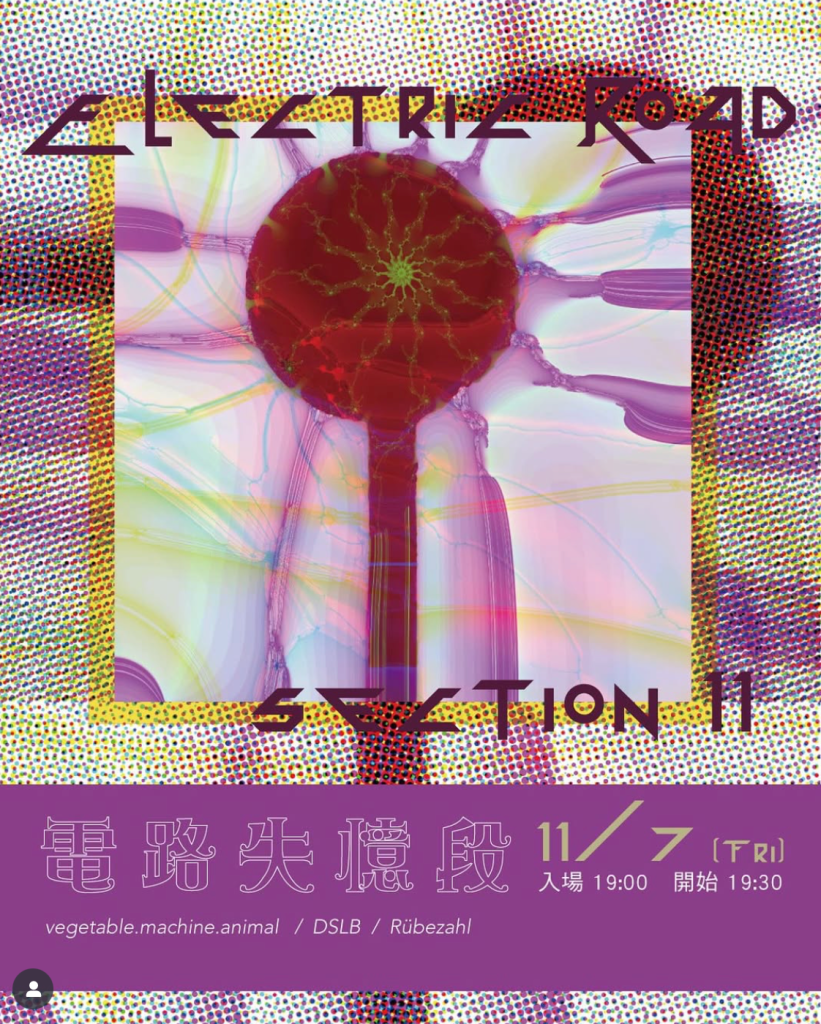
We leave early in the morning. We came Hualien to play a show at a cute cafe called Night Cruising, at an event called 電路萬段 Electric Road. We met wonderful people and felt welcomed by their enthusiasm.
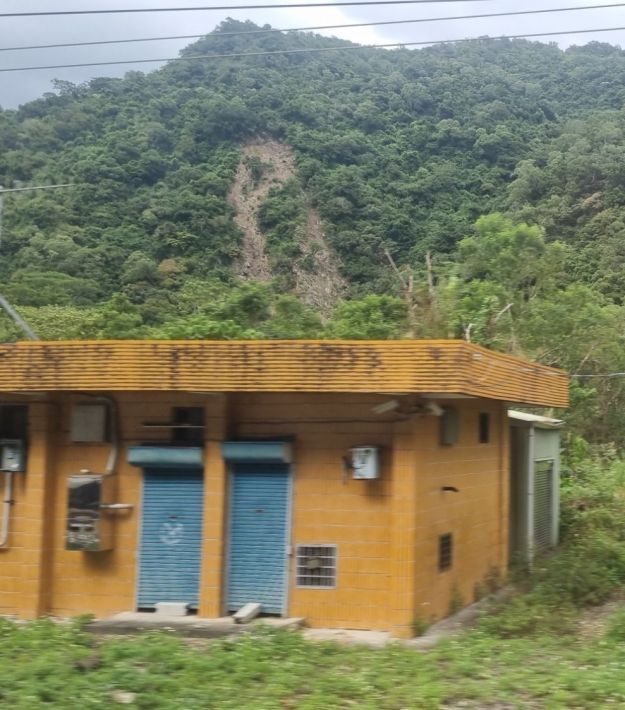
From the train window, evidence is still visible from Typhoon Ragasa’s recent visit: A super-typhoon that slammed into the Taiwanese east coast, Hualien County, only weeks ago, in September.
There are tears on the hills from slips, some of the scars are massive. Roads built on the side of river banks are broken at right angles, as the force of the wash undermined any idea of structural integrity. There’s also human-made assemblages of rocks, boulders, and concrete structures waiting in place to be used to repair some of the damage. There’s also spontaneous hillsides of elephant-sized stones washed down from torrents, thrown violently as if weightless to the might of water.
The riverbeds are occupied by machinery. Diggers and graders assemble to remove and distribute the debris. They look like tiny toys in these causeways of dry braided rivers. But Typhoon Fung-Wong is on the way, and it will blow the dry away.
The news yesterday says the super-typhoon has just left the Philippines, with nearly one million forced to evacuate, and a shit-tonne of damage left in its wake. It is the 25th typhoon in 2025 to impact the Philippines.
Typhoon Fung-Wong in the Phillipines
Hualien County is on high alert from incoming Fung-Wong. Less than two months ago, Typhoon Ragasa smashed the region, bringing death, injury, and destruction. Entire neighbourhoods were submerged after barrier lakes, naturally formed obstructions (think dam) in the mountains, breeched, sending water, mud, and rock at all that lay in its path.
Ragasa in Hualien, September 2025
We met a teacher/artist in Fenglin in a super-friendly coffee shop. She tells us how her school was devastated by Ragasa. Classrooms clogged by mud, resources ruined and destroyed in the aftermath. The clean-up is ongoing, and nothing is normal. Classes haven’t resumed, but the teacher returns to work to continue with the clean-up. She also shows us some of her artwork, illustrations for a book she is writing to help children manage and express the intense emotions they may be feeling. Her attention to care is evident. And finally, more personally, she shows us a video on her phone, a clip she filmed after they had evacuated upstairs, of the torrential floodwaters surging down the streets past her family home six weeks ago. She points out cars, appliances, and other items that float past in the deluge.
“Don’t Rain Anymore” Shizaodai– thank you for letting us share your art
We also hear the repeatable story of civic mobilisation and mutual support post-disaster. Ordinary people who voluntarily head into damaged zones to help out with cleaning, repairing, and bringing essential skills and compassion for others. Ordinary empathy is an incredible resource, worth more than all the gold and riches.
Video of Ragasa impact in Southern China
This will be my first experience of a typhoon, but here, it is an ongoing and seasonal experience for Taiwan. That said it is now without question that the frequency and intensity of these storms is increasing. The meteorological projection, for this part of the world, is that the ongoing warming ocean will continue to exacerbate the extremity of the storms. And you can’t move an island.
I live on an immovable island at a safe-ish distance for most of these sub-tropical events – for the moment. But change has arrived whether we like it or not. The impacts are with us. Back home in Aotearoa, the recent fires of Tongariro are still smouldering. And the evidence says the fires are more frequent, as are droughts, the winds, and rains. To top this off, we have a government who are acting like a bunch of slap-headed fuckwits in relation to any policy responsibility towards the mitigation from the impacts of a locally, and globally, changing climate. The islands are fixed in place, the change comes to us.
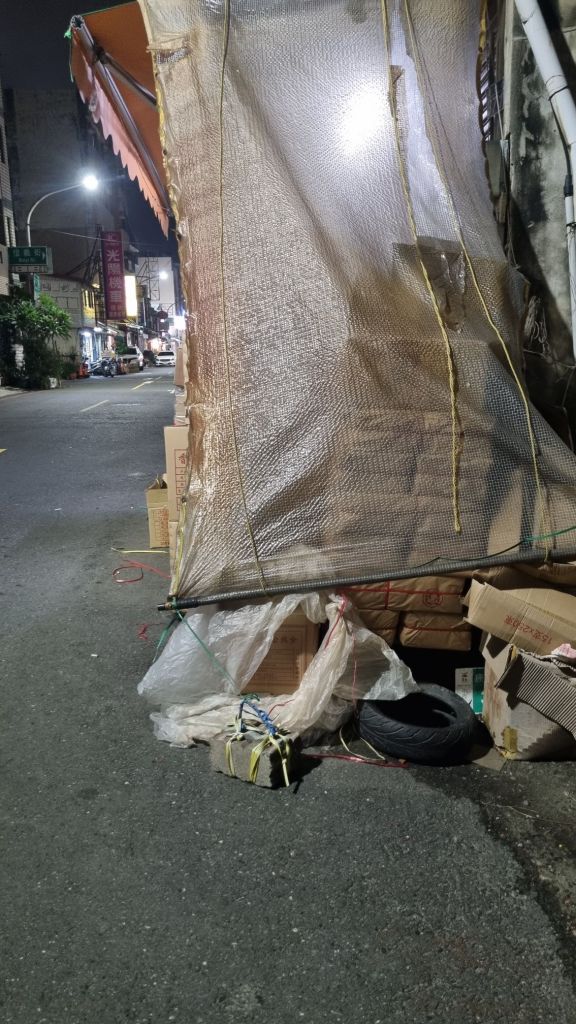
Later: I’m about to press publish. The typhoon arrives in about 9 hours. Friendly folk we have met over the last few weeks are telling us to be careful. But when we look around the laneways it all seems quite relaxed. There almost nothing I can see that indicates that people are especially worried. The only precaution I spot is that a local joss paper shop has cover his merchandise with a single tarp, and then fixed it to the ground with plastic rope and a brick. But best I don’t get deceived, the locals are experts at living with these storms. We will see what the morning brings.
It’s been a fair while since I hit the road. And with that said, I’m really excited for the coming months of shows around the length and breadth of this motu. I still think live is such an essential way to experience music. Information is conveyed in the moment that can never be captured to record. There’s a bunch of place I’ve never played and it’s a real privilege to get back out into the provinces.
Immense thanks at the outset to all those that have helped out with practical efforts and encouragements.
Massive thanks to the wonderful artist Fergus Nm who is the creator of this brilliant image on the poster. [By his stuff]
I have a nice swag of merch with me, the new album, the book SOUNDBITTEN, and a bunch of other skirted releases.
July Thursday 17 – House Party, Patea – with Jack Tamakehu & Unknown Rockstar Friday 18 – Last Place, Kirikiriroa/Hamilton – with Moon Hotene and Halcyon Birds Saturday 19 – Instore – Flying Out Records, Tāmaki Makaurau/Auckland, 2pm Saturday 19 – Audio Foundation, Tāmaki Makaurau/Auckland – v.m.a with Taekyung Seo, O/PUS and Oksen Ox Thursday 24 – Common Room, Heretaunga /Hastings – with Invisible Plain Friday 25 – Snails, Te Papa-i-Oea./Palmerston North – with Powers, S.D.W. Saturday 26 – Porridge Watson, Whanganui – with XRVR & ROC///OPT/ Sunday 27 – Common Ground Presents, Pae Tū Mōkai/Featherston – with indigogue browne Thursday 31 – Brayshaw Park Chapel, Te Waiharakeke/Blenheim – with Twin Rudders
August Friday 1 – Space Academy, Ōtautahi/Christchurch – with Cuticles, and Haunts Wednesday 6 – Te Atamira, Tāhuna/Queenstown – solo Friday 8 – The Crown, Ōtepoti/Dunedin – with HōHā, Sewage and Murgatroyd Saturday 9 – Threes and Sevens Records, Waihōpai/Invercargill – with Murgatroyd and Hattford



 skirted Records