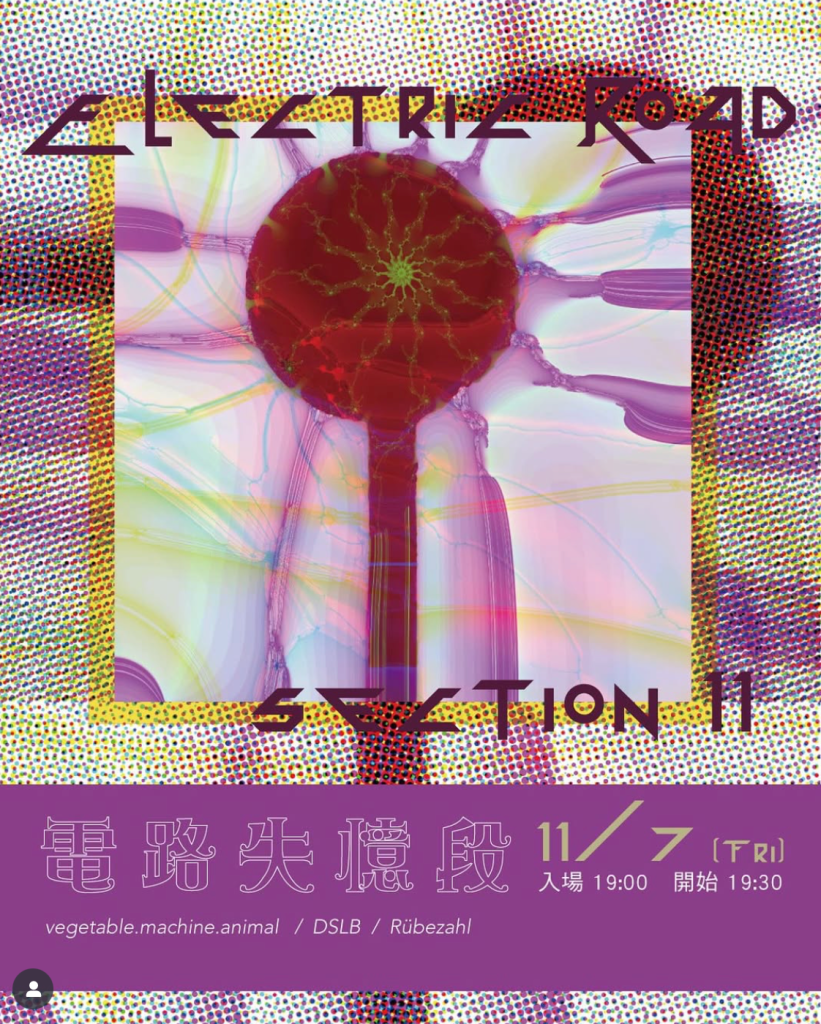
We leave early in the morning. We came Hualien to play a show at a cute cafe called Night Cruising, at an event called 電路萬段 Electric Road. We met wonderful people and felt welcomed by their enthusiasm.
From the train window, evidence is still visible from Typhoon Ragasa’s recent visit: A super-typhoon that slammed into the Taiwanese east coast, Hualien County, only weeks ago, in September.
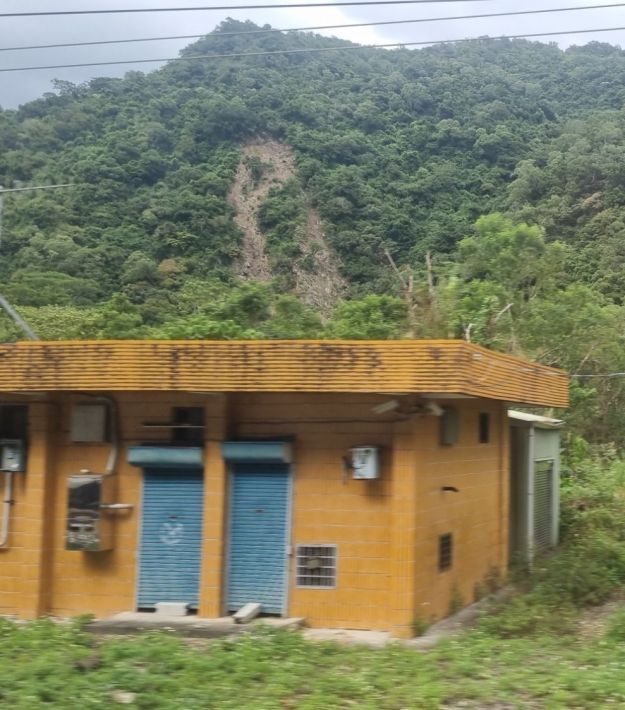
There are tears on the hills from slips, some of the scars are massive. Roads built on the side of river banks are broken at right angles, as the force of the wash undermined any idea of structural integrity. There’s also human-made assemblages of rocks, boulders, and concrete structures waiting in place to be used to repair some of the damage. There’s also spontaneous hillsides of elephant-sized stones washed down from torrents, thrown violently as if weightless to the might of water.
The riverbeds are occupied by machinery. Diggers and graders assemble to remove and distribute the debris. They look like tiny toys in these causeways of dry braided rivers. But Typhoon Fung-Wong is on the way, and it will blow the dry away.
The news yesterday says the super-typhoon has just left the Philippines, with nearly one million forced to evacuate, and a shit-tonne of damage left in its wake. It is the 25th typhoon in 2025 to impact the Philippines.
Hualien County is on high alert from incoming Fung-Wong. Less than two months ago, Typhoon Ragasa smashed the region, bringing death, injury, and destruction. Entire neighbourhoods were submerged after barrier lakes, naturally formed obstructions (think dam) in the mountains, breeched, sending water, mud, and rock at all that lay in its path.
We met a teacher/artist in Fenglin in a super-friendly coffee shop. She tells us how her school was devastated by Ragasa. Classrooms clogged by mud, resources ruined and destroyed in the aftermath. The clean-up is ongoing, and nothing is normal. Classes haven’t resumed, but the teacher returns to work to continue with the clean-up. She also shows us some of her artwork, illustrations for a book she is writing to help children manage and express the intense emotions they may be feeling. Her attention to care is evident. And finally, more personally, she shows us a video on her phone, a clip she filmed after they had evacuated upstairs, of the torrential floodwaters surging down the streets past her family home six weeks ago. She points out cars, appliances, and other items that float past in the deluge.

We also hear the repeatable story of civic mobilisation and mutual support post-disaster. Ordinary people who voluntarily head into damaged zones to help out with cleaning, repairing, and bringing essential skills and compassion for others. Ordinary empathy is an incredible resource, worth more than all the gold and riches.
This will be my first experience of a typhoon, but here, it is an ongoing and seasonal experience for Taiwan. That said it is now without question that the frequency and intensity of these storms is increasing. The meteorological projection, for this part of the world, is that the ongoing warming ocean will continue to exacerbate the extremity of the storms. And you can’t move an island.
I live on an immovable island at a safe-ish distance for most of these sub-tropical events – for the moment. But change has arrived whether we like it or not. The impacts are with us. Back home in Aotearoa, the recent fires of Tongariro are still smouldering. And the evidence says the fires are more frequent, as are droughts, the winds, and rains. To top this off, we have a government who are acting like a bunch of slap-headed fuckwits in relation to any policy responsibility towards the mitigation from the impacts of a locally, and globally, changing climate. The islands are fixed in place, the change comes to us.
Later:
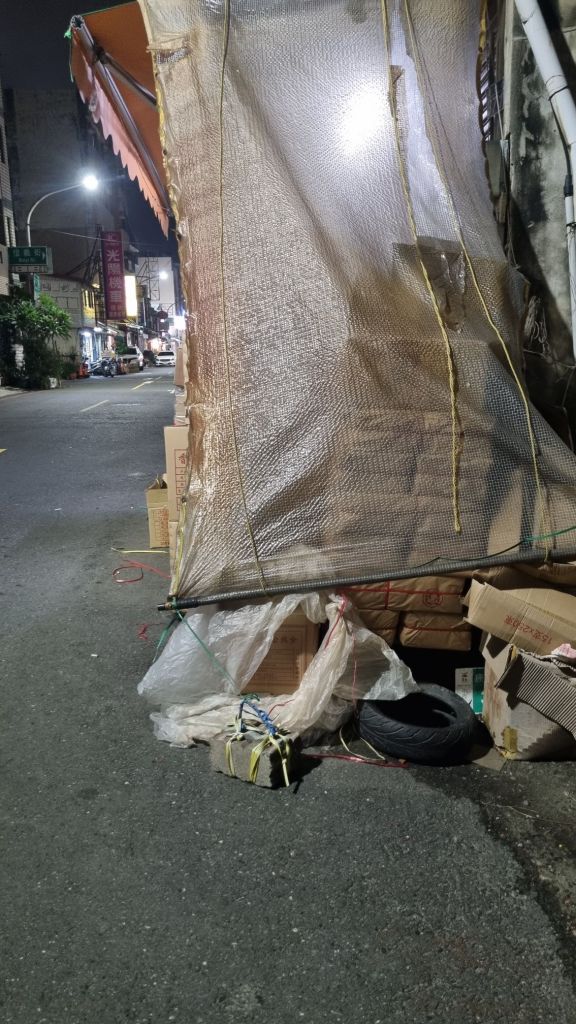
I’m about to press publish. The typhoon arrives in about 9 hours. Friendly folk we have met over the last few weeks are telling us to be careful. But when we look around the laneways it all seems quite relaxed. There almost nothing I can see that indicates that people are especially worried. The only precaution I spot is that a local joss paper shop has cover his merchandise with a single tarp, and then fixed it to the ground with plastic rope and a brick. But best I don’t get deceived, the locals are experts at living with these storms. We will see what the morning brings.
 skirted Records