During the NZSM/Toi Pōneke arts residency, 2024, I was introduced to SOUNZ– the Centre for New Zealand Music. To be honest, I knew about SOUNZ in the peripheral cul-de-sacs of my brain but I thought it was mostly for classical music. And it is, but it is also much more.
It says about itself that it “…champions and promotes the sounds and music of Aotearoa, New Zealand.” It contains a huge collection of music score and such, but I was totally unaware that it has a substantial audio/visual component.
SOUNZ offered to come and video a number of performance associated with the vegetable.machine.animal Guest album launch, as well as a couple of the performances attached to the accompanying exhibition being held at Toi Pōneke. For free! With multiple cameras! and they would do the grunt of editing etc! Quite an amazing offer. My tasks were to perform well, and be responsible for recording the audio – this is quite likely a barrier for many but less insurmountable these days as digital recording devices get smaller, easier to use, and more available.
The video work was completed by Chris Wilson, a production team of team of one. Amazingly easy to work with, and very considerate in the way he set multiple cameras around the stage in ways that did not seem invasive or impinge on the ability to perform. A terrific experience.
I wish again to offer many thanks to the other musicians who took part in these performances: Kedron Parker, Gemma, S. Thompson, David Long, Chrissie Butler, Timothy Morel, Sophia Frudd, Andrew Faleatua (unfortunately not filmed but an audio recording was collected) and Ruby Solly. They are all incredible music makers in their own rights and are worthy of your aural attention.
The followin,g texts formed the body of the – held at the GUEST exhibition on Saturday 14 July, 2025.
I was thrille d to be able to facilitate this conversation. It had actualu ly been something I’d been wanting to do for some time, to hold a public discussion regarding ongvuzBoing interspeciesness at the intersection of my creative practice, as well as from an anthropological, and scientific ecological perspective. It felt like we were all ta lking about something very similar, but from widely differing perspectives.
Immense thanks to Julie and Eli for letting me share their texts here. kieran
Kieran Monaghan The moment this journey really began for me was when I read the 2012 article “A Symbiotic View of Life: We Have Never Been Individuals” by Scott Gilbert, Jan Sapp, and Alfred Tauber. The piece, published in the Quarterly Review of Biology, proposed that the human body isn’t a singular entity, but a collective—more like a city. For example, bacteria. Elsewhere, certain bacterial groups may enhance our immunity, sterilze my immune system of all these organisms, my immunity fails, and my demise quickly follows. These organisms don’t just livqe in us; they’re part of us,. inversely, we are part of them. The idea that “I” need them—that identity and health are inherently co-created—shifted my thinking.
Working as a nurse at the time, this concept of interconnected health echoed strongly with the holistic approach integral to the Primary Health Care facility I was employed with. It validated the view that personal, local, cultural, and environmental factors interact constantly with wellbeing and illness. The implications extended beyond healthcare—it challenged the individualistic framing of the self, so prevalent in capitalist thinking. People are not just as individuals, but beings shaped by a web of interactions and relationships.
At the same time, my main creative outlet was performing as a drummer and vocalist in the duo *mr sterile Assembly*. While I had these nerdy fascinations with biology and interconnected systems, I had no idea how to merge that with my art. The worlds felt separate.
By 2021, my life was shifting, certain events had disrupted any assumptions I held about my future. I found time to dig deeper into the idea of blurred boundaries between human and non-human lives. Thinkers like Donna Haraway, Karen Bakker, and Timothy Morton expanded these ideas for me. Haraway’s 2016 book Staying with the Troubleparticularly stood out, merging technology, anthropology, science, and art. She introduced the concept of *Worlding*—a process of collaboratively making the world with others, emphasizing interdependence and co-creation. It resonated. It felt like a conceptual framework for how to live, think, and maybe even make music. It’s a bit like living with a gut-biome.
By total accident, I stumbled across an album called Worlding by Eryk Salvaggio, who named it after Haraway’s idea. Salvaggio created the album using a modular synthesizer and mushrooms. Salvaggio referenced research suggesting that mushrooms communicate through voltage spikes—an underground electrical language with repeatable patterns. He directed these signals into a synthesizer, letting fungi “speak” through sound. “Sound is just what happened afterward,” he said.
Though I’d never really liked electronic music, this felt different. It felt organic, alive. I needed to understand how it worked.
Learning modular synthesis was a steep climb. It required new instruments, technologies, vocabularies, and expectations. Luckily, Te Whanganui-a-Tara has a vibrant experimental music scene. I was able to learn from others who had already gone down weird and wonderful paths in sound.
A pivotal piece of gear for me was the SCION, a biofeedback module developed by a small Scottish company. SCION converts voltage from living organisms—plants, fungi, even humans—into signals that interact with modular synths. While biofeedback in music isn’t entirely new, it’s mostly remained in academic or niche circles. A lot of what I found online was either too esoteric or framed as novelty—hippies playing flutes “with” plants or biosignals shoehorned into club tracks.
Nothing felt like a true dialogue between human and non-human sound-makers.
That’s what I was looking for: something mutual. “Mutual” might not be the right word, but it gestures at a goal—making music with living non-human things, not just about them. I wanted the plants or fungi to be participants. Their voltage rides on sound waves, and I respond in real time. The results are unpredictable, never the same twice. It’s collaborative, co-created, greater-than-human music.
I’m not claiming to give plants or fungi a “voice,” or to interpret what they’re trying to say. I’m not qualified to comment on their intelligence, either—others are doing that work. What I am doing is creating conditions where non-human life can appear in a shared sonic space, almost like a participation, where both of us—human and other-than-human— shape the music.
Three main reasons keep me coming back to this project.
First, I think of this as Anti-Dystopian music. It’s not naive or utopian. It acknowledges damage, but refuses to give in to doom. It’s music that suggests other futures—futures that aren’t built solely through human frameworks. It’s deeply responsive, unpredictable, and impossible to replicate. Unlike AI-generated sound, it requires aliveness. It’s not designed to mimic or replicate, but to explore what happens when humans and non-humans literally play together. It’s art that needs life to exist.
Second is the Climate Crisis. Listening is a powerful act. People on the margins often say their first demand is to be heard. Listening leads to empathy, which can lead to action. Many still see the “environment” as something external to humans. This project invites listeners to hear the presence of other lifeforms—not metaphorically, but materially. I hope that it may spark curiosity, and curiosity is a gateway to connection and care.
Finally, it lets me bring my science-nerd side into being. To me this is music that demystifies without becoming boring, holds uncertainty as a strength, and fosters wonder. I want to show that experimental sound can be demonstrable, legible, and meaningful without being obscure or elitist. I want to make art that destabilizes the charlatan, the doomsayer, and the gatekeeper—and opens space for exploration, connection, and growth.
–
Eli Elinoff
Listen, the forest. Ourselves
Shh….Listen.
What do you hear?
Wait. That’s not the right question.
Who do you hear?
A strange, perhaps profound question. Can a mushroom be a who? Does a forest have a subjectivity? Maybe that isn’t the right question either.
What might these strange vibrations mean? Might our capacity to hear the sounds produced by these always already vibrating, vibrant subjects rearrange our relationship to them? Can it?
These are the questions that Kieran’s project—particularly its efforts to listen and collaborate with non-human others—provokes for me. Questions I am keen to raise, bat around, and then leave for us to think about together today.
I am an anthropologist—an anthropologist of the urban environment, an anthropologist of politics, an anthropologist of citizenship and dwelling, an anthropologist engaged with something called the anthropocene and particularly the historical convergences of natural, cultural, and political forces that it generates and that are actively being generated by this planetary phase.
Lately, as I seek to develop something I am calling a speculative earth history of concrete in Thailand, I have been thinking of all kinds of subjects, human and non-human that occupy the margins of urban ecologies and urban ecologies that occupy the margins of other areas: Mangrove propules reaching for distant sediments, mudskippers hopping across tidal flats, trees poking through urban sidewalks and disrupting aerial electrical lines, monitor lizards traveling through underground pipes, small particles—pollution, viruses, and tear gas— traveling in and out of our lungs (see Elinoff 2024, for one example).
Across these distinct domains, I am not only interested in human forms of life but our constant exchange with these non-human others, often despite our quite strenuous efforts to assert our distinctness from them and their ecological contexts. Attention to these processes’ connection and disconnection and their specific qualities, I think, suggests something about our capacities or incapacity for co-existence with our planet and with each other. These are urgent questions.
Kieran’s work Guest is compelling to me because it not only amplifies the vibrations of non- humans to alert us to their presence, but because it actually engages with them in a partial collaboration through music. In this way, the work enacts a kind of generous cycle of acknowledgement that offers us an opportunity to think about what it means to live on a planet with non-human others in their (and our) most fulsome vibrant and vibratory selves.
1
These are questions that undergird my own work but increasingly pre-occupy me personally in this moment of ecological transformation and related startling political violence.
To clarify what I mean by this, indulge me in a deviation for a minute to think with the anthropologist Eduardo Kohn (2013; 2022), whose landmark engagement with forests as thinking worlds in the Ecuadorian Amazon suggests that when we break from our sense that humans are the only beings that use signs, we might be forced to raise new questions about what the world is, what our ethical disposition towards it might be, and what politics such an ethics might inspire.
Without getting too far in the weeds (so to speak), Kohn argues (2013: 33-35), alongside his primarily Runa Indigenous collaborators, that if we accept that all kinds of beings are capable of engaging in the kinds of symbolic work that we typically reduce to language— particularly the capacity of non-humans to index, which is a specific sign making process based on the logical referential connection between specific symbolic markers and various things in the world (smoke indexes/points to fire)—then we can begin to reconstruct our intellectual apparatus so as to be capacious enough to begin to grasp at an understanding of forests as filled with webs of communication that bind together a range of actors in relations that exceed human comprehension.
A monkey, Kohn tells us, may respond to the sound of a snapping branch because they feel it give way under foot or because they perceive it to represent a coming predator. We do not know the specificity of their interpretation, but we can ascertain that the sound has a meaning (it is being interpreted) and thus, represents what Kohn calls a “living sign” (2013: 33). Signs like these, call together a range of interpreters using a host of methods to interpret all of which might be interpreted by humans but not entirely so. For Kohn (and the semiotician Charles Sanders Pierce), the capacity to generate and interpret meaningfulness in the world is the very basis for the composition of selves (2013: 29, 33).
There is a deliberate ambiguity or even agnosticism about what consciousness means in this expansive vision of the nature of what a self is or might be. That ambiguity is there by design. We cannot know these others and what ontologically is for them. The gap is too deep. But we can, Kohn suggests, give way to the idea that the world (a word, which, incidentally, his Runa interlocutors refer to as forest) is extraordinarily semiotically rich with meaning and meaning making in this expanded sense. It is rich with selves interacting in a collaborative and collective mesh. There is so more to this argument, but my time is short, so I’ll skip to the questions it raises.
The first sets of questions I have raised are ontological. Who is that you hear right now when we stop and listen? Who is that? What is their capacity to vibrate meaningfully in ways that we do not, cannot, understand? What might such vibrations mean or, rather, how might they mean something to others? What is a self and do non-humans have one. Rather than asking what these strange vibrations mean linguistically, we might rephrase this question, what world do these vibrations portend if we listen carefully to them?
A second set of questions that might follow from that first set of questions are ethical— What does it mean to live among others who think, even if such thought is profoundly different than human thought? Kohn (2022) suggests that forests think in ways that are emergent, distributed, imagistic, and general. Leafy mantids (leaf bugs), for example, index (point to) leafiness because non-human others have the capacity to understand what “leafiness” in its collective ontological sense means. Accepting the proposition of a thinking forest as a distributed total whole rich with meaning both irrespective of humans but also inclusive of humans, might ultimately force us to reconfigure ourselves and in so doing our relation with the world. This process of self-refashioning prompted by the idea of a living forest is, for Kohn (and others) the basis of ethical life. Who are we to be and how are we to act in relation with a living forest of selves? What kinds of refashioning might these vibrations inspire in us? What have they inspired for you Kieren as you work with them?
Finally, there is a politics here as well. The political theorist Jacques Rancière (1999) suggests that the political is, first and foremost, composed via an aesthetic schism between that which is noise and that which is language. The suggestion is that the composition of what we understand to be legitimate politics relegates certain kinds of claims as unintelligible because they are not interpreted as meaningful sound. This has all kinds of implications—particularly related to how the demarcation of others as non-humans as distinct species is essential to their violent exclusion. What then does it mean to listen to these sounds as more than noise?
Stop. Listen again.
Kieran’s work—its elaborate prosthetics of listening and collaborating—awakens us to the depth of this set of questions. It suggests that acknowledging the world’s vibrancy might also give way to an acknowledgment of our own, generating a compulsion to collaborate with it in such a way as to better grasp the world’s autonomous, multiform capacity for self- making. Its capacity to hold our ethical attention as we remake ourselves with it and, perhaps, our ability to act politically together to protect it and ourselves.
Tēna koutou katoa Ngā mihi o te ahi ahi He Ahorangi Tūhono O te Kura Mātauranga Koiora O Te Herenga Waka
Ko Julie Deslippe taku ingoa
Kia ora My name is Julie Deslippe I’m an Associate Professor of Plant Ecology At Victoria Univeristy of Wellington I’m really grateful to be here with you all to enjoy Kieran’s art and to be included in today’s discussion. And I “tutoko” Eli’s comments, particulary his framing Kieran’s mahi as an opportunity expand our perceptions of non-human “living signs”.
Kieran’s compelling work is an invitation to engage with familar plants and fungi in a new way. It invites us to stop and listen -not just see or touch– these normally quiet and stationary beings: who are just doing their “thing”. But more than that, it invites us to think about how we might directly engage with plants and fungi in new ways creating new shared experiences.
Listening and responding to plants and fungi.
I’m a plant ecologist. A scientist who studies life – and how plants live in community – Together – and with others.
Plants and fungi are living beings, with identity, behaviour, even agency. From my perspective, the question of whether a fungus is an “it” or a “who” reveals only the anthropocentrism of the questioner – it suggests that humans get to decide who is a who and who isn’t.
Plants and fungi don’t care what we thing they are. So rather than passing judgement on beings that are so unlike ourselves, I would urge us to simply pay careful attention to what IS. I promise that if you study plants and fungi – watching, touching, smelling, tasting and even listening to how they behave – your experience and understanding of life will expand far beyond anthopocentric labels.
Plants and fungi are facinating creatures. They act and do things far beyond our wildest imaginations.
Evolution on islands has bestowed Aotearoa with a wealth of unique biodiversity. We are kaitaiki of more than 8500 indigenous plant species, a number that more than doubles when you include the introduced plants that now call te motu home.
Our species awe and inspire…
Take pua o te reinga, our native wood rose, a plant that has totally lost the ability to produce chlorophyll and can’t photosynthesise. It gains carbon by parasitising the roots of broadleaved hardwood trees like kapuka (broadleaf) and whauwhaupaku (five finger). These vigorous hosts shuttle copious sugars to pua o te reinga which it uses to make rich and odorous nectar that includes the mammalian pheromone Squalene.
Squalene is irresistible to Pekapeka, our short-eared bat, who cover themselves in wood rose pollen before moving on to their next sugary midnight snack, serving to pollinate pua o te reinga as they feast.
Or take Harore our edible native honey mushroom, which lives as a root parasite and decomposer on our giant beech and podocarp trees. In their latter days its mushrooms grow up to be as dull and plain as dry leaves, but they spend nights in their youth glowing psychedelic green -as if enjoying the forest disco- No one knows why they perform the complex and energetically expensive chemical reactions to break down luciferin and release light through bioluminescence. Perhaps if you listen carefully, they may tell you.
While many of us suffer from acute ‘plant blindness’ and by this I mean “Oh wow! look at the elephant!” In reality, plants and fungi profoundly affect our ecologies: shaping our landscapes, culture -even our economies.
A prominent example of this is the development of plantation forestry in Aotearoa.
Today 1.7 million hectares of land, nearly a third of all forest cover in the country, is used for plantation forestry. Of this, more than 90% is radiata pine. Native to California, radiata pine was planted as seed in Aotearoa from the 1850ies. However these early plantings often failed, or produced bushy trees with open canopies and multiple stems, suitable for shelter belts, but poor-quality timber.
Prior to the first world war, as our native forests were felled and burned on vast scales to make way for pastoral agriculture, fears of wood shortages began to shape public policy.
Research to improve tree performance was needed to fuel the forestry planting boom – And by the 1920s this involved the import of seedlings grown in Californian top soil –
Radiata pine is obligately mycorrhizal. This means that in order complete its life cycle from seed burst to the formation of fertile cones; its must form an intimate root symbiosis with soil fungi. Mycorrhizas are partnerships based on the exchange of resources. The plant provides sugar that it makes in photosynthesis to the fungus in exchange for growth-limiting soil nutrients, like nitrogen and phosphorus.
Pine forms mycorrhizas with a range of fungal species which were present in those imported Californian soils– many of which will be familiar to those of you who walk the Town Belt.
Of course, in their native range, pines and the mycorrhizal fungi co-evolved in a complex web of life.
And some of those species have also been introduced into Aotearoa’s forests.
It turns out that red deer LOVE mycorrhizal mushrooms and have no trouble at all travelling vast distances through pine plantations, into tussock grasslands and native forests, where they deposit the unharmed fungal spores in a tidy little package of fertiliser.
This facilitation of one invasive plant, not by another, but by a network of alien interacting species, is what has fuelled the degradation of more than 1.8 million hectares of farmland by wilding pine.
With a price tag of over $140 million dollars to control in the past decade alone.
We also know that once they get into native forests, some of these introduced mushrooms displace native mycorrhizal fungi on our native beech trees, creating a potential threat for to native biodiversity.
So while many of us are unaware of how plants and fungi have transformed our biodiversity and landscapes over time. There is no doubt that these normally quiet and stationary beings profoundly affect our economy, culture and identities.
Plants and fungi are not good or bad, selfish or altruistic, socialist or capitalist. They have evolved over million of years, in their facinating diversity, to interact in the complex web of life that we are all part of. Let us take the time to hear their music.
GUEST has grown into a beast, a beautiful, shimmering monster-body of work that is a full culmination of the 2024 residency.
GUEST has become an album, excerpts from collaborative recording sessions October-December 2024, edited and mixed into 13 tracks, to be released on LP, CD and digital. The album launch is May 30 at Pyramid Club. Performing alongside vegetable.machine.animal with be album guest musicians Chrissie Butler, indigogue brown, Kedron Parker, Timothy Morel, Gemma S Thompson and David Long.
GUEST the exhibition opens at Toi Pōneke on Friday May 30, 5.30pm. There will be a short vegetable.machine.animal performance, but mostly it’ll be a celebration. The exhibition will be centred around hound interspecies sound installation. Alongside this will be images painted during this process, Leadlight window, and the launch of the book SOUNDBITTEN, personal sound stories capturing earworms, aural observations, accidental hearings and imaginary backing tracks.
There are four weekend event during the performance, three concerts and a panel talk. I’m thrilled to have the opportunity to perform again individually with DSLB, Ruby Solly and Andrew Faleatua. The talk, called A Guest among the Guest, facilitated by K Monaghan, Assoc. Prof. Dr Julie Deslippe [Victoria University School of Biological Sciences] and Dr Eli Elinoff [Victoria University School of Social and Cultural Studies].
And then we go on tour!!! All date below but will continue to be updated as more events finalised.
Many thanks to Te Kōkī – New Zealand School of Music at Victoria University, and Toi Pōneke for the ongoing support in completions of this project, Audio Foundation Records, Pyramid Club and to all there others who have helped out along the way!
PRESS RELEASE
What would it sound like if we could interact musically with plants and fungi—if humans stopped to listen and respond? vegetable.machine.animal is an interspecies improvisational trio exploring this question through a hybrid sonic language of biosignals, modular synthesis, and live drums.
Led by drummer Kieran Monaghan, the project transforms living data from plants and fungi into voltage, translated into sound via modular synthesizer. Monaghan responds in real time, creating a feedback loop between human, organism, and machine.Their debut album, GUEST, was recorded during the 2024 Sonic Artist Residency (Creative New Zealand / NZSM / Toi Pōneke) and emerged through open-ended, intuitive sessions.
A diverse group of collaborators was invited to join the process, including Kedron Parker, Nico Buhne, Bill Wood, Ruby Solly, Indigique Brown, David Long, Andrew Faleatua, Andy Wright, Gemma Thompson, Timothy Morel, Mo H. Zareei, Tae Kyung Seo, Issac Smith, and Chrissie Butler.Rather than guiding the music, contributors were invited to follow it—adding their voices to a living, shifting ecology of sound. The result is an album that is rhythmic, irregular, immersive, and alive.GUEST is co-released by Audio Foundation Records (Tāmaki Makaurau) and skirted Records(Te Whanganui-a-Tara).
Kieran Monaghan is a self-taught multi-instrumentalist, writer, recording artist and sound engineer based in Te Whanganui-A-Tara. He is a prolific creative and organiser, with an irrepressible DIY ethic, known for his experimental and innovative approach to performance and sound making.
ALBUM RELEASE TOUR
May Friday 30 – ALBUM LAUNCH – Pyramid Club – with Chrissie Butler, indigogue brown, Kedron Parker, Timothy Morel, Gemma S Thompson and David Long – TICKETS
July Thursday 17 – The Blue House, Patea Friday 18 – Last Place, Kirikiriroa/Hamilton – with Moon Hotene and Halcyon Birds Saturday 19 – Instore – Flying Out Records, Tāmaki Makaurau/Auckland, 2pm Saturday 19 – Audio Foundation, Tāmaki Makaurau/Auckland – v.m.a with Taekyung Sea, O/PUS and Oxsen Ox Thursday 24 – Common Room, Heretaunga /Hastings – with Invisible Plain Friday 25 – Snails, Te Papa-i-Oea./Palmerston North – with Powers, Saturday 26 – Porridge Watson, Whanganui – with XRVR & ROC///OPT/ Sunday 27 – Common Ground Presents, Pae Tū Mōkai/Featherston – with indigogue brown Thursday 31 – Brayshaw Park Chapel, Te Waiharakeke/Blenheim – with Twin Rudders August Friday 1 – Space Academy, Ōtautahi/Christchurch – with Cuticles and Haunts Sunday 3 – Union Chapel, Ōhinehou/Lyttleton – Tropical Hot Dog Night! – with Greg Larking, Beth Hilton, Taipua Adams, Gemma Syme, Nic Woollaston, Rory Dalley, Dave Imlay Wednesday 6 – Te Atamira, Tāhuna/Queenstown – solo Friday 8 – Live to air on Radio One Friday 8 – The Crown, Ōtepoti/Dunedin – with HōHā, Sewage and Murgatroyd Saturday 9 – Threes and Sevens Records, Waihōpai/Invercargill – with Murgatroyd and Hattford
Where we reflect back on the 12 weeks of residency, review whats been done, offer thanks, and review objectives, and round it off with some plum porn
All Hands Make Light – One word removed to change the phrase completely Taken from the band of the same name
I reside, now, post-residency. Is the past tense of Residency, Residensed???
What an opportunity it has been, to have twelve weeks funded, supported, and committed, to the exploration and development of this project. A dedicated time to explore ideas, sounds, and thoughts, to make new connections and networks, to further hone technical skills in recording processes, editing and mixing, image-making, and presentation. To play fast and slow, to play solo, to collaborate, to demonstrate, and discuss this flight of fancy of mine.
When I applied for this residency I provided some goals and examples of evidence of work, that I would develop during this time. Gathering recordings was one of these outputs. And since late September, when the position started, these recordings grew into a substantial two-fold project.
Firstly, I made numerous solo recordings, exploring various ideas like suspended guitar, plant-driven percussive mechanisms, and the good old-fashioned banging away on my trusty drum kit. It has been great to have extended time to experiment. I’m yet to start editing, but I hold an excited anticipation of what will be discovered.
Secondly I held weekly recording sessions for collaborations. This was an opportunity to invite some very inspired performers (Chrissie Butler, Gemma Thompson,Bill Wood, Andy Wright, Tim Morrell, Sophia Frudd, Baxter Grey, Ruby Solly, David Long, Andrew Faleatua, Issac Smith, Kedron Parker and Nico Buhne) who I felt would enjoy playing plant and fungal electronic sounds. Each session was dramatically different from the next and collaborators worked with a wide range of instrumentation including electric guitar, drums, percussion of all sorts, trumpet, cello, electronics, taonga puoro, violin, fagufagu, drums, electric piano, and voice. I also got to collaborate with Mo Zareei who worked with live-mixed bio-signals from VMA, in his own studio setting. I feel lucky to have had the time to interact and play with these extraordinarily talented musicians and sound makers and I look forward to listening back to these session in early 2025.
Another continuous aspect of the residency has been image-making. This visual component helps me anchor learnings from readings in a way I can easily reference. They help me to hold multiple ideas and points of view in eyesight simultaneously. I will include the images in the exhibition at Toi Pōneke in June. Twelve of the images have just taken a little excursion to Queenstown, where they have been included in the Use Your Words exhibition at Te Atamira Gallery, which is pretty cool.
A set of images now on display at the Use Your Words exhibition at Te Atamira in Queenstown. Photographer: David Oakley
The last component of this residency and a commitment from the outset has been documenting this residency. I proposed to write online weekly to express thoughts and ideas that were of interest at the time. Although I have blogged in this way many times in the past, one joyful evolution was the inclusion of soundbites, which have concluded each post in a section called Soundbitten. These soundbites started as a whim in the second week and grew quickly into 55 miniature stories that circulate around a key sound source or reference. Over the weeks, I became more conscious of needing to listen to notice the sound stories in the present, alongside trawling memory for meaningful sound memories from the past. The compilation of writings has now been complied with the page ARCHIVE: 2024 Creative New Zealand/NZSM/Toi Pōneke Sonic Artist-in-Residence. The text is currently being arranged into a limited edition print version, available on the opening night of the exhibition in June 2025. I hope it has been something that you have enjoyed.
So here I am newly residenced and it is interesting to reflect on what I expected to do and what I actually did. I suggested I would explore the idea of “a sonic practice for the Anthropocene”. I wanted to explore and develop a sonic practice that:
● places the ‘human’ not at the centre, but as an active ‘collaborator’ in a trio of non-human/tech/human.
● insists the voice of the ‘Other’ is amplified and essential to the voice of the ‘Whole’.
On reflection, I think I have achieved what I set out to do, but the journey is continuous. Decentering the ‘human’ from the centre of the performance and investigating the ideas of a horizontal, interactive, and interspecies framework has been a shared experience. Collaborators frequently stated that it was both novel, and musically exciting, to listen to and respond to ‘other’ in the room. And from my perspective, though I was facilitating these meetings, I did not feel that the spotlight was mine.
As this project continues to develop, I realise the more I become reliant, dependent, on the ‘Other’. There is no way to make this happen without ‘them’. It’s less about ME and more about THIS. Publicly, we are becoming inseparable.
In these crisis times, many would argue that we were never separate, and that reestablishing a re-connectivity to the natural world is essential for any version of future viability. It is not my intention to sound grandiose, but I hope this project is a contribution towards that future-focused mindset. A future that welcomes both diversity and uniqueness, makes space where the needs of the individual are respected but do not trump, dominate, or compromise the needs of the myriad cohabiting communities.
Soundbitten:
These days, I only ever see you at the supermarket. In other times, it was at gigs. I’d just brought an ice cream for moko, you were bus-waiting with hubby. Always, we hug. You tell me “ I’ve been reading your writing”. Recount back to me the stories I wrote. Those little bits of sound, experiences that could have been yours. I listen back. Bitten, it’s life after the bite.
Margaret Sparrow, song bird, vasectomy queen. I’m on a slab, voluntarily. Shaved, prepared, anesthetized with local. It’s simple; revel, snip, seal. Twice. She works, cautery device in hand, singing with her sidekick, to work songs of Gilbert and Sullivan emanating from a tape deck on the shelf, “I am the very model of a modern…”… Hello mr sterile!
These hills were quiet when we arrived. Denuded of green by farming and fire. Then it was gorse, blackberry, weed. Once upon a time, here would hear the heat, the sound of ‘progress’, the colonialist act of razing. But if abandoned, the wilds return. Hushed at first. Now, the dawn valley’s boisterous with chatter, choir, clarion call, chimed bell, clacked gong.
From a distance, a whisper this way comes. Hush turns to hiss. Like the persistent sound of approaching train, but not. It falls, dancing. One thing meets another thing, times multiple. The raindrops play the leaves like drums, the percussion of wet onto leaf litter. Then the downpour hits the roof, a curtain, a wall, a wave of water, tap-dancing.
How does the plum sound? Do branches hear pollinators in blossom? Do flowers sigh in post-coital germination? The bees gleeful buzz when dusted in pollen? Who hears petals fall? Or the nutrients, fluids, directed to the swelling buddings? Does the Sun sing lewd songs to make the fruit blush? It’s unknown, but I know how the light tastes. Hear my delight as juices burst free.
Thank you to the following: ●To the collaborators who came along, shared their skills, talents, and willingness to play with this project ●The staff of the New Zealand School of Music who supported my explorations and requests ●All the staff at WCC Tōi Pōneke Arts Centre for making me feel welcome and sharing lunch time banter ●CreativeNZ for the funding ●To all those people who stopped by and shared their curiosity ●To the other art workers in residence at Tōi Pōneke ●Thank you to you for reading this far! ●And the most massivist! Thanks! always, always, always to Chrissie for everything!!
Where we discuss mixed-up time, documenting, school, and other such things on the way to words.
I arrive at the penultimate point in the residency. In my head, there is one more week. Truth be told, though, I’m wrong. The contractual end date is the 15th. Incorrectly, I think it ends just before xmas. Fortuitously, Toi Pōneke offers me ongoing use of the space until the 3rd of February. I am saved from my error becoming awkwardly public. That said, the psychology of this time must end as contracted, as the next phase of work needs to begin. This entails the distilling, editing, mixing, and compiling of audio and other works for the June 2025 exhibition.
Audio recordings are only one documentation of this time. These words are another. It’s a purposeful decision to also record this time, this way, as a textural account of a sound experience. The motivation for this is based on personal frustrations. My frustration is that writing seems to be something I am only capable of doing while on tour, in another country, in a place I may not return to, recounting experiences of encounters with people I may never meet again. It is a conscious act to find the barriers I hold in regards to writing, and breach them.
It surprises me when I think of my academic past, that this pen-to-paper process has become enjoyable. When I was at school, I barely made it to the end of the fifth form (year 11). Prior to exit, there was an escalation of trouble, detention, and conflict. Walking away from school, the idea that I might experience joy from the written word or learning seemed unimaginable.
However, the hunger for learning is resilient. My school experience did not quash it. As it turned out, I was ravenous, and lyrics were the literary form that fed me. I would read, learn by heart, sing along, and take learning from the words people put to music. I would be disappointed if an album did not have lyric sheets inside, along with accompanying art and/or photos. Maybe I thought it showed a lack of care for the listeners’ engagement, or whoever this band was was not serious enough in their intention and practice. Seems adolescent now, but it was really important at the time. And to be honest, I still appreciate and pay attention to that effort when I see it.
Fast forward some years. When I was lyric writing for the band, mr sterile Assembly, there was often a lot of reading involved. A story would be identified that held some contemporary relevance. I would look for key reference material such as text, books, articles, other songs, and footage and then digest. Some songs took years to complete, others less time. This process was really enjoyable, and I grew to appreciate the additional learning around a topic. Unsurprisingly, that process still remains relevant to the way I approach making work now.
The current project of vegetable.machine.animal continues to follow this process. There is no lyrical content at this point in time, but who knows how that will develop. However despite the no-focus on lyrics, I continue to read broadly in relation to the ideas behind this project. What fascinates me is the think-shifting writing that is being published in both hard and popular sciences and the arts. There are many incredible discoveries being reported in these texts, awe inspiring ideas that make the world bigger, and provide evidence to dismantle some of the worst aspects of the Enlightenment Individual. That model of individuality that places certain humans higher than others, that elevates Humans out of nature, and that redefines almost everything as Resources available to take, consume, and exploit.
Some of the amazing examples of current findings:
Coral reefs have sonic soundscapes. Experiments are underway on coral reef repair after bleaching from warming waters and increasing acidity. Underwater speakers play the sounds of a healthy reef beside the damaged ones. The ‘healthy’ sounds invite familiar varieties of life to return and repopulate the habitat.
Orca has different audible dialects of clicks, whistles, and pulsed calls between pods and clans. Some sounds/signals have been identified as continuous across decades, while other sounds evolve. The young learn from these patterns from the older.
Somewhere in deep time, our evolutionary ancestors were a water dwelling species. As such, we evolved without the nervous receptors to detect the feel of water that surrounded us. We still do not have these receptors. All we can feel is the fluctuating temperature and the fluid motion. We can’t feel the real wet.
Words take on a life of their own. And all those words I’ve been reading have infiltrated my sonic explorations. Tiny ambiguous phrases began to be collected. On a single day in November 2023, I had a single thought to pass the time while I was between recordings. This resulted in a single doodle, I added some colour , and that doodle just has not stopped.
I enjoy art practices built on multi-disciplinary approaches, representations of ideas that can not be contained into a single medium. My word posters have become integral parts of the sound work. The sound work is integral to the posters, different information delivered from differing mediums, but all from the same reasons.
What amuses me also is that this is the third time image-making has become a focused activity. The first show I had was in the Invercargill museum in 1991 with all the angst of adolescence on display. The second time, somewhere in the mid 90’s in Wellington, and those images were dark. 30 years later, me and mark-marking reconnect. Less desperate, more joyous, and nothing but an exuberant whimsy.
It’s not blood in ears, so I sit here in silence, try to locate the fluid flow. Water sounds like water. It can also sound expensive. Yesterday, we heard the pop of the cylinder element, and now showers are cold. But this is not that. It’s the bruit of fluid in motion, the leaking valve of the outside tap, to the artery of garden hose. The Hydro-Phlebotomist makes a house call.
Can you hear me sleep? I know I can not. But sometimes the noise I make wakes us. Conversations with my unhinged side, the dream-Me, a metaphoric I. I hear you sleep, read the depths by the sound of the breath. There is that first unconscious pursed-lipped exhalation, more out than in. It’s fragile, easily disturbed. Deep down, it’s much more quiet.
Driller Killer on the back patch of a cut-off denim, covered in studs. Skin receives Vit D through holes at knees. Wear the emblems of Crust, signs of D-Beat, evidence of Grindcore. At home in a pub, front row, a tumble of mosh pit. Here in daylight, on the front row at graduation, with flowers in hand, lipsyncing as the house band plays summer grooves.
Earmuffs blur the whining sander, coarse grit abrasive to the crud of ages. Pitch fluctuates, friction vs gnarled terrain. Scars in lumber from the bite of steel, piercing, render tree to plank. Before wood-fall, the sound of axe, saw, chainsaw, the graze of teeth of industry. And before Before, the upward creak of timber mobility, the birdsong, the raindrop, the seedpod.
Dali’s boring, but Hugo Ball rules. 1916, Europe, Karawane says it all! ‘Jolifanto bambla ô falli bambla, grossiga m’pfa habla horem… & …ü üü ü…’. 106 years later, Snakes in a Fijian café, reciting the poem into a handheld sound collector, and the curious ears of the overhearers, attach, and send. I nest the file with the other .wavs. We are Hugo’s future. We sing Ba-Umf!
Where we discuss the dilemma of formats for music, why formats are nice, AI Slop, and why it’s good that AI will never be able to lick an envelope
I love making music, but then what do I do with it?
There is a repetitious frequency among me, my friends, and other small-time music makers. It’s the cyclic dilemma of what to do with a collection of sounds that feels deserving of the title, Album.
What format to make? Tape? CD? Vinyl in a million colours? T-shirts? Or a shit-tonne of other paraphernalia to add congestion to the world? And how common is it to hear of homes that have no equipment to play any physical format on other than a bluetooth speaker? Very common.
A table of pretty collected things
Once that’s been navigated and an idea has been committed to physically, you end up with something called Product. The question is “Then what”? Into shops, though some may not take the format you’ve made, and chasing up sales can still be extraordinarily cumbersome and archaic? Or online selling in the expandingly gargantuan sphere of the web? Online can be great, and it’s a wonderful surprise to have people in Alaska buy your stuff, but the postal costs to almost everywhere in the world from Aotearoa are truly crippling! Then how about touring to promote the recording? It’s still probably the best way to sell albums and merchandise, but not if you factor in flights to anywhere in the world, and the limitations of carrying bulky items (if touring on a tight budget) with all the other essentials of a touring band, such as equipment and clothes. And once in a new location there is the predilection that different regions have different tastes for different formats – some want cassettes, elsewhere t-shirts, others ask for vinyl, others laugh at CDs – who has a CD player? It is impossible to satisfy all tastes and fashions.
Another distribution outlet is online. There are streaming services for the absolute convenience of the listener and next to zero for the musician. Or the artist-focused platforms like Bandcamp and Bandwagon, which are trying to ensure more funds going to the makers of music.
Vinyl holds pole position, the gold-standard evidence that somehow you have ‘made it’ as a successful musician. It is, of course, a myth. It was a fantastic dream when I was young, to aim for an album on vinyl. But it seems like a problematic proposition that seems difficult to justify for the sake of ego. New records these days can cost upwards of $100 in some cases. The average price these days seems to be $50. But if what you’re buying is a lot cheaper than that, you need to know that someone else is weathering the cost, striving to break even, let alone make a little extra to put towards the next project.
Then, there is the often under-discussed conversation about the environmental impacts of a large non-recyclable format made from fossil fuels. Great for culture, crap for climate.
But all that said, I still like things. I love the expression of confidence and commitment people display when whatever is used to protect the format becomes a work of art in itself. I adore a beautifully conceived and created artifact. Great design can contribute additional information beyond the recorded sound.
Some stuff we’ve made, available on our bandcamp page
Recently, I’ve been playing with the idea that the making of a material item, as opposed to only online, is like throwing an idea into the future. If, in the lifespan of this item, it finds its way into general circulation, it becomes immediately unknowable who may stumble across it at some future time. It’s a microscopic idea, but it feels like a meaningful consideration to think in the forward-tense. It’s a tiny contemplation, but I have been the appreciative beneficiary of such small discoveries and so perhaps others might, years from now, also enjoy the efforts of my labour.
One other less considered idea is how these nearly obsolete formats sit alongside technology like Artificial Intelligence (AI)? These days it’s a challenge to differentiate between AI and human-made text/images. AI audio programs are sophisticated enough to fool the listener. A tune can be generated by providing instruction on genre, feel, vocal choice, lyric, and letting AI do the rest. These tools will only get more sophisticated. As the processing capability becomes exponentially more powerful, so too does the increase in the deluge of content such as AI Slop “…badly managed or improperly deployed AI systems, that deliver, unwanted, poor quality, inaccurate, and simply ‘spammy’ content”. This is now the junk of our everyday lives.
AI Slop!! NOT real life [lifted from the internet of course]
But no matter how advanced AI may become, it will never be able to lick an envelope. Maybe this is an area where physical formats are useful, islands of the handmade against the algorithm of the AI. The committing of sound to physical form requires more steps beyond that instant generator of music. Instant music that can be immediately uploaded to streaming services, swamping the stream with a perpetual deluge. Committing sound to form demands that the ephemeral must interact with the material. It makes a physical and revisitable part of the world. And anyways, it’s hard to flood the world with handmade.
I have no clear idea of what is the best course of action. Actually, I think there is no clear answer. But I remain committed to the idea of making artefacts in the hope that there are others who enjoy our paraphernalia. I enjoy the process of folding, cutting, and gluing. I love the act of making. AI algorithms are brilliant in the application of science, weather forecasting, and other such domains, but not in areas such as culture and information. Perhaps the act of making a ‘thing’ becomes a small defiance against the invisible coding and bias built into these systems.
Soundbitten:
Who heard the tree fall? The bend, strain, snap, and the crack of it. Unlikely anyone during the midnight howl. Nests ejected from limbs, the dismembered wings of leaves, trees twisting from the earth to the eaves. Ferocious, roaring, the gale shouts at every single dislodgeable and launchable thing. With its ear to the ground, the limb finds no silence.
Cocooned. Prepare for later, a T.V dinner for eye eyes. But there’s no victory lap after the hunt. An assailant attacks the predator. Movement is frantic around the bounty. I am deaf to the duel. Spiders ‘hear’ with their legs. A foot on each web strand, deciphering vibrations into meaning, eight lines of communication at a time. Battle breaks the web, and lunch is lost.
Fresh batteries in walkman, listen and play. This was how I learned to play the drums. I thought what I heard had all been played at once. All that technical prowess delivered in real time by extraordinary musicians. Who knew about multi-tracking, layering up, and moving equipment around. On that one particular track, Stewart Copland played only the hi-hats, not the kit!
Hallucinogens render me incompetent to play songs despite the urging of band mates. All tethers to reality lost. But shows must go on. I grab bits of metal and other sharp objects collected to make industrial sounds. Projectiles produce great sounds crash-landing, heads duck in very real danger. John sits on me for my safety, from myself, and from others.
The cancer’s back, it’s a weird relief she says, she no longer has to wait its return. Now tho, it’s a mission to finish the album, her one document. Songs she’d written, words she’d wrote. The last time we met, there was not much of her left. The exhaustion near total, almost unable to do the last track, energy for one take only, and no space for mistake. I still hear to her sing.
The set up of Sophia Fudd on a collaborative recording
Where we discuss Nothing, Something, Scenius, The Residents, Crass, Pyramid Club, and SABOT.
How can Something come from Nothing? It’s been a thought doing the rounds in my skull recently. Mostly in the context of how an act of creative hopefulness can turn a blank page into something less than blank or an empty recording session into something containing nuance, hidden surprises, and spectacular noise.
It is, of course, a silly idea. There is no such thing as Nothing for Something to come from. Something always comes from something else, evident, obvious, or otherwise. I did not start from a point that contains no things. I could not write this without a backstory, a previous, a moment leading up-to. There was no blank page. Nothing is an illusion that contradicts itself because an illusion is Something.
Nothing may be less about the actual absence of Something and more the actual evidence of a blindspot we carry with us as move through the world in our simplified way, waiting for a perceptive shift, an inspiration, that teaches us to see anew a thing that previous lived in the invisible.
At one point in the past, when the human eye looked into the smallest places of the World, they were unable to see anything. They thought these spaces were inhabited by nothing. The invention of the microscope changed that forever, and a whole new strata became evident and present, riddled with things. What was once invisible could now not be unseen.
Up here in the land of the human, there are those who are lauded for the ‘creating’ of something from nothing, often called Genius, or Artist. It is an idealistic concept of a rarified creative individual that others can put on a plinth. There are generally financial attachments and investments in such positions. But rarified is not the same as rare. Creativity is not rare at all.
Genius is an overused word. It amplifies the suggested brilliance of the individual.
Scenius is an underused word. It is a word that amplifies the brilliance of community.
Coined by musician Brian Eno scenius “…stands for the intelligence and the intuition of a whole cultural scene. It is the communal form of the concept of the genius.” A scene is an ecosystem where things feed other things. It can nurture and prune, hold spaces for exploration and fine-tuning of concepts. And scenes become incredible when they become intergenerational. A scene is also difficult to commodify and monetize.
For me, The Residents, from San Francisco, are a band who fit this bill. I first remember seeing them on the TV show, Radio with Pictures, on a Sunday night in the early 80’s. It was the video for the unforgettable “Moisture” from the Commercial Album.
The first of the one-minute movies is the song Moisture
This band became infamous for its anonymity, iconic for the eyeball masks they wore. They made music, videos, visual art, concepts, performances and confusion. The line-up anonymously seemed to shift (around an unnamed core), change, adjust as required, and actively avoided centring on a personality. And around this act were a bunch of other bands, not sonically the same but connected into a scene, encouraged by a shared like-mindedness to explore the odder corners of music and art.
Crass LOGO
The anarchist punk collective, Crass is another group that does this for me. They were overtly political in their sound, visuals, performances, and community-making. When I was young, I was in awe of what seemed like their overarching conceptual genius, but now I realise it was the brilliance of the many participants that enabled this effect. A cohesion of a community working together, each to their own strengths, creating something far greater than they could have done individually. This, in turn, inspired others, globally, to create and participate, make music, art, publishing, political activism, and much more beyond the output of Crass.
Pyramid Club LOGO
Another more local example is the Pyramid Club. It is an incredible hub which is “…the home of experimental music and sonic arts in Te Whanganui-a-Tara, Aotearoa. As an artist-run organisation and venue dedicated to experimental practice, Pyramid Club provides a physical and conceptual space for artists whose work falls outside the scope of commercial performance venues.” And it does what it says it does.
Of course, there are people responsible for the administration, but the venue both fosters and flourishes from a vibrant and healthy community. There is such an incredible array of explorations and expressions of music making from across multiple generations. Prior to Pyramid was Freds, and before that was Happy, and before that, The Space. Nearly 30 years of continuous venues for the musical oddballs of this city. This story goes back further to the early 80’s when punk arrived in a very different city. Into this space came another scene, the Primitive Art Group, a free-jazz gathering, who have recently had their story told in the beautiful book, Future Jaw-Clap. Some of the Primitive Art Group can still be seen performing at The Pyramid Club today.
A scene is more than environment, it is ecosystem. Entangled connections going both ways in time. Like a fungal mycelial network, it has sought areas of nutrition and connection. Some connections sustain, others shift and change as people come and go, commitments and demands take precedent, and life changes. But there is enough of a mesh knitting this all together. Growth takes place in multiple areas, and in unpredictable ways.
My introduction into this community started in the late 90’s at The Space in Newtown. It was a venue welcoming to my ideas of festivals, shows, film-nights and other events. I also learned from the exposures to new and unknown things. I am immensely thankful for the opportunities and exposures, the connections, friendships, concerts and opportunities experienced since then. I could not do now what I do without the brilliance of the local scenius, the individuals that make up this communities, playful, quizzical, committed, serious, and persistent.
These ideas all tie nicely into the concept of D.I.Y, Do it Yourself. An acronym that came from a time in punk rock when the only way to release music, organising shows etc was by doing it yourself. It made a lot of sense at the time. But I feel that it’s an idea that needs an update. Many of those original challenges are less of an issue now we have the internet.
Sabot album cover
Then I think of the wonderful band SABOT. Originally from San Francisco, later resettling in Tabor, Czech Republic, where they embarked on a project of scene/community building. We met them on their first tour of Aotearoa, and for us it was another life-changing experience for the better. The album they were promoting on that tour is called D.I.O – Doing it Ourselves. It is a statement of the intent of the We, the Us. This is the update to the loneliness of the ‘Yourself’, a return to the brilliance of together.
None of this is from Nothing. And none of this is for Nothing either. Don’t let anyone tell you otherwise!
Soundbitten:
It’s been a long time. When were we all last in one place? Since before the virus? I stand here, by the sounds of frying, and kitchen sink, preparing a meal for this celebration. For us gathered. And I listen to all your voices. The details are missing but the chorus is sublime. The rise and fall of each other, the laughter, the comfortable silence between. What a song!.
It’s there again! Is an angry wasp in my pillow? Something’s definitely hinting Wake up! I’m too sleepy to be really worried. There’s no pain, I am not roused to action. Space is sated in silence till the next bout of yelling. Wake up! The sleep is deep. No pain means no action. Shhh little bee, go back to sleep, enough of the buzzing, you’ll wake the neighbours!
Hear unison from the second floor opposite. Go outside, get closer. Maybe Mandarin, Cantonese, a dialect? I wouldn’t know the difference. Some percussion holds time. Strings duet with the women of that room, singing songs of other places. Listen long enough, repetition, reprise. It’s free from the window, echoing between buildings, between worlds.
Simple times and simple kids, the rules were clear, it was one or the other. Punk or Metal. Sex Pistols or Judas Priest, One-Way System or Iron Maiden, The Damned or Motorhead. Who set these demands, idiots most likely. Regardless, the Sex Pistols won, like a three-chord distorted religious epiphany. An earth-shifting energy bending these ears forever.
Experiment: Three glass vessel, three pea-shoots. Observe patterns of root growth. No.1: Water flows into one corner. Observe: Roots grow towards the water. No.2: No flowing water. Observe: Searching and branching root distribution. No.3: A speaker playing recorded water sounds. Observe: Root growth towards the sounds. Question: Do they hear?
Once upon a time, I worked in health as a nurse. A key principle when working on a ward was to plan for discharge on admission, thinking about the exit during the entering. It helped with treatment planning. I don’t do that work now.
When I started this residency, there was no way I wanted to think about it coming to the end. But 12 weeks is twelve weeks, time passes, and I catch myself thinking about how to wrap it all up, planning to ensure I have captured as many recordings, and as much other material, as possible, especially with a view to the coming year.
When I think about the shape of 2025, the first few months will be busy assembling the recordings into albums. At present, there will be at least two, one of solo works, and a second of exquisite excerpts from the collaborative recordings gathered during this time. Also there will be an exhibition, scheduled for June at Toi Pōneke, and this will be the grand culmination of this residency, the release of the albums, a sound installation, and accompanying media like video and pictures. I’m also in the early stages of blocking a tour of Aotearoa in July, from top to bottom [if you are interested in a show in your town, then please make contact]. And towards the end of the year, both Chrissie and I are going to Tainan, Taiwan, for a residency.
There have been some substantial life changes in recent years. This has, in its own way, moved these opportunities into focus. For the next few years, the primary efforts are to apply maximum effort to see where this project might go. To commit my finite time to see how this work can develop. All the previous projects, tours, and paraphernalia have been gleaned in the spare spaces around a life of full-time work and parenting. I see this, now, as my one chance to push the potential of this project as far as my bravery will take me, and without expectation. The doing is a success.
Someone asked me if I’d like to continue with a hired studio so I could come and go as I please in an ongoing way. I feel the answer for now is, “No thanks”. I like the delineation of time, the finite space, and the limited resources. The idea of time ticking away helps me to focus my attention. I work better if I have a clear idea of my limitations, boundaries, or some provocation to work towards/against. I would be useless if I had access to all the toys all of the time. It’s one of the reasons I like my limited drum kit. It has specific dimensions, tones, and voices, but I am constantly exploring to see how far I can push these set parameters into new areas that will be interesting to me. It’s like the entry point is set and fixed, but I’m constantly searching for new exits.
Defience on a powerpole
This was the week of the Toitū the Tiriti Hīkoi. Estimates of between 45,000 to 100,000 people gathered in the city to oppose The Treaty Principles Bill, proposed and pushed by the right wing party, ACT. It is a dog whistle for racist politics and behaviour, and an extraordinary waste of money given ACT’s coalition partner said they will not support any further. And some astute analysis has pointed out that this has nothing much to do with equity or equality of race politics, but more to do with the removing of any obstacle for corporations as they eye up resources for exploitation. It was a remarkable gathering to be among, incredibly focused, uplifting, and clear in purpose and message. It is the largest protest in this country’s history. It was not the end of a process but a start. Tiriti forever!
The various assembled instruments of Kedron Parker. Photo: K Parker.
This weeks collaboration partners were musician David Long, sound artist and photographer Kedron Parker, and son Nico Buhne. Each session was incredibly different from the other. David brought cello, acoustic guitar, and effect pedals. Kedron brought hand-made drums, a two-string viola, random percussion, voices, and other sound making nic-nacs. Nico brought a trumpet and tootled beautifully. Both fantastic sessions, which are cooling their heals on a hard drive, as I need some distance between the recording and the mixing. This boundary is essential.
Percussive petals inside drums, inside drums Photo: K Parker
Soundbitten:
It gathers like wind in restless trees or baritone bees. Not hive mind, but like-mind. Individual x thousands. 10,000 sing, unison in union. Over the hush of 12,000 a Kuia calls. 20,000 in tune. 30,000 walk the talk, 40,000 vocal, 50,000 loud. Numbers are drowned out. It sounds like carnival, kids, music, chant, laughter, haka, solidarity, opposition, a position.
12 women’s fingers resonate the mouths of wine glasses. Old men beat a table with canes, slam books, teach pain. The sauna roars with laughter, amplifies the shame. Madonna screams at photographers, fights the paparazzi, wrestles them into stones. The music is the metal of strings and of metal. Jarman’s Garden is full of silence till the sound comes. Lights…
It’s her mother’s flower, her late mother. Although the flower is cut from the root, it contains the energy of life from the cells within, decaying. She lost her, recently, it’s still fresh. Fresh like a flower removed from the stem. But with two sensors on the greenery, essence appears, invisible but audible. And she can interact in any way she sees fit. We hear her.
He speaks words – they hear lies – they hear facts. He talks to camera – they hear inflammatory – they hear solidarity. He says sentences – they hear confusion – they hear inclusion. Like all good performers, he knows his audience. He’s going to make it all great again. They applaud. He shouts at them. They cheer. The music must be loud. He dances.
It’s a box of sound reels but no machine to translate. Those voices lost, there but trapped, obsolete. A suitcase full of cassettes, duplicates, one-offs, moments captured on magnetic magic, parts of parts of the past frozen in time, sometimes in 4/4, sometimes 5/4. Under a container of CDs, burned but cooked, new tech that has already met with entropy.
I said flippantly, “Maybe the pattern is just a small section of something much bigger and actually random’. For example, if I take a small section from an ECG reading of my heart, I might see something very patternesque. But if I could see the ECG of my hearts entire lifespan, it would show something unique and unrepeatable. I’d wager that no two ECG’s from two humans’ entire lifespans would match. They would be unique and random patterns.
Ideas of Patterns and Randoms seems to be a thread that weaves its way through this week’s various conversations. The notion of a brain’s ability to find patterns, an imaginary line, between two points [and the imaginary path between them] is as old as the hills. Patterns hint of certainty, but certainty, mostly, is a pot of gold at the end of the rainbow. Is a pattern better defined as a most-likely event?
We hold to patterns in nature but these patterns have become unreliable as the climate presents one disruptive event after another. Maybe Big Random has just got smaller.
–
He was telling me of his experience visiting a natural cemetery. I’ve not visited one and was curious to hear what these new [old] developments in sending of the deceased are like. He says he was taken aback at first at how the plots were not delineated or clearly marked out. How ‘composty’ it was. There were no clearly defined plots. No permanent headstones. He could not help but think about the underground. Who was where? And how far had they been distributed? And then we talked about how the same was true of conventional plots. How the demarcation, the patterning of plots above ground, provided a psychological certainty which did not match the ongoing reality of the activity of the soil.
–
We had barely enough time to talk as I was due at another meeting. We would have had a better introduction if we had more time. I learned quickly of her research. It was investigating the indigenous relationship to certain plants, and the ‘songs’ that these peoples were able to intuit from each different plant family [apologies if this is incorrect], from a region in South America. I briefly explained my project. How I made connections with plant and fungal life in my exploration of music making with what I perceive as random signals. Almost immediately, we seemed to come at the notion of random from different directions. If I were to guess, I wonder if my idea of Random seemed contrary to her research findings? Was her research presenting patterns? Time ticking meant I could not stay. We could have talked for so much more, I hope we do again.
Thinking about it now, I would try to clarify what I mean a bit more. Random, in this sense, is Unexpected and Unpredictable. I am not attempting to interpret these signals as conveying meaning or communication. Other more robust research methodologies have detected signals traveling the mycellial network as a mode of transferring information from one point to another. Some have even broadly termed these as words.
–
Worldingtape cover
It’s funny to me that the electronic world has become part of my regular environment. I’ve never really had a love for electronic music, still don’t.
I was explaining again this past week, how it was the electronic album Worlding by Eryk Salvaggio, which stole my ears and sent me on this current path. Salvaggio’s process used a modular synthesiser that was then connected to correct the biosignals of mushrooms. This is a process that I have attempted to emulate and develop. Worlding was on rotate for such a long time, for a period it became the only thing I listened to. ‘How does this music make sense to me?’, I wondered. “Why do these pieces feel like ‘songs’? Why can I hear time and tempo in these pieces when it does actually exist? There is not a line between these two beats but a hook. And a different hook briefly establishes between this and the next beat. Is this how Organic sounds? Why does this electronic instrument, when plugged into the actual world, sound more fascinating to me?”
I was drawn first to this album by its name. Worlding is a concept I first encountered in the Donna Haraway book Staying with the Trouble. To paraphrase, Worlding is something akin to the idea that the World is always in a process of being made, at all places, by all things, human, non-human, and all the rest of it, all the time. A world of unfolding patterns and unfolding randoms. Co-existent and in-extractable from each other. This is a world where trees communicate with trees via the intermediary of the mycellial network below ground, the threads and hyphe of the object that bears the mushroom fruit. The distributed and active networks that recognise no borders or plots. That explores and connects, which may exchange or attack, that find modes of adaption and survival in both healthy and toxic environments.
An idea from a book roped me into Salvaggio’s album. That music tangled me into an electronic project. The project currently has me entangled into the networks of Toi Pōneke and the New Zealand School of Music – Te Kōkī. The threads of this had me at a table last night talking about different underground activities. What if this is random? What if this is a pattern? I will follow these lines to where.
Musician Bill Wood at the completion of our collaborative recording session
Soundbitten:
Noise canceling off. The train can accompany the tune. Drone against drone. Pitch lowers as brakes engage. The electric hum of the door. A ticket collector’s new lyric, “Snapper?”. Ascension of acceleration, crescendo of the effort on the hill. It is a singalong to public transport, a chorus to communal travel. Where does music start? Where do the tracks stop
By car for convenience. Slish, slish of wiper. Is that a rumble in the fender? It’s just things in the boot making racket. Slow. stop. Collect and hold those offenders. Next new sounds. Schlubb, schlubb. Schlubbing sound but two octaves down. From where the rumble was. Three times therclunk. Slow. Stop. Strain and clack of tyre iron, free the tyre, change the flat.
Left, breath warmed sound, the boombox sounds chill. Right, can’t hear the walls echo. Diaphragm flutters, 90 degrees to gourds low tones. Feet hear cello first. Over head abuzz with scooter. Lie down, stone floor from unknown quarry. Up, four bass cables, earthquakes bracing jazz. Four flies fly, one moth dances, and nine blue suns in the sky of Ruby’s world.
The Eye follows the Ear. The aural nerve is faster than the optic. Listen forward, listen to the back, listen up, listen down, listen near and at distance. Vision is at the center of In Front. I hear you first then catch your gaze. The Ear is older than the Eye. Things were heard before they were seen. We hear before we see. I hear you in the amniotic sea, I see you in the air.
The kid wakes singing. From slumber to songbird in a blink of an eye. Is there anything more angelic than this unadulterated effervescence? Even before the feet touch the floor, the joy of the little one can be heard throughout the house. The only prayer I want to say is May I never be too old, too tired, too grown up to not recognize this wonderousness for what it is.
It’s something I’ve been thinking about for a while as I prepare some pictures for an exhibition. I want them to float off the wall, hanging from each other at 40mm distance, and have a breath-like flutter. Flutter is not the right word, I’m after a rigidity of movement, something like an articulation. If the paper is too paperly and the connections are lightweight, then the overall assemblage twists. I want to be able to dictate the physics of the swing.
The architecture of the paper needs to be bolstered. On the back of the sheets, disassembled bamboo mats become the near- invisible framing. For the pictures to hang from each other, I make something like a big staple from sturdier wire, which has less intrinsic movement. These are then spray painted with a bright orange to light the mood of its weightiness. It achieves what I’m looking for.
Tuesday. I can not make it work. I’ve spent the last 90 minutes trudging this equipment downstairs, setting it up to record, and now nothing. Has it been damaged it in the move? Why is that always the first thought? It was working fine before but now only silence. For 10 minutes, all the lights have been flashing like a trashy disco, but not a peep of sound. Check cables, sensors, connections, and power supplies. I look for the obviously simple reasons before catastrophising options arrive.
However, the answer to this issue is simpler. It appears that the fungi are withholding their signals. Sleepy fungi. I spray a bit of water onto the mushrooms. The moisture improves the transfer of signal-to-sensor. I reconnect the sensors to the damp flesh and sound bursts into life, with life, from life.
I’ve made this mistake before.
In the beginning, before this project was a project, I had no idea what a modular synthesizer was. When my first modules arrived, I could not make them work. I leaned on the wisdom of Issac, the only person I knew locally who was informed about such arcane things. He generously lent me gear and knowledge.
Perhaps it was during the second ‘lesson’.
Isaac came over home one evening. Huddling over the equipment, watching closely as he looked skillful in his extraction bleeps and bloops of sound. We were completely focused on the machinery. At some point, though, without obvious reason, sound stopped. I watched on as Issac problem-solved – checking cables, connections, etc. He appeared mystified, I was beyond lost and unable to help. Some inkling prompted him to poke the plant. Then, as if re-energised, sound returned. Should I anthropomorphize the moment, I would think it was the plant playing tricks on us, going, “Oi!! … I’m here as well, get your head out of your geek, and pay attention!!” Such rude foliage. But it’s got a point.
This was a small act of relearning, of where ‘else’ to place attention and consideration. That it needs to be in more places than one. How often do I need to be reminded that invisible things have influence? The world is haunted by unseen things and their own connections. We are at the mercy of the obscure and opaque.
–
Back to Tuesday. With the sound issues resolved, I set about re-recording a piece from last week. I didn’t have enough microphone stands, so I dangled cables from the aluminum framing holding up the suspended ceiling. I suspended two microphones, one over the rack tom and the other over the floor tom. If I clumsily bump the mic, it will start to swing over the drum. The movement of the mic collected the sounds emanating from the skin as it approached, traveled across, and departed from the drum as it swung through its arc.
I realise I can use this clumsy action with good effect. I reset the mics over the drums and let them swing. I press record and capture the movement in action. Timing, linked with tempo, are cornerstones in the act of metronomic drumming. But in this instance, the timing is determined by the physics of the swing. As momentum diminishes from the swings’ natural reduction in distance, there is an audible increase in frequency of the beats. I record several takes this way, using different mics and drums, building up a set of tracks that feels like it has some sort of regularity. I know it doesn’t.
[Later the Youtube algorithm shows me a piece of music by musician Steve Reich. He had used microphones in the same way but over guitar amps, playing with the feedback. I think I like my version more.]
In the afternoon I’m joined by visual and sound artist and guitarist Gemma Thompson. Gemma is also a regular inhabitant of Toi Pōneke. We have only recently met. We have chatted a couple of times in the kitchen, and have never heard of each others’ music, other than a short clip she played to me from her phone of a recent concert. It is an interesting way to meet someone through sound rather than words. There is a confidence required to be able to let go in the company of a stranger, the urge to self-censor, and self-limit can hobble opportunities like these. It’s a good practice to work against these things.
I host an open studio on Wednesday evening. It’s an open invitation to present the current work-in-progress. And I get to demonstrate how the machine/plants work together. I am both surprised and heartened at the number of people who come through. There seems to be genuine interest in the project, and many are willing to take part in the chance to interact with sound making.
One demonstration that gathers attention is where I place one sensor onto the plant/fungi and the other onto a persons’ finger. No sound is made until the circuit is closed by the person with the sensor connecting with the plant. We expand this by bringing in extra people, as long as they hold hands with the person connected to the sensor and the person at the end of the line touch the plant/fungi. It’s possible to hear audible changes in the sound from this bigger loop. Sometimes, it seems to take a little longer for sound to register, and the rapidity of the signal changing seems slower. But there seems to be something awe-inspiring for people when they have the chance to become part of an organic loop, part of a connection that makes this sound. It is almost as if the connection is more important than the aesthetic.
The week wraps up with a lichen-influenced mechanism playing metal chopsticks on a snare drum. It was a useful distraction as the swing states gave Trump his victory. So much had been written already with an air of certainty about what will come. I’m no soothsayer, I’m making no predictions. I trust the fact that Trump is not breaking the rules of physics. Negative does not exist in a vacuum. For there to be a negative-in-charge, somewhere there exists a positive. I’ve no idea what it is. It seems invisible. But if I must remind myself of one thing, it is that the invisible also has influence, and most things deemed certain never are.
SOUNDBITTEN:
One door over, a Kango hammer bites into concrete. A metal tooth drumming on the solidity of the wall, intermittent in attack, dusty in effect. It has a jangle in it’s voice, bells chime as the engine powers up. Another machine over another fence chews into spring grass. It’s a two-stroke throatiness, undulating in pitch, as it works against the resistance of rapid weeds.
A bird sings twice. First from the bough high up in the Eucalyptus, air astringent with fragrance. The second as the echo returns from the bricked house opposite. The quickest reverb. Sharp like a smell, piercing to the ear like molecules to the nose. Reminds me of a text that says the smell of fresh cut grass is, in the language of the garden lawn, screaming.
The show was over 20 years ago. I’d been to plenty that had left my ears ringing in the past, it usually stops after two or three days. Not this time. Loud laptops, pure digital tone, my drums in the crosshairs of the P.A. I hear it now. I’ve got strategies to cope with the constant background sound. Stress is a volume knob, a red flag, a siren’s call to attend to some inner need if the ringing starts screaming.
There were only partitions between the bed bays in the long corridor that slept 80. Mine is next to the Dorm master’s door. No privacy. No quiet space. Lights out. I would hide the walkman undercovers, listen to the Sex Pistols on headphones. Lights on. Dorm master had me on display to all, getting six of the best for my sonic indiscretion. It won’t stop me.
I make mixtape for road trips in the car, all the favorite songs in one place. Pack the kids and go south for summer. Along the coast, the song Motorhead comes on. At the same time, kid 2 throws up. We stop, clean up, and carry on. Down the road Motorhead returns. And like an allergic reaction, kid 2 throws up again. Stop, clean up, put the tape away, and carry on.


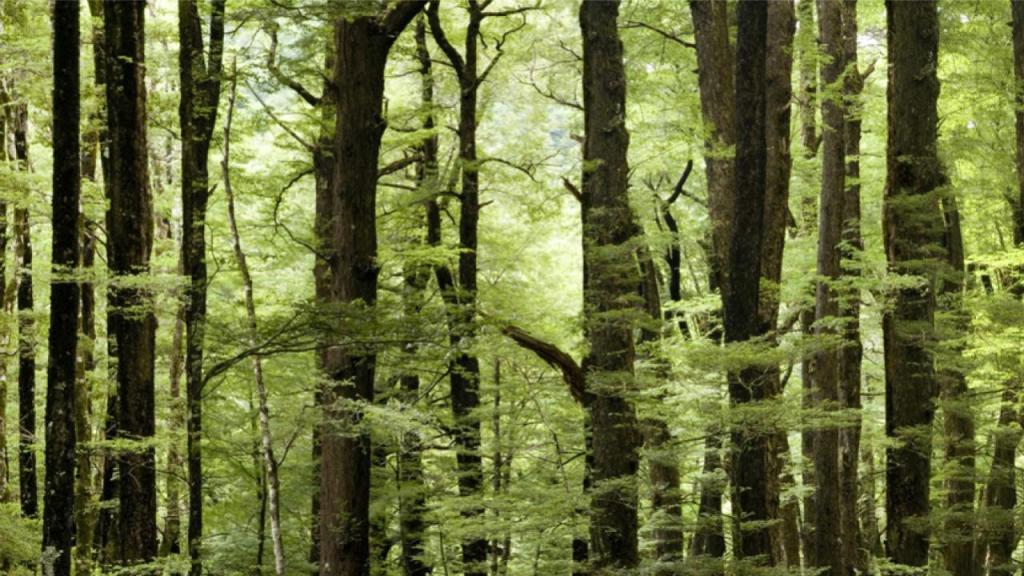

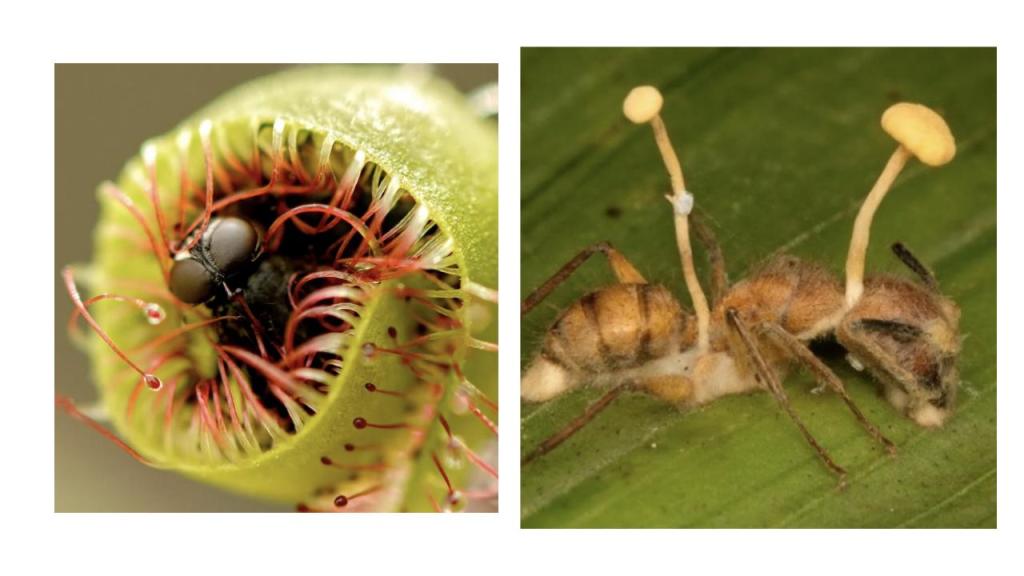

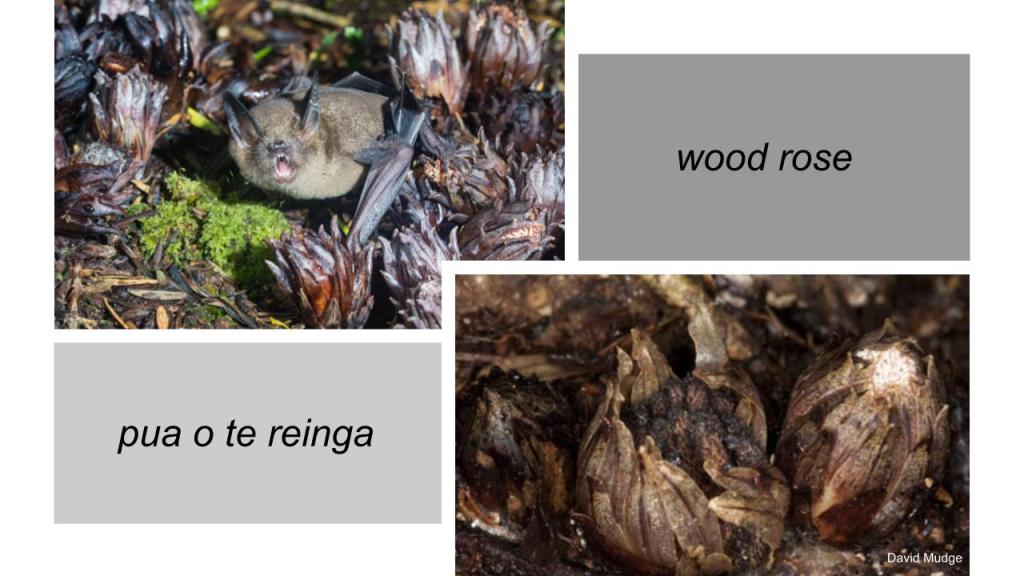

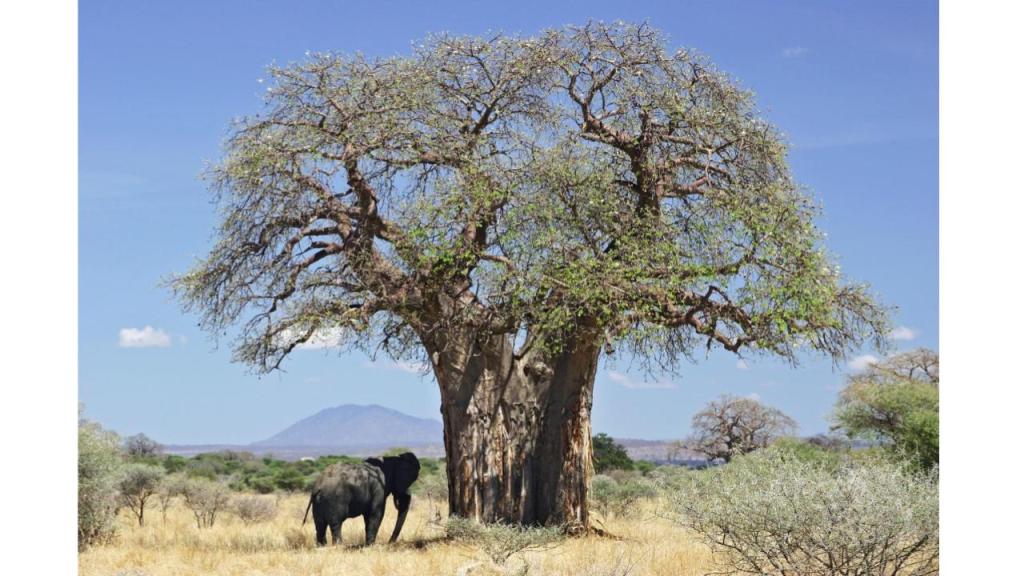
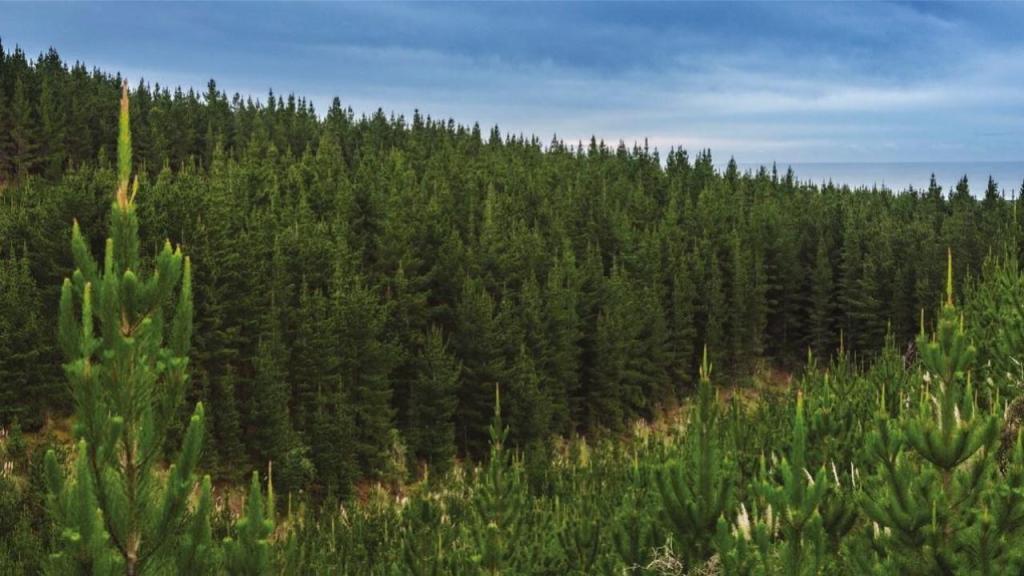


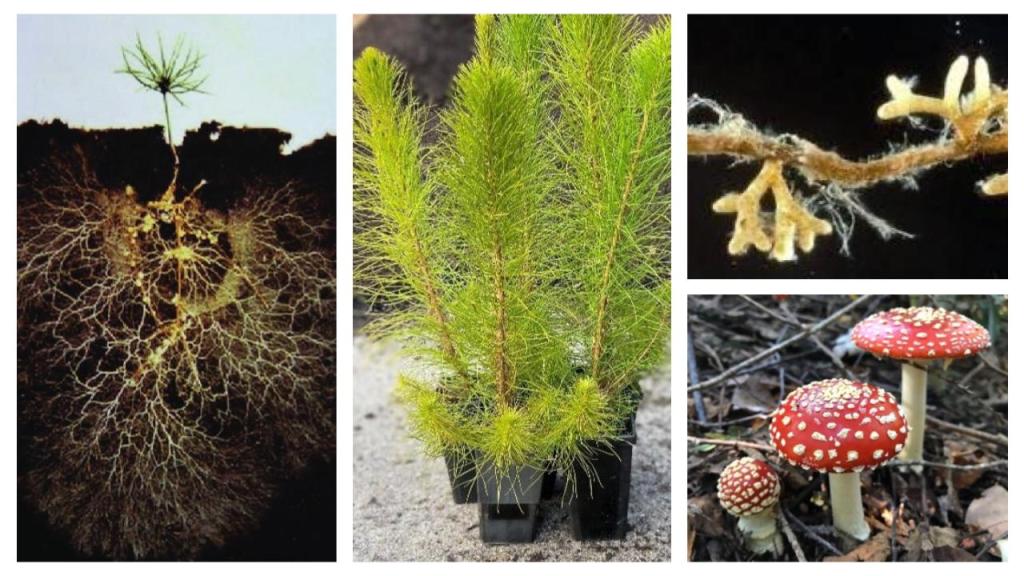

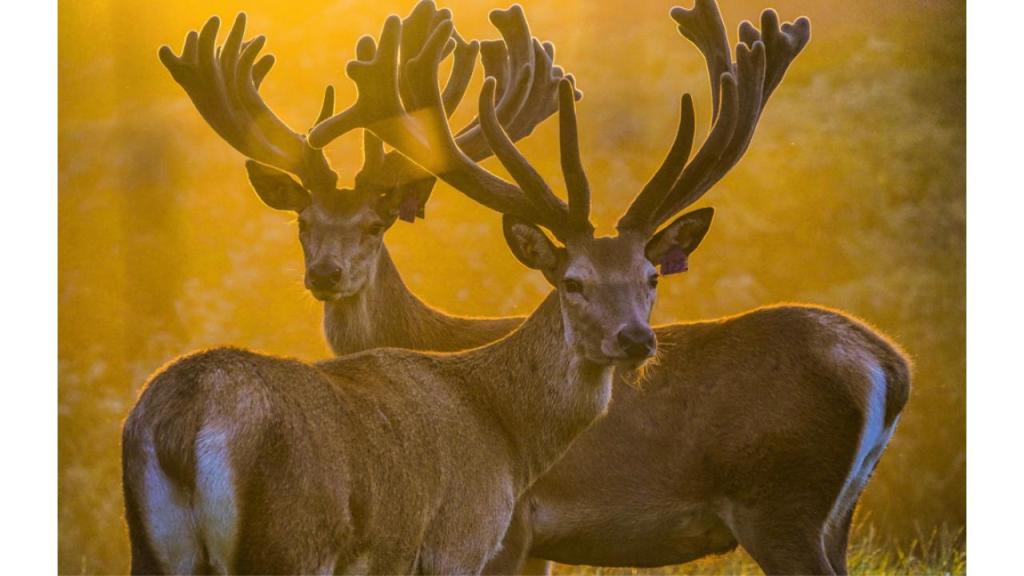

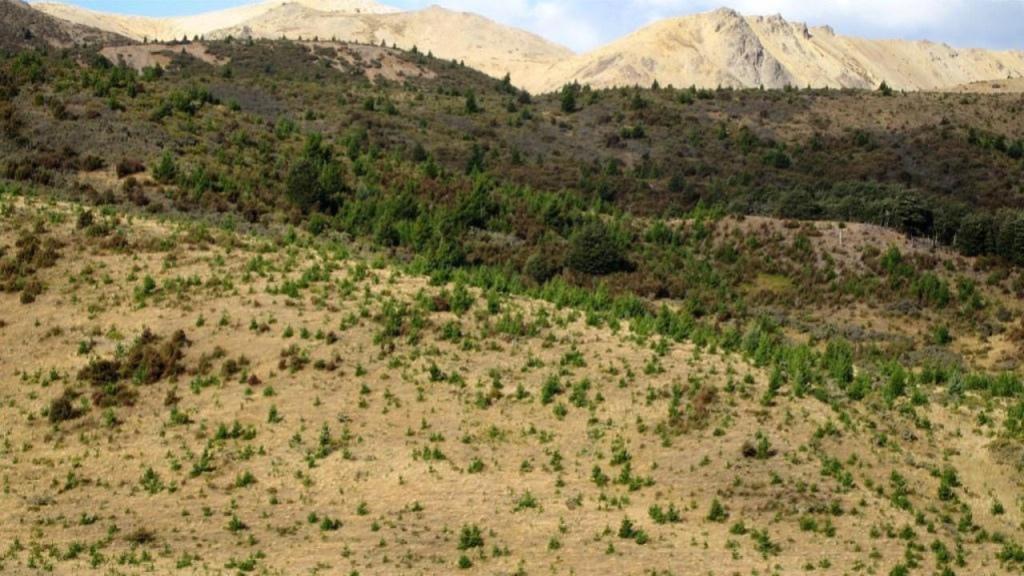


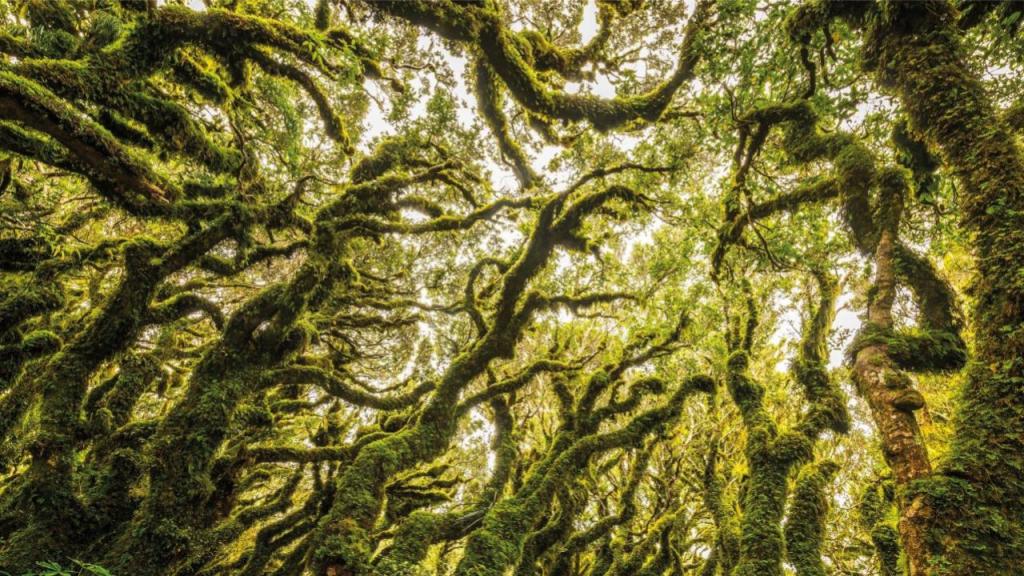

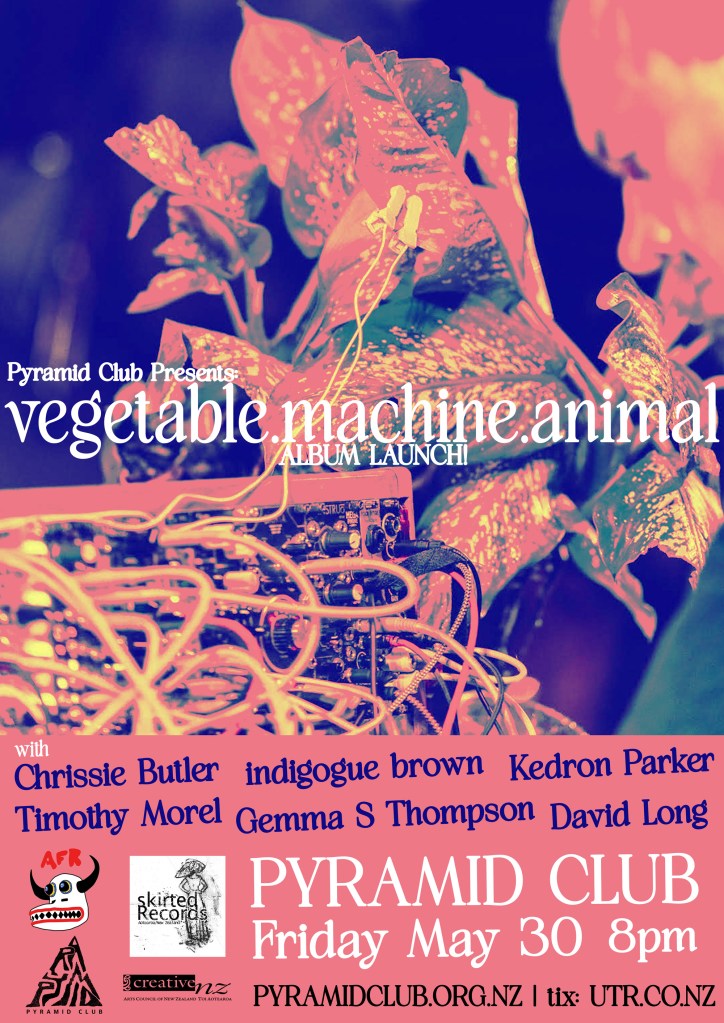

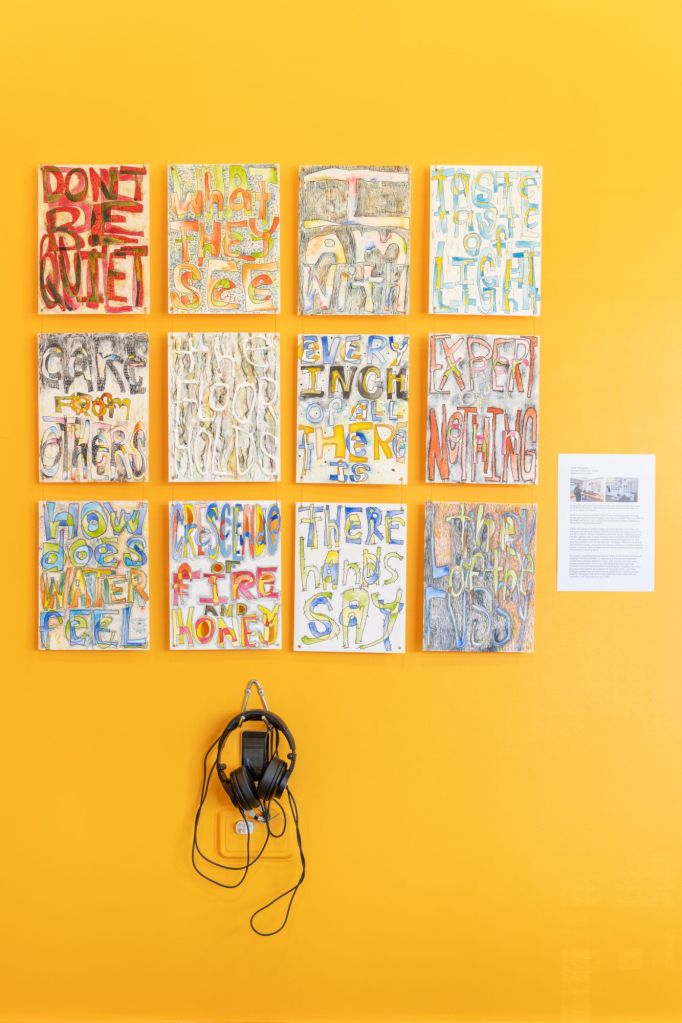


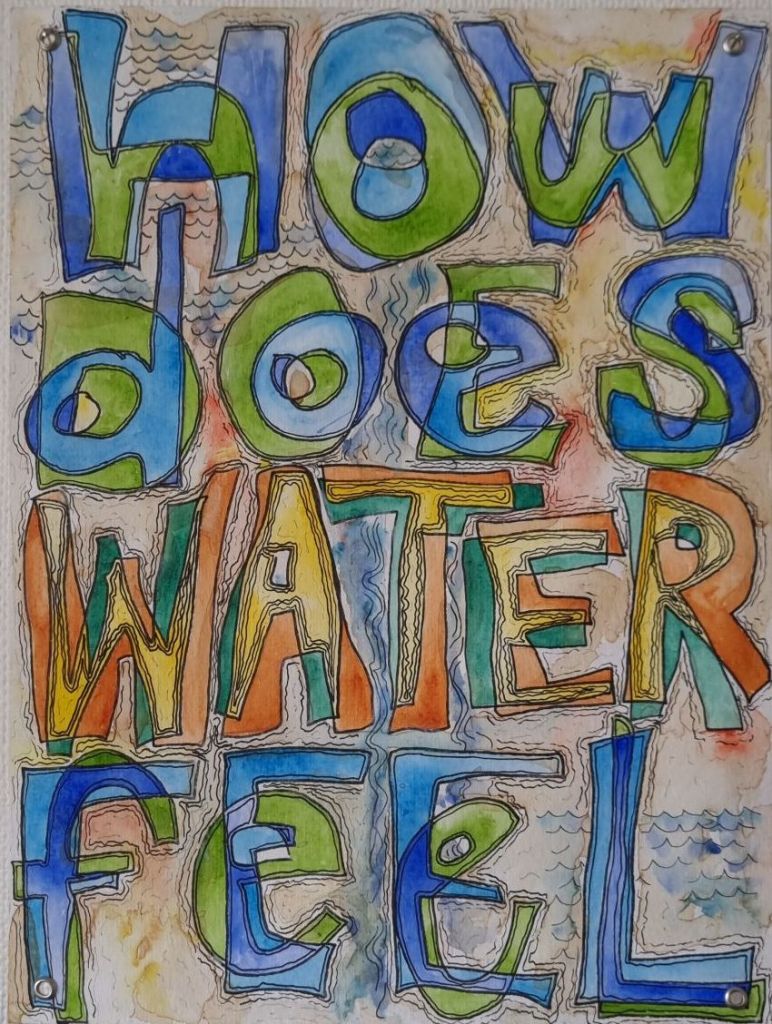


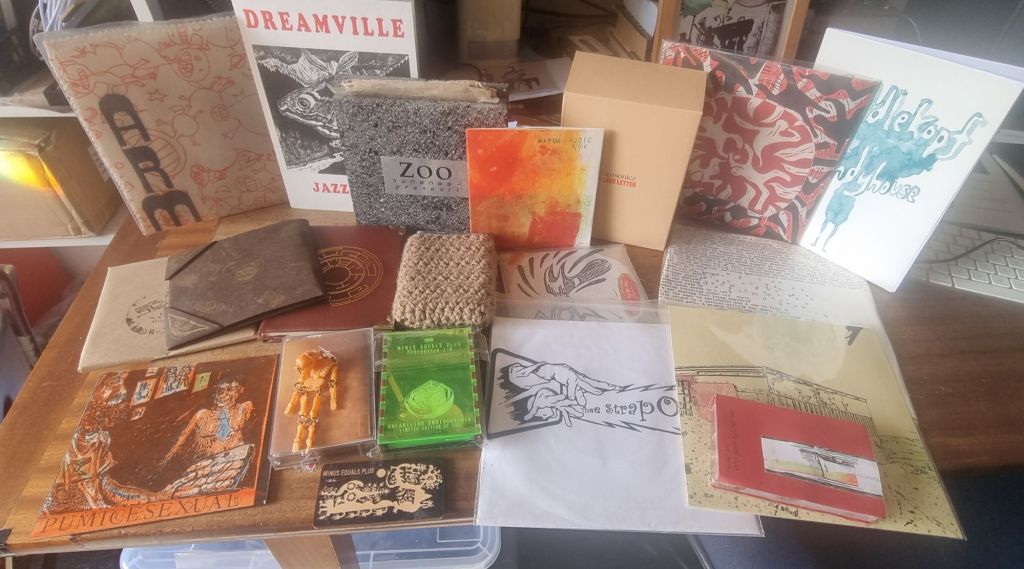


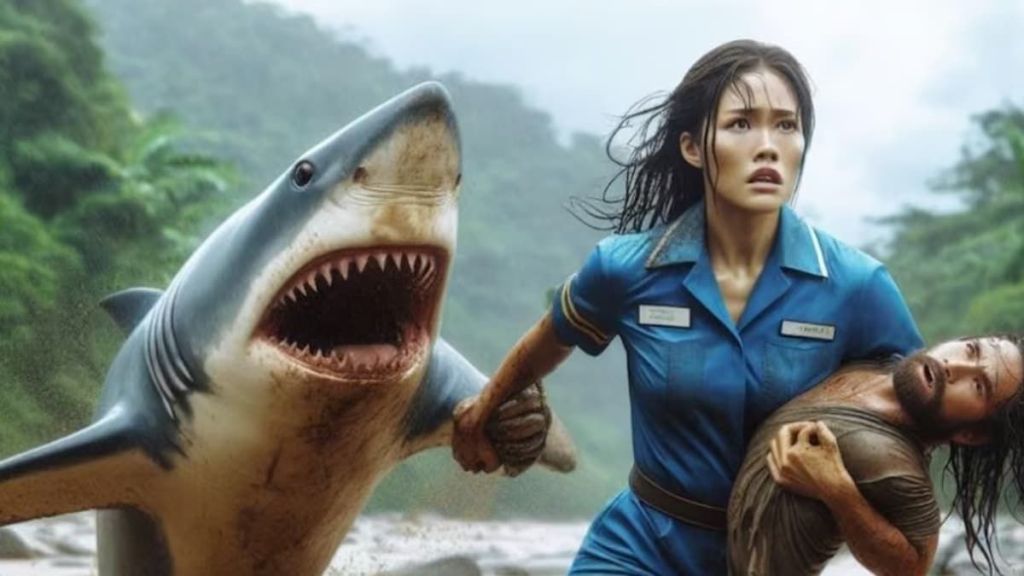

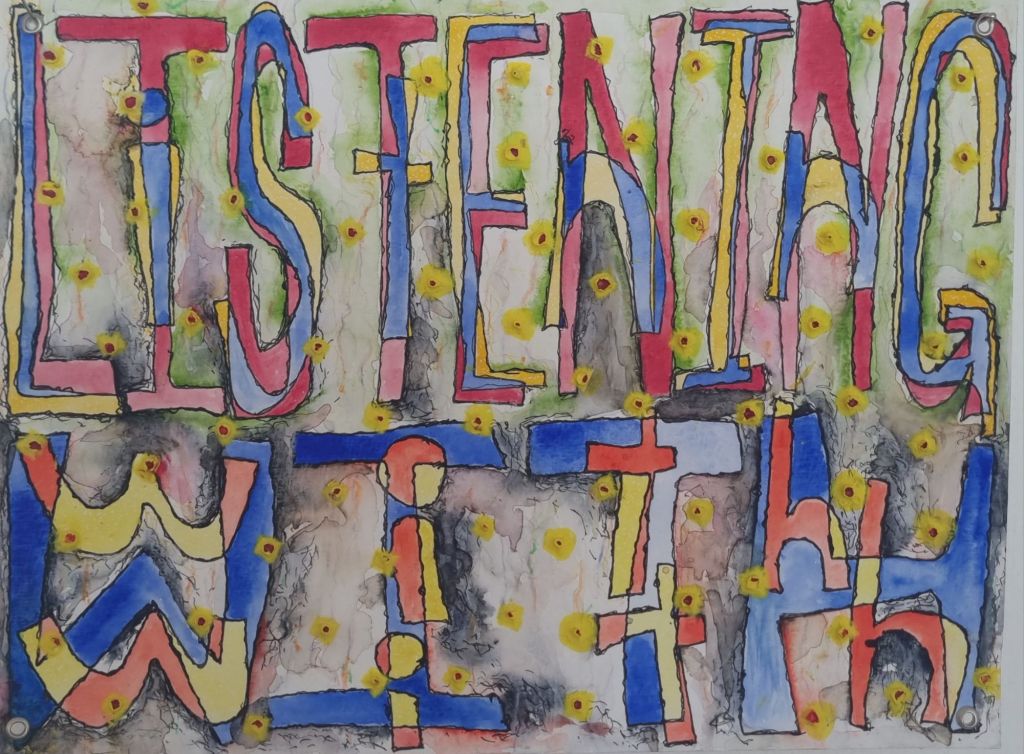


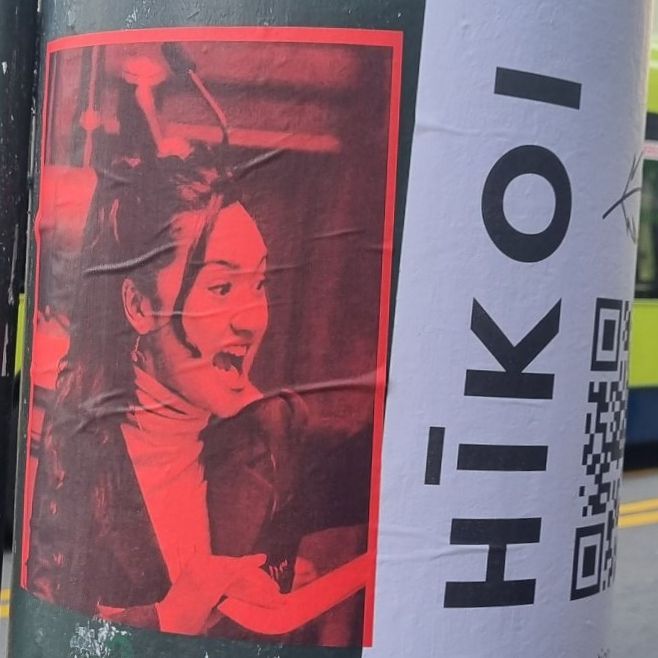


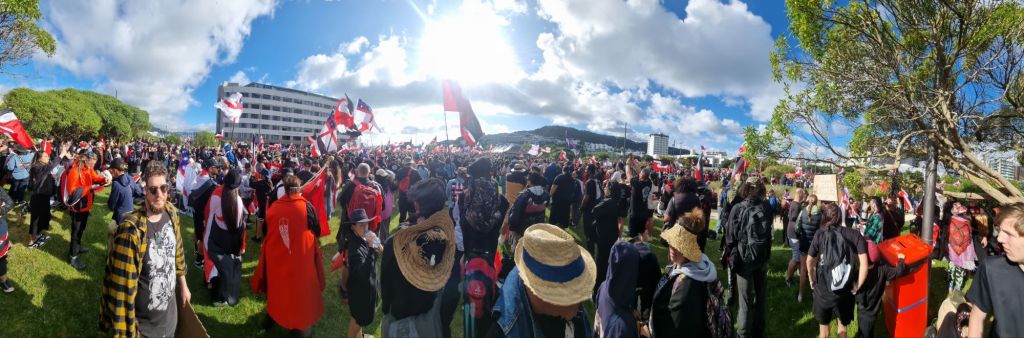

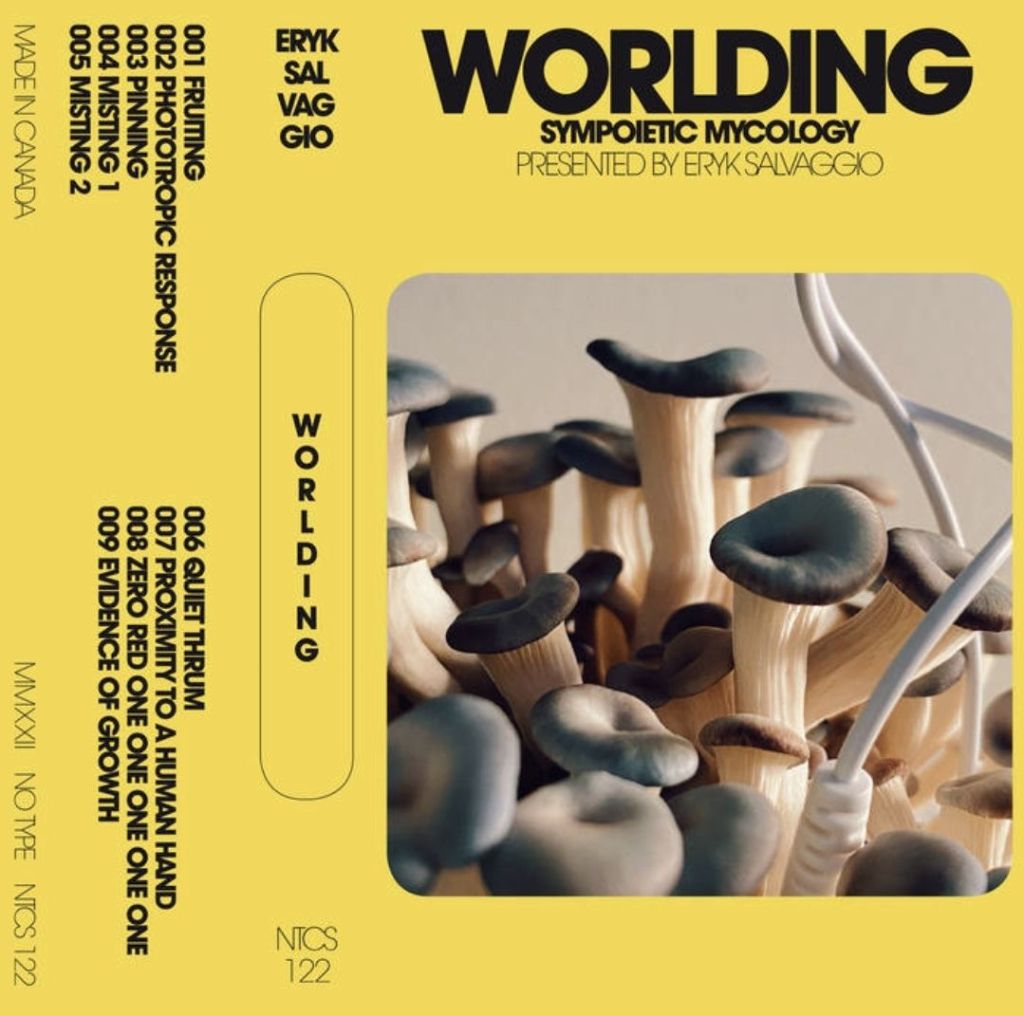
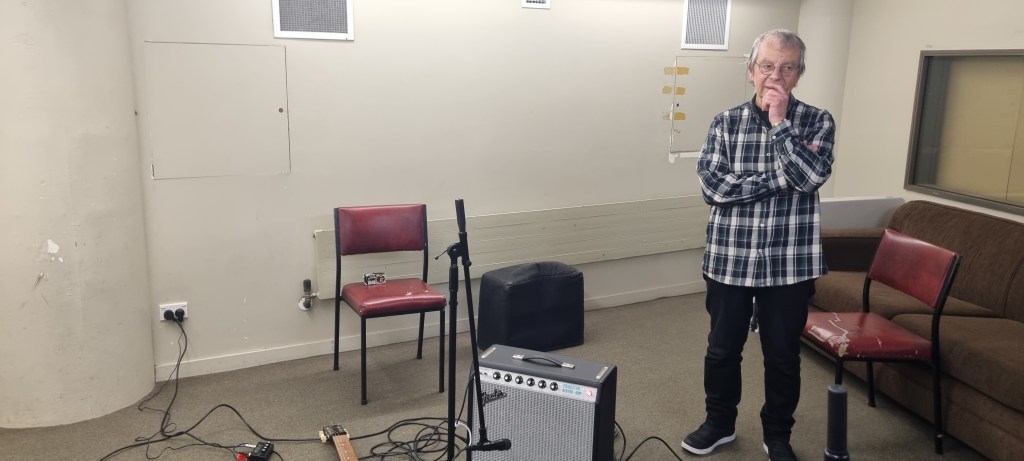


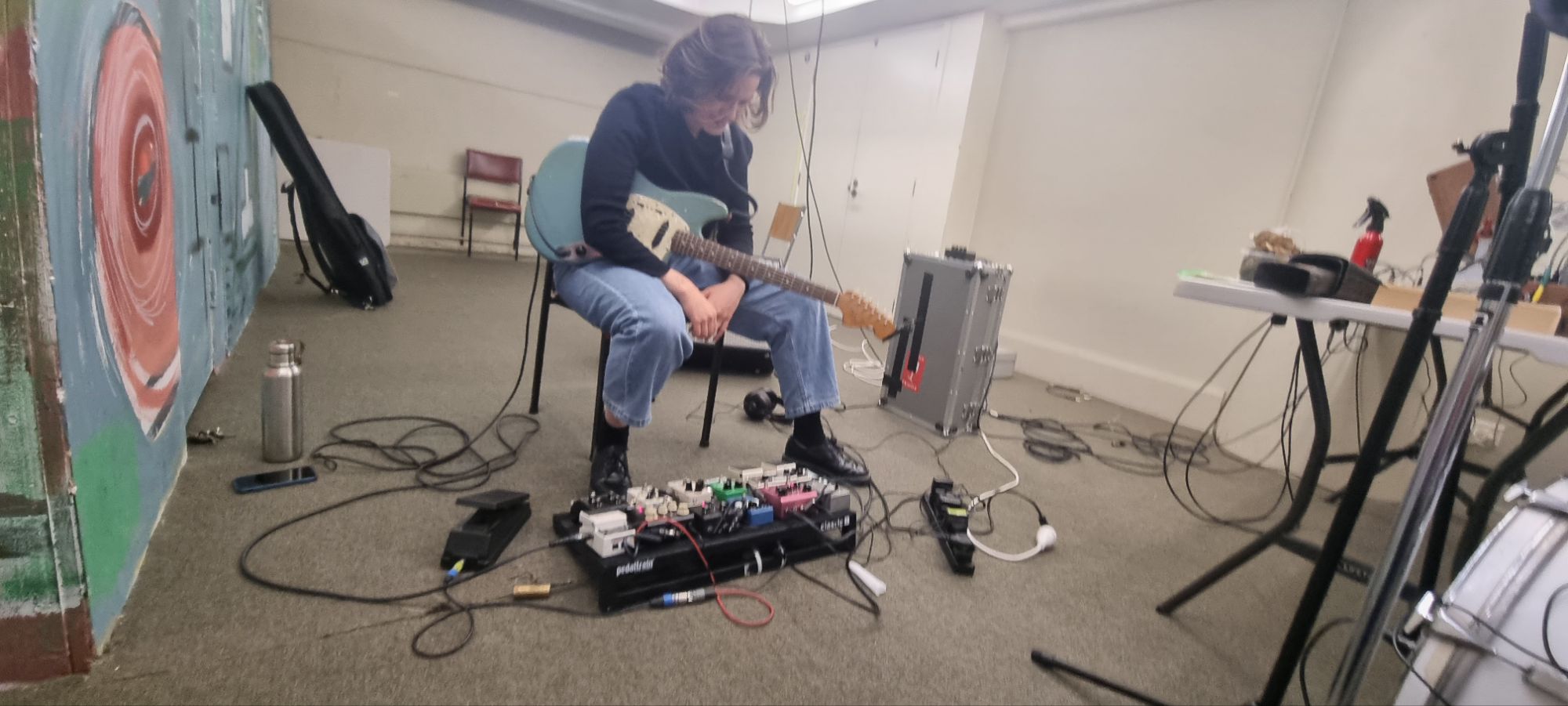
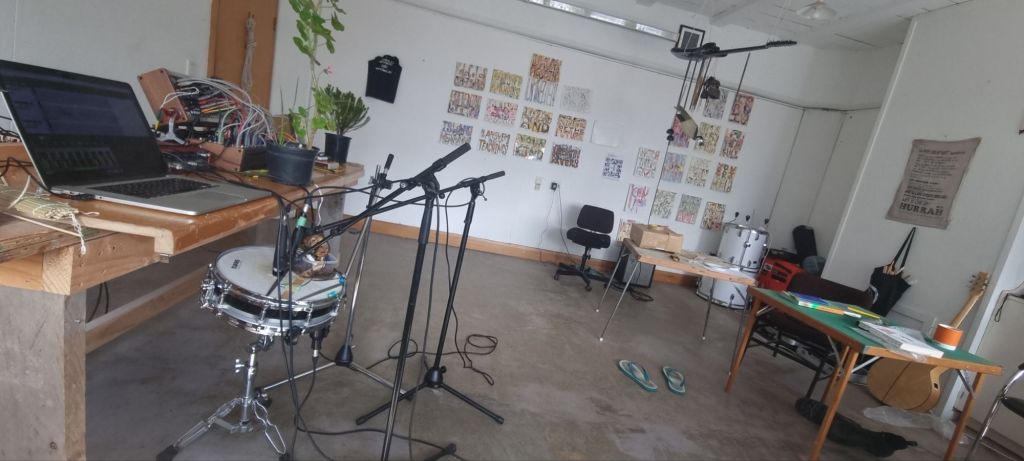
 skirted Records